About Scolopendra polymorpha Wood, 1861
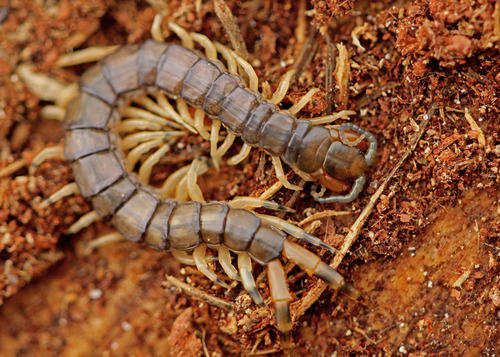
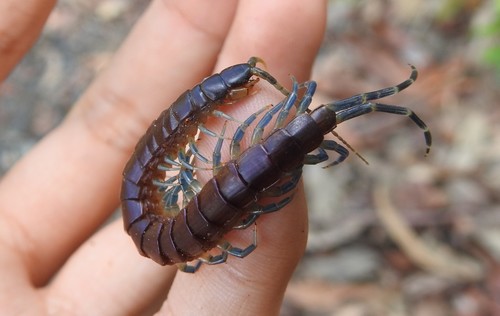
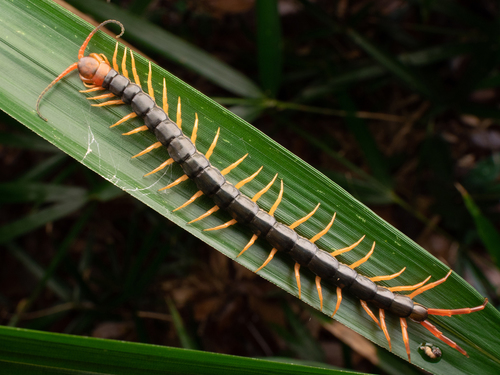
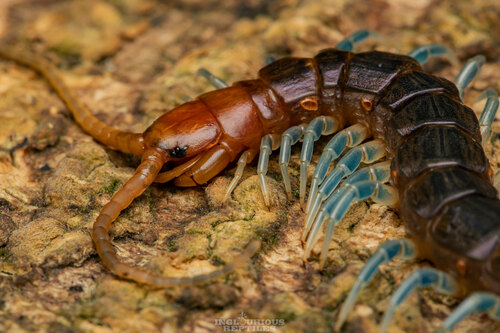
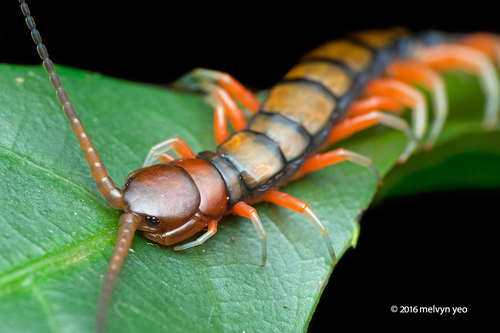
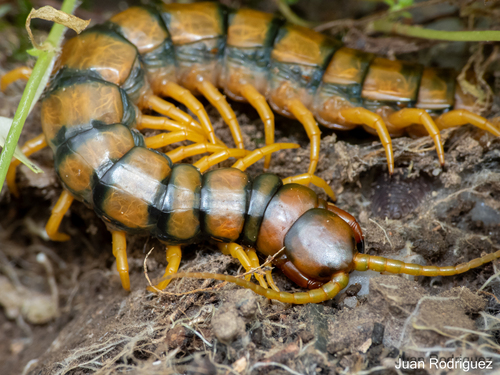
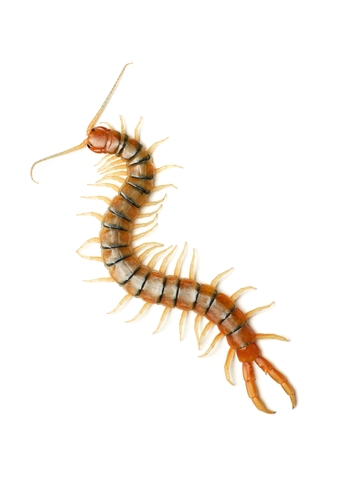
Adult Scolopendra polymorpha Wood, 1861 generally reach 4–7 inches (10–18 cm) in body length. Its coloration is highly variable, which is the reason for the species epithet polymorpha (meaning "many forms") and the common alternative name "multicolored centipede". Each body segment bears one dark lateral stripe, giving this species additional common names: tiger centipede and tiger-striped centipede. Most individuals have a darker brown, red, or orange head, lighter brown, tan, or orange body segments, and yellow legs. Some populations, such as those found in Southern California, may be entirely light blue with indigo stripes and have turquoise legs. Their antennae have seven or more smooth segments. This centipede is indigenous to the Southwestern United States and northern Mexico, ranging north to the Pacific coast. It can also be found in the deserts of western North America, specifically in the U.S. states of Texas, New Mexico, and Arizona, and the northern Mexican states of Sonora and Chihuahua. It inhabits dry grasslands, forests, and deserts. Within these habitats, it typically shelters under rocks, though it has also been observed burrowing in suitable substrate and living inside rotting logs. It primarily seeks out cool, moist shelter during the day, most commonly under desert rocks. Because of its desert habitat, it is one of the most xeric (dry-adapted) members of the class Chilopoda. It is not fully adapted to this extreme arid environment, so it is most active at night during the cool winter months, or occasionally during the summer New Mexico Monsoon when temperatures are lower and moisture levels are higher. It remains burrowed underground for the rest of the year.