About Sclerophrys capensis Tschudi, 1838
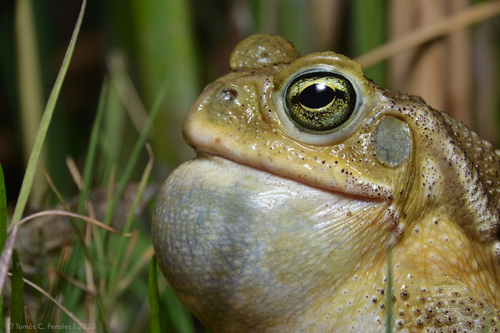
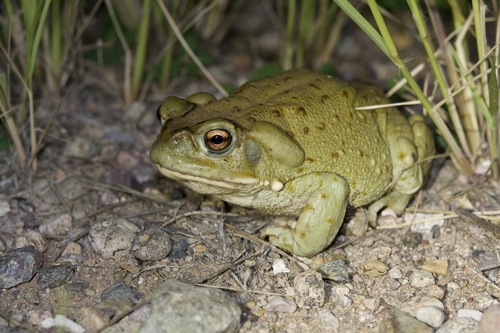
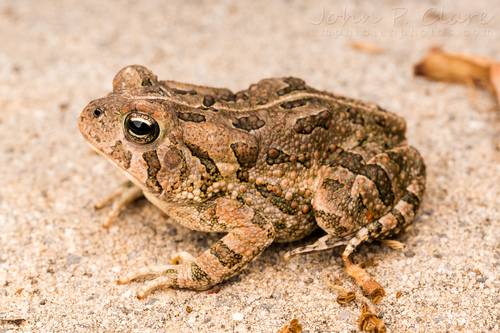
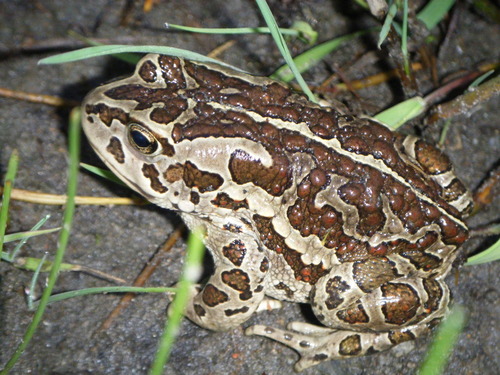
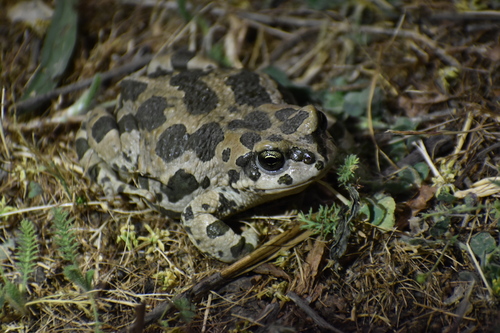
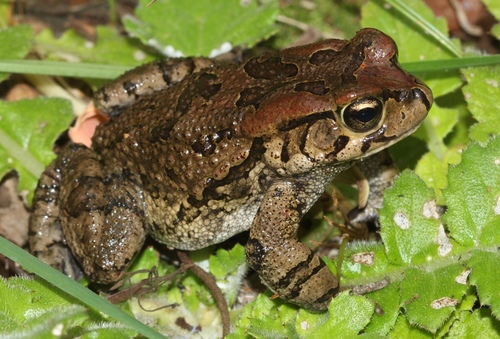
This toad reaches a maximum snout-to-vent length of approximately 120 mm. It is a characteristically robust, medium-large toad, with wart-like protuberances scattered generously across its dorsal and lateral skin. Its base color ranges from brown to greyish, with roughly paired dark brown patches positioned on either side of the medial dorsal line. On the head, the dark patches meet to form a brown chevron on the top of the head, behind and between the eyes; the anterior dorsal skin of the head has no dark brown patches. Like most typical toads, it has a large parotoid gland behind each eye. When injured, it releases whitish spots of venom from these parotoid glands, and this venom can be dangerous to domestic dogs if they bite the toad. The underside is whitish; in males, the gular (throat) area is tinted yellow, with a dark blue-black bar located posterior to the gular region. Sclerophrys capensis is found in South Africa, Lesotho, Eswatini, and extreme southern Namibia, and may also occur in extreme southern Botswana, Mozambique, and Zimbabwe. It inhabits fynbos heathland, grassland, dry thicket forest, savanna, and agricultural land. Breeding occurs in dams, ponds, and pools along slow-moving streams, and the species shows some preference for permanent water bodies.