About Sclerophrys arabica (Heyden, 1827)
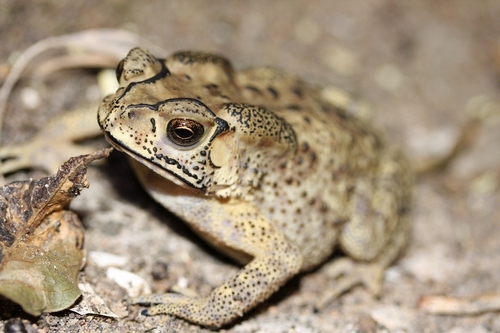
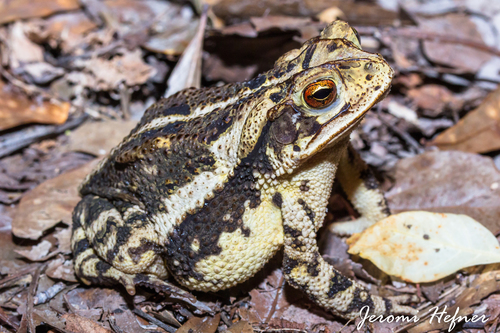
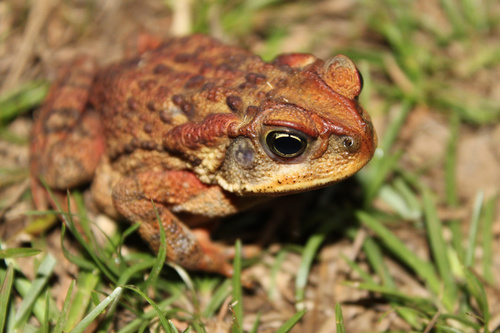
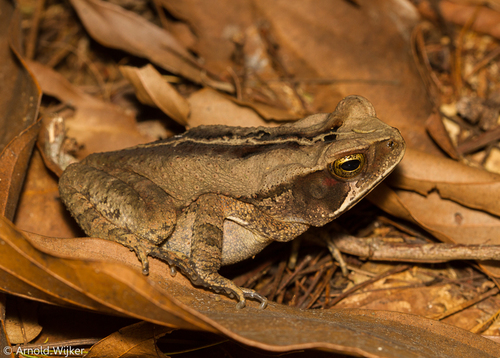
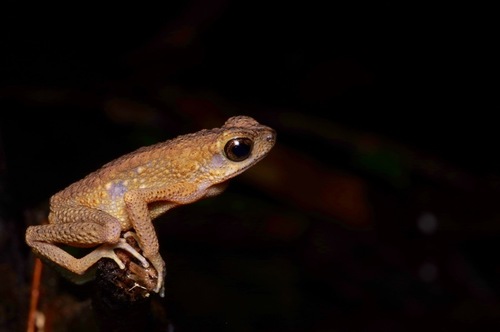
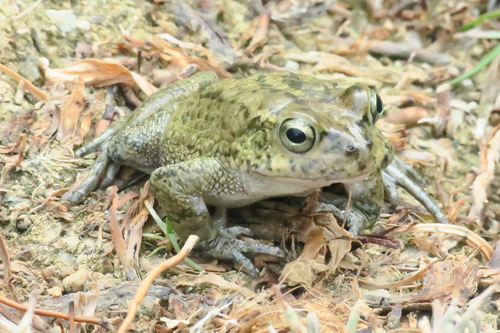
Sclerophrys arabica, commonly known as the Arabian toad, has a rounded head and snout, prominent eyes, and small tympanic membranes. Its back is covered in small warts, and its colour varies between grey, tan, brown, or green, often marked with golden speckles. Males are generally smaller than females, and the male's long croak resembles the sound of a rusty door hinge. This species is endemic to the Arabian Peninsula. Its range covers several widely separated locations across northwestern, central, and southwestern Saudi Arabia, the Farasan Islands in the Red Sea, western and southern Yemen, the United Arab Emirates, and northern Oman. It occurs at altitudes from sea level up to around 2,300 m (7,500 ft). It is a common species in suitable habitats, and can be found in oases, springs, irrigation ditches, watercourses, ponds, and gardens. In the United Arab Emirates, it is often found in mountain pools, and may bury itself by digging holes in damp gravel in wadis. Arabian toads can be active at any time of day or night. They are well camouflaged, and will hide in crevices, animal burrows, or other concealed locations. They feed on insects and small invertebrates; larger individuals sometimes eat small juvenile toads. They may also consume small fish in drying ephemeral pools, swallowing the fish whole because they lack teeth and cannot chew. Arabian toads breed opportunistically at any time of year in still or slow-moving water, laying strings of black eggs in the water. When conditions are adverse, this toad can bury itself in the ground and aestivate, remaining dormant until rain falls or conditions improve. It has been recorded aestivating for up to three years at a time. When stimulated by improved conditions, all toads may emerge at once and gather in large numbers at suitable breeding sites. Carpet vipers and Brandt's hedgehogs prey on the Arabian toad, and appear to be unharmed by the noxious secretions the toad produces.