About Sclerocactus mariposensis (Hester) N.P.Taylor
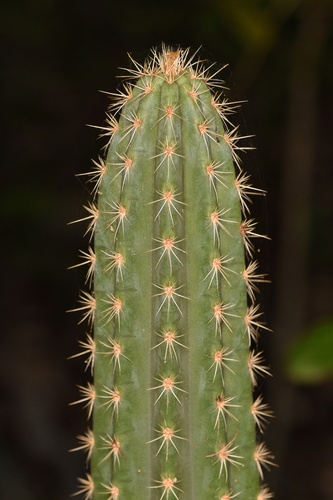
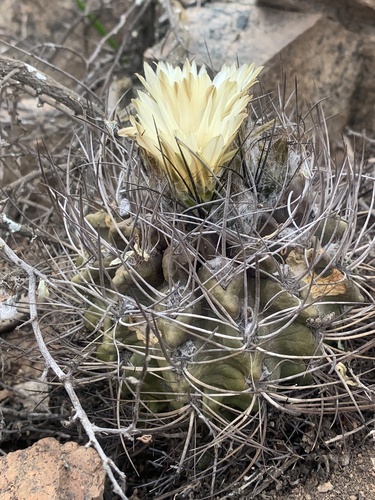
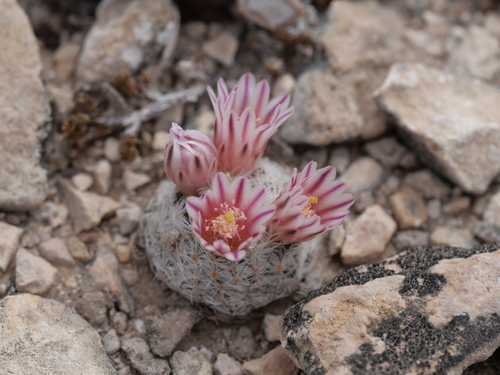
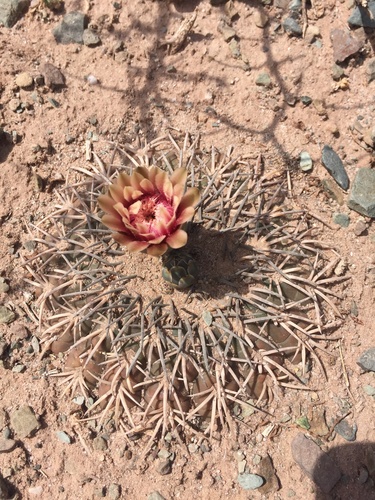
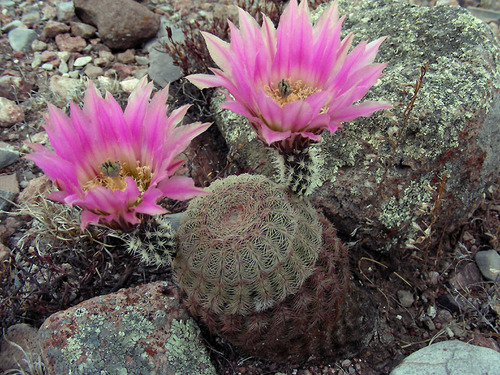
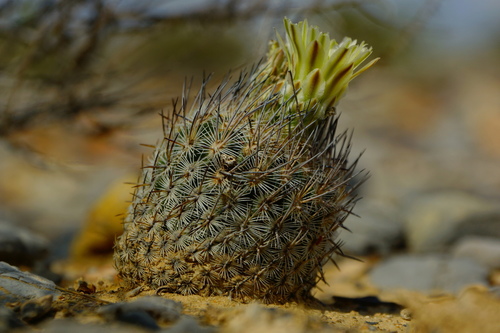
Sclerocactus mariposensis (Hester) N.P.Taylor is a small cactus that reaches a maximum size of 10 centimeters tall by 6 centimeters wide. Its entire body is covered in areoles that produce spines. Central spines grow up to 2 centimeters long, and are white, gray, or yellow with brownish or bluish tips. Each areole also produces many smaller radial spines, which are white or gray, sometimes with brown tips. Its flowers are white or pink that fades to white over time, often marked with dark midstripes, and reach up to 3 centimeters long. Its fruit is yellow-green and measures roughly 1 centimeter in length. This cactus blooms during February and March. This small cactus grows at approximately 30 sites across Texas (United States) and Coahuila (Mexico). Many of these sites are within Big Bend National Park and the Black Gap Wildlife Management Area. In Coahuila, it has been observed growing near Cuatro Ciénegas and Monclova. The species is named for the Mariposa Mine, a mercury mine in Texas where it was first discovered, and it was first formally described in 1945. It grows in Chihuahuan Desert scrub, alongside other plants including beaked yucca (Yucca rostrata), creosote (Larrea tridentata), lechuguilla (Agave lechuguilla), and many other cactus species. It inhabits barren, exposed, rocky terrain with limestone substrate. It does not grow in adjacent habitat areas with gypsum rock, where the related species Sclerocactus warnockii occupies its niche instead. This cactus may grow alongside bunched cory cactus (Coryphantha ramillosa), another threatened cactus species.