About Sciurus aureogaster F.Cuvier, 1829
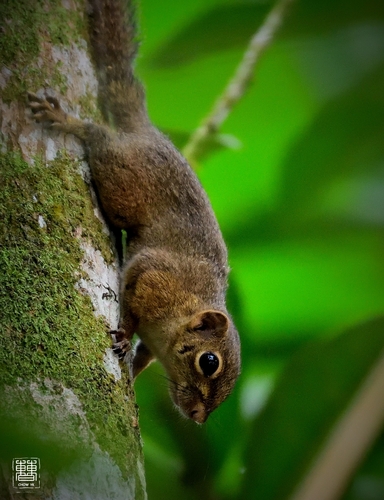
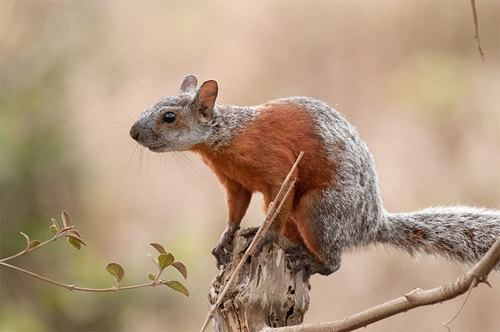
The Mexican gray squirrel, with the scientific name Sciurus aureogaster F. Cuvier, 1829, is also called the red-bellied squirrel; in Mexico, it is known locally as ardilla gris mexicana or ardilla vientre rojo. This species is split into two subspecies: S. a. aureogaster and S. a. nigrescens. Both subspecies are native to Mexico and southern Guatemala. The species was introduced to the Florida Keys in 1938, where it is classified as an invasive species. Across most of its native Mexican range, the Mexican gray squirrel has a light to dark gray back, while its underside ranges from white to orange to a deep chestnut shade. In northern native populations, individuals commonly have fully black or gray back fur, with faint red coloring on the belly and rump. On Elliott Key, the most common form has entirely black fur. This squirrel is native to multiple biomes across Mexico and Guatemala. It occupies a wide variety of habitats, including evergreen forests, dry pine-oak woodlands, thorn scrub, secondary forests, plantations, and also regularly occurs in urban areas. It has adapted to survive in high-elevation habitats up to 3,800 meters (12,500 ft). It is most often found in dry woodlands or forests, and regardless of location, it prefers habitats with extensive canopy cover or dense forest. It builds nests in trees approximately 5–15 meters (16–49 ft) above ground, covering the nests with leaves. This leaf covering hides the nest from predators and protects the squirrel from harsh weather. After being introduced to Elliott Key, Florida in 1938, the species has adapted to the area's urban and dense subtropical environments. Squirrels in Florida build nests that are very similar to those constructed by their conspecifics in Mexico and Guatemala. On Elliott Key, Mexican gray squirrels have been recorded building leaf nests in 12 different tree species, with 60% of all nests located in S. mahagoni.