About Scissirostrum dubium (Latham, 1802)
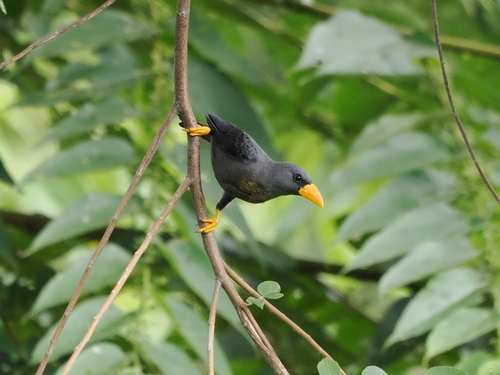
The grosbeak starling, with the scientific name Scissirostrum dubium, is also commonly called the grosbeak myna, finch-billed myna, or scissor-billed starling. It is a starling species that belongs to the family Sturnidae, and it is the only species in the monotypic genus Scissirostrum. This species is endemic to Sulawesi, Indonesia. Its natural habitat includes tropical lowland areas, and occasionally subtropical montane areas, consisting of lightly wooded forest regions and wetlands. In the wild, this species faces threats from habitat loss, as well as from capture of wild individuals for the cagebird trade. The grosbeak starling nests in colonies, which often hold hundreds of breeding pairs. It carves out its nests in rotting or dying tree trunks, in a pattern similar to how woodpeckers excavate nest sites. Its diet includes fruit, insects, and grain. Grosbeak starlings are highly vocal, both when they are at their nesting colonies and when they gather in feeding flocks. This species was first described by English ornithologist John Latham in 1801, under the binomial name Lanius dubium. New breeding populations originating from escaped caged birds have been recorded in Kalimantan (Borneo) and on Java.