About Scinax squalirostris (Lutz, 1925)
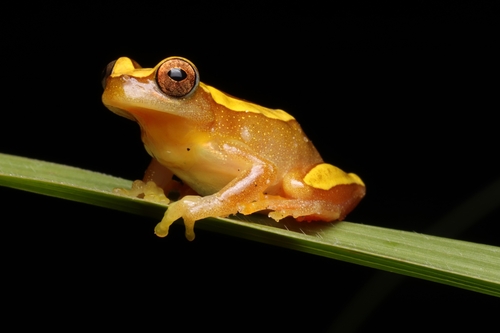
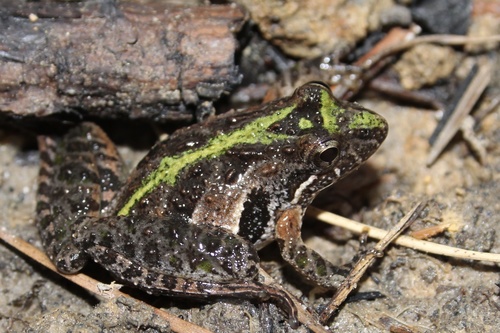
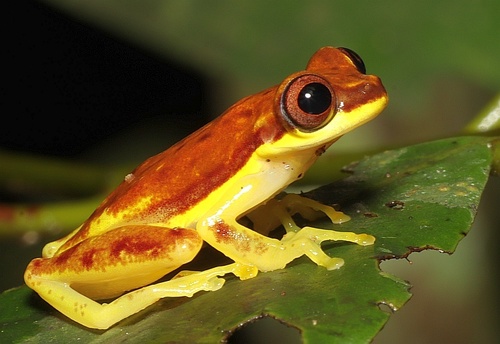
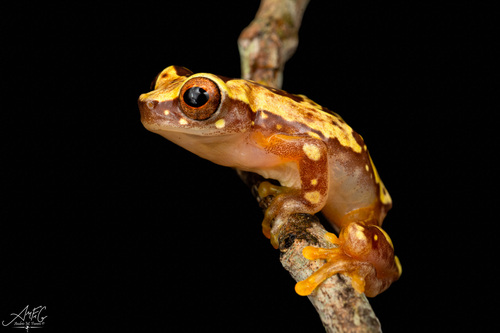
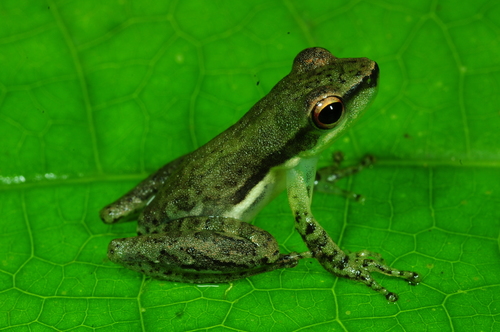
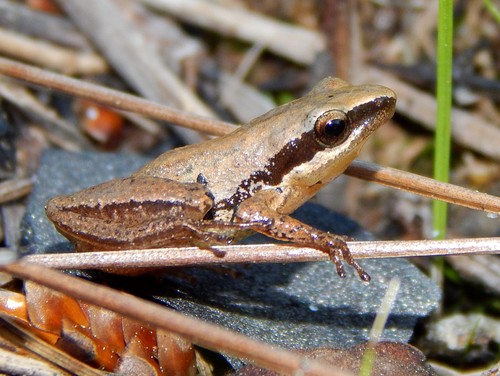
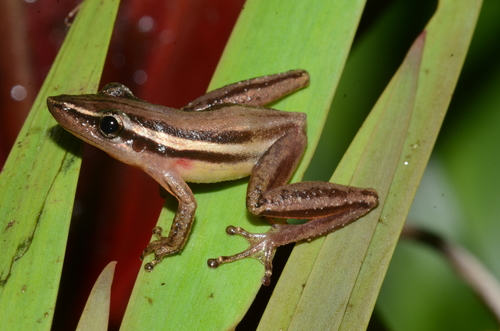
Scinax squalirostris is a small species, with individuals measuring 24–29 mm (0.94–1.14 in) in snout–vent length. It has an overall slender build, with slender limbs and fairly long hind limbs. Its head is long and wider than its body, and the snout is very elongated. The tympanum is distinct. The dorsal ground color of this species is brownish. It has a narrow, black mid-dorsal line and black canthal lines that are bordered with white. Two black stripes start from the eye and enclose a white or flesh-colored area. Its belly is greenish yellow, and the vocal sac is large and lemon-colored.
In terms of habitat and conservation status, Scinax squalirostris occurs in open areas of grasslands, rushes, and Eryngium spp., and can also be found in forests, all at elevations below 1,500 m (4,900 ft). Breeding occurs in small permanent and temporary waterbodies, including cattle ponds. It is a common species that adapts well to anthropogenic disturbance. Pollution may be a localized threat to it, and it is known to live in several protected areas in Brazil and Argentina.