About Scinax elaeochroa (Cope, 1875)
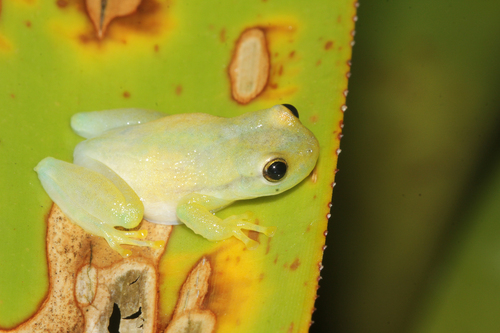
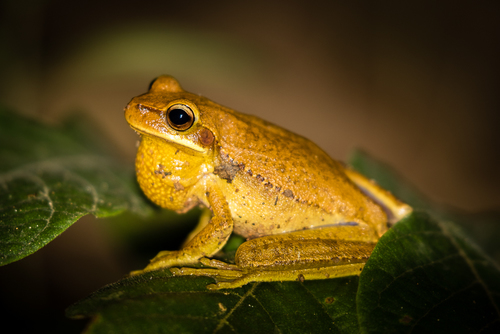
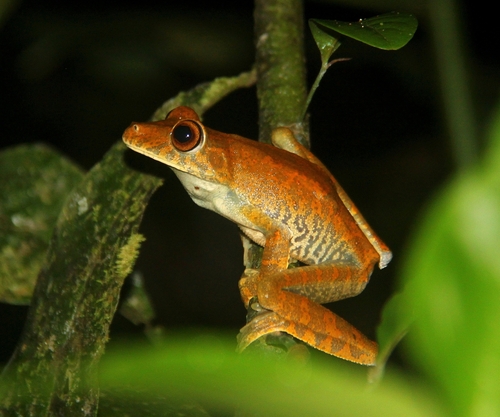
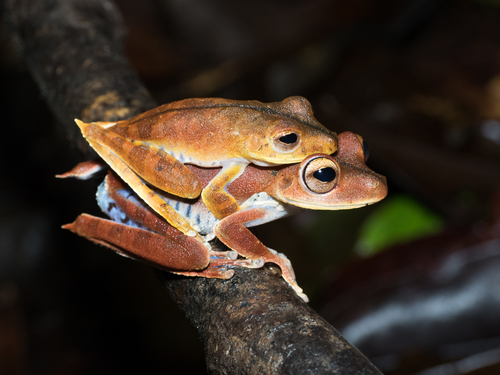
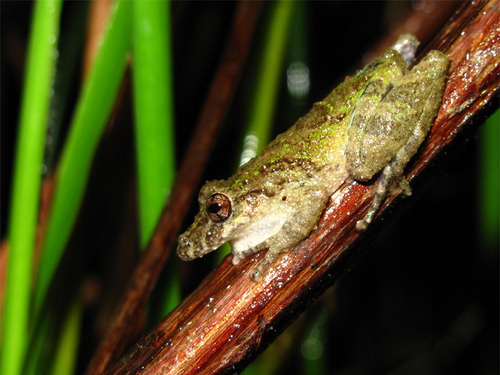
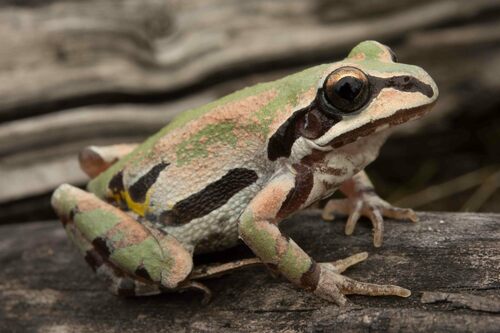
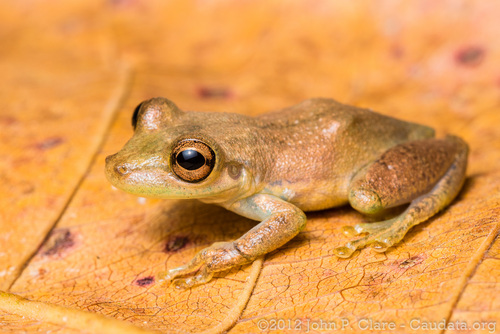
Males of Scinax elaeochroa reach 38 mm (1.5 in) and females reach 40 mm (1.6 in) in snout–vent length. This species has a protruding snout. The dorsum is yellowish, sometimes with a faint green or light brown tint, and becomes brilliant yellow in breeding males. There are usually some darker markings present on the dorsum. The arms and legs are typically barred. The venter ranges in color from cream to yellow to orange, and the throat is usually yellow. The vocal sac of breeding males is bright yellow-orange. Its advertisement call is a series of short "waaks".
The natural habitats of Scinax elaeochroa are humid lowland and lower premontane forests. It also occurs in secondary and disturbed forest habitats. It can be found from sea level up to 1,200 m (3,900 ft) above sea level, and reaches up to 1,500 m (4,900 ft) asl in Colombia. It is a primarily nocturnal species that breeds in temporary ponds during the wet season. Eggs are laid in ponds or on adjacent vegetation, and tadpoles complete their development in the pond. While it is a common and somewhat adaptable species, Scinax elaeochroa is potentially threatened by deforestation.