About Scinax boesemani (Goin, 1966)
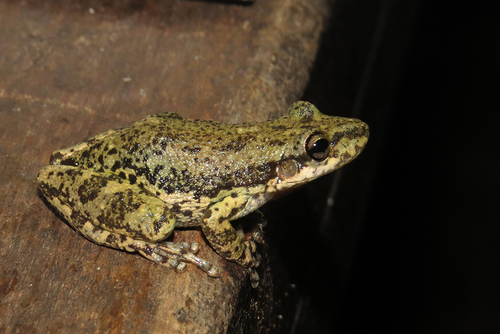
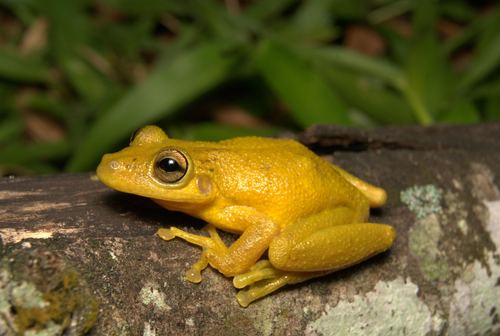
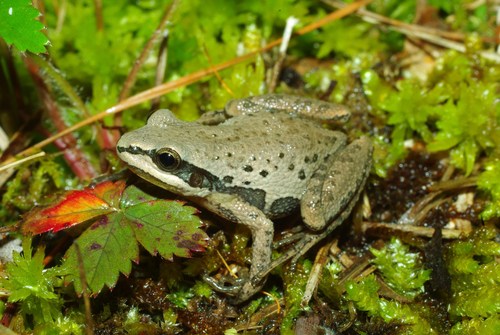
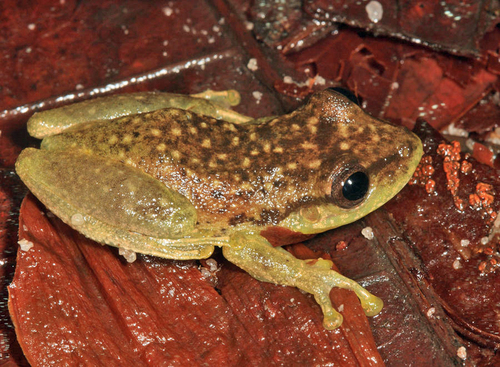
Description: Male Scinax boesemani reach a snout–vent length of 32 mm (1.3 in), while females reach 33 mm (1.3 in). The fingers are unwebbed, and the toes are webbed, though webbing is reduced between the first two toes. Skin is smooth to weakly granular on the dorsal (back) side, and granular on the ventral (belly) side. Dorsal coloration is variable, with a tan to dark brown background marked by cream or yellow spots; how visible these spots are depends on light intensity. A dark colored line runs from the nostril to the arm insertion point. All ventral surfaces are white. The advertisement call of males is a buzzing trill, produced at a rate of approximately 30 notes per minute. Habitat and conservation: Scinax boesemani lives in tropical rainforests and forest edges at elevations below 650 m (2,130 ft). Individuals are most often found around or in bushes growing over small temporary bodies of water. This species is nocturnal. Males call from vegetation that sits 5–10 m (16–33 ft) above the water, and breeding occurs in explosive events. Scinax boesemani is a common species that adapts well to human-caused disturbance of its habitat. There are no major threats to the species as a whole, though local populations may be harmed by habitat destruction and wildfires. The species' range covers multiple protected areas.