About Sciaena umbra Linnaeus, 1758
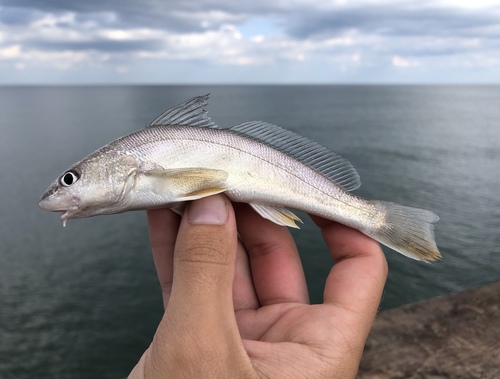
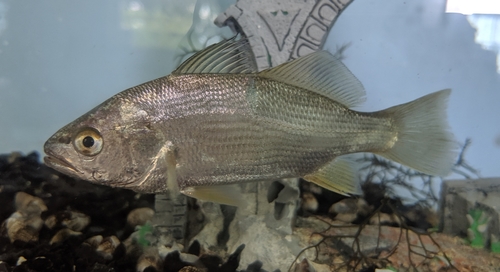
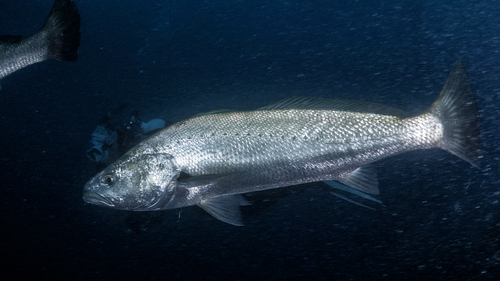
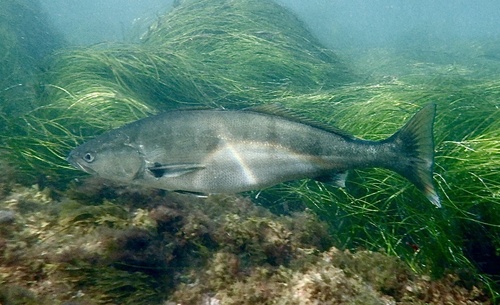
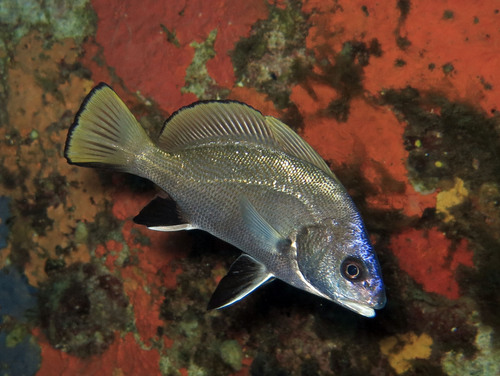
Sciaena umbra, commonly called the brown meagre, is typically 30 to 40 cm (12 to 16 inches) long, and can reach a maximum length of 60 cm (24 inches). It has a distinctive body shape, with a flat belly and a strongly arched back; its body is laterally compressed. It has a large horizontal mouth that extends to the level of the eye, and holds villiform teeth. Its body has a grey base color, with gold and silver iridescent flashes. Ctenoid scales cover the nape and flanks, while cycloid scales cover the head. Its anal and pelvic fins are black, with white anterior margins. In contrast, its dorsal and caudal fins are yellow with black margins, and the caudal fin is usually truncate in shape. The brown meagre occurs in the eastern Atlantic Ocean, ranging from the southern English Channel south to Senegal and Cape Verde, including the Canary Islands. Records of this species from West Africa south of Senegal are considered questionable. It is also found in the Mediterranean Sea, where the IUCN classifies it as Vulnerable, as well as the Black Sea and the Sea of Azov. It inhabits depths between 5 and 200 meters (16 to 656 feet), and occurs most often over rocky and sandy substrates. Juvenile brown meagre will enter estuarine environments.