About Schroederichthys chilensis (Guichenot, 1848)
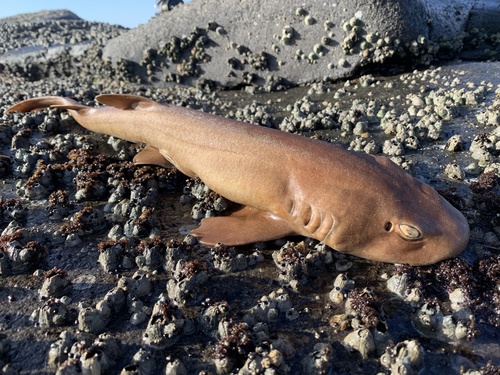
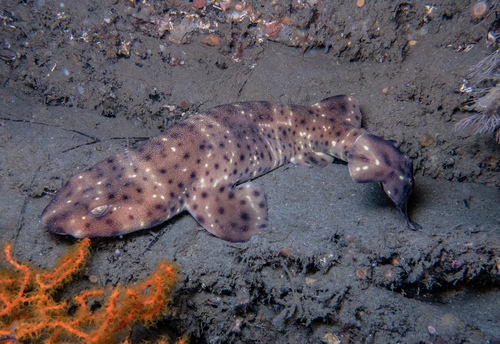
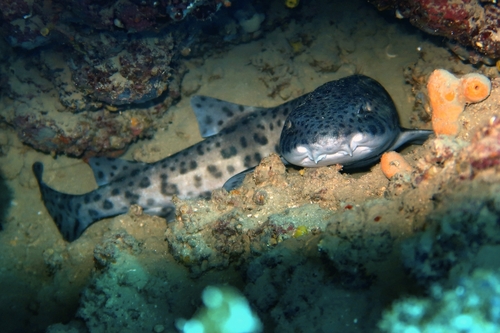
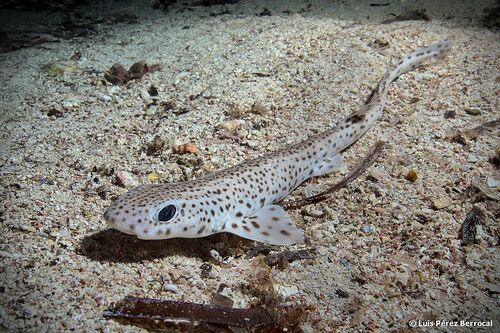
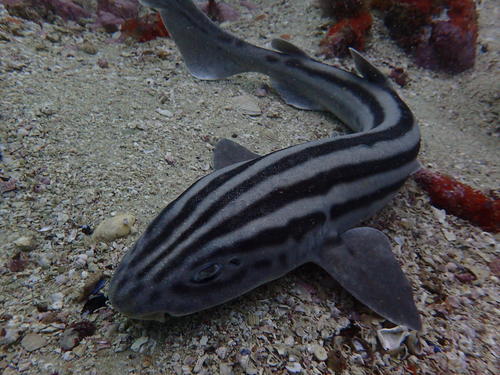
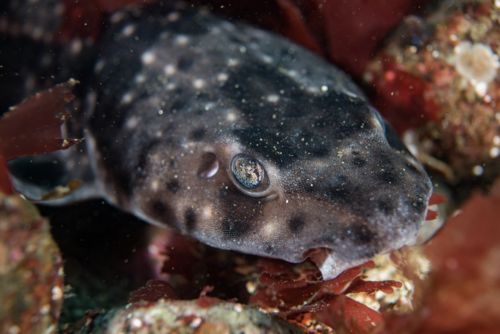
Redspotted catsharks, known scientifically as Schroederichthys chilensis, reach a recorded length of 30 to 66 cm based on captured individuals, and it is thought they may grow larger than this maximum recorded size. Their bodies are elongated and sleek, which matches the typical body form of the catshark family. The dorsal side of their body is dark reddish brown, with dark saddle-shaped patterns along their sides. Their ventral side is creamy white, marked with reddish spots. This species has two dorsal fins; the axil of the first dorsal fin sits over the pelvic region. No spines are present on their dorsal fins, and their tails do not have an upward bend. Redspotted catsharks have multicuspid teeth, but males usually have longer teeth with fewer cusps, a trait thought to help with courtship biting. This species is oviparous, and individual sharks follow an annual breeding cycle. Mating occurs seasonally, most often in spring and winter, though females have occasionally been found carrying egg capsules during summer. Redspotted catsharks are polygynandrous. When a male fertilizes a female's eggs, he typically carries out a "courtship ritual" that involves biting the female. The sharks hatch from fertilized encapsulated eggs that are released into the water. Each capsule, also called a mermaid's purse, usually holds two eggs. Embryos get their nutrition from the egg yolk until hatching. When the eggs hatch, the young sharks look like miniature versions of adult redspotted catsharks, but they grow quickly after hatching. It is thought that juvenile sharks move into deeper waters to avoid predation, leaving the shallow sublittoral zone that adult sharks inhabit. This means there is spatial segregation between adult and juvenile populations of the species.