About Schoenus cuspidatus Rottb.
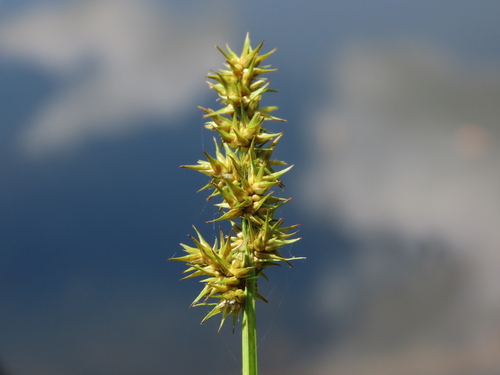
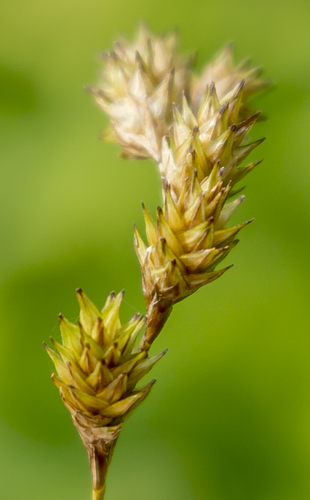
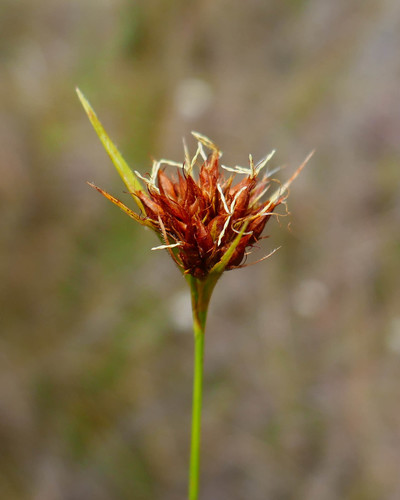
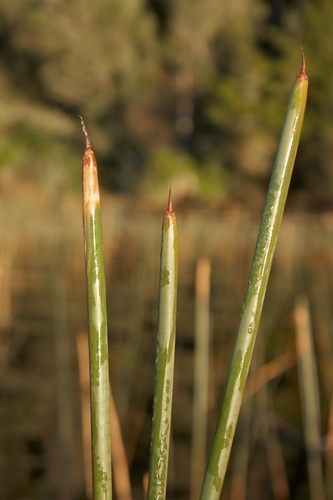
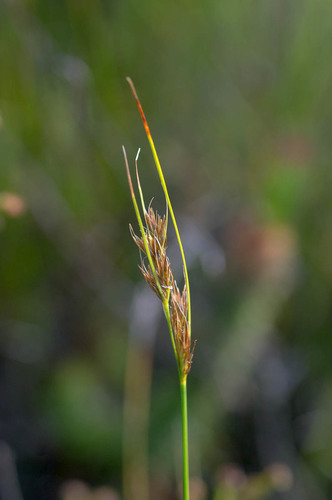
Schoenus cuspidatus Rottb. is a species that shows greater vegetative and reproductive variability than closely related southern African Schoenus species. Its key diagnostic features are cuspidate spikelets and broad elliptic nutlets. Two other species have spikelets and nutlets that are similar in form to those of S. cuspidatus: S. loreus and S. riparius. S. loreus has wider and longer inflorescences than S. cuspidatus, and its leaves are usually relatively wide, non-channelled and flat, while the leaves of S. cuspidatus are more round-shaped. S. riparius is a larger, more robust species that has a longer, more dense inflorescence compared to S. cuspidatus. The current circumscription of S. cuspidatus is broader than that of other southern African Schoenus species, and further research is needed to better understand this species. Four main variants of S. cuspidatus have been identified to date: 1) Cederberg variant, 2) Cape Peninsula variant, 3) Western Cape mountain variant, and 4) Eastern variant. These variants have not been classified as separate independent species because intermediate forms exist between them. Like other sedges, plants in this group are very difficult to identify. A contributing factor to this identification difficulty is that southern African Schoenus tend to form hybrids with one another. Evidence suggests that S. cuspidatus forms hybrids with other southern African Schoenus species, particularly those within the S. cuspidatus and allies group. Schoenus cuspidatus is a sedge species that has a relatively wide geographic distribution compared to other closely related species in its group. It grows throughout the Western Cape and Eastern Cape Provinces of South Africa, across a wide range of elevations. This species can grow on a variety of parent materials in both wet and dry habitats, and it is most commonly found on mountain slopes.