About Schoenoplectus acutus (Muhl. ex Bigelow) Á.Löve & D.Löve
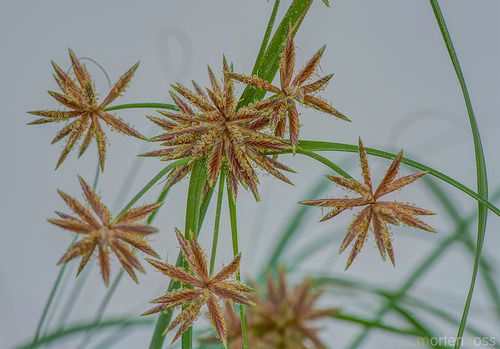
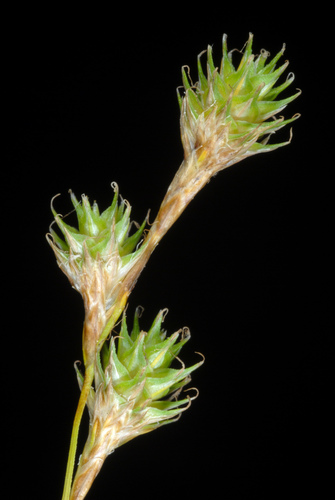
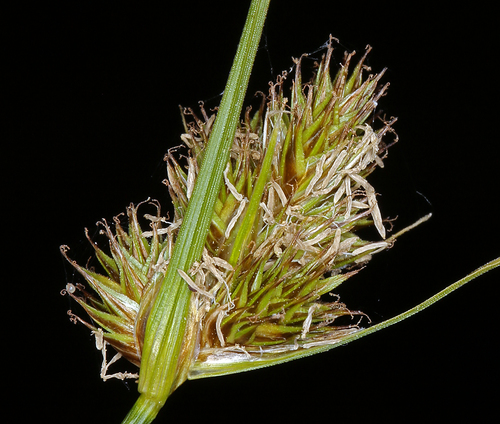
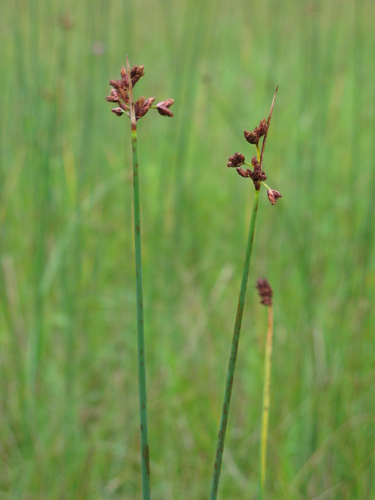
Schoenoplectus acutus, commonly called tule, produces a thick, rounded green stem that grows between 1 and 3 meters (3 to 10 feet) tall. It has long, grasslike leaves, and bears radially symmetrical, clustered, pale brownish flowers. This species is native to freshwater marshes across North America, and is particularly common in California wetlands. Historically, tules lined the shores of Tulare Lake, California, which was once the largest freshwater lake in the western United States before it was drained and lost to agricultural development in the early 20th century. Shoreline-growing tules serve an important ecological function: they buffer against wind and water forces, which enables other plant species to establish themselves and reduces shoreline erosion. Tules are sometimes removed from waterways via herbicide application, and when erosion occurs, tule rhizomes are replanted in targeted areas to address the issue. For human use, flour can be produced from older tule roots: the roots are peeled, cut, crushed, boiled, have fiber removed, and are dried to make flour. Tule seeds can also be ground and added to this root flour. Native American groups have used dyed and woven tules to create baskets, bowls, mats, hats, clothing, duck decoys, and even boats. Before the Salish people acquired horses for bison hunting, they lived in tents covered with sewn tule mats. At least two tribes, the Wanapum and the Pomo people, built tule houses as recently as the 1950s, and continue to construct them for special events. The Bay Miwok, Coast Miwok, and Ohlone peoples used tule to make canoes or balsas, which allowed them to travel across the San Francisco Bay and access marine and wetland resources. Northern groups of the Chumash people used tule to make canoes, rather than the sewn-plank tomol canoes typically used by other Chumash groups, and used these tule canoes to collect marine food resources. The Paiute people named a neighboring tribe Si-Te-Cah, which translates to "tule eaters" in their language. Young tule sprouts and shoots can be eaten raw, while rhizomes and unripe flower heads can be boiled and eaten as vegetables.