About Schizophyllum commune Fr.
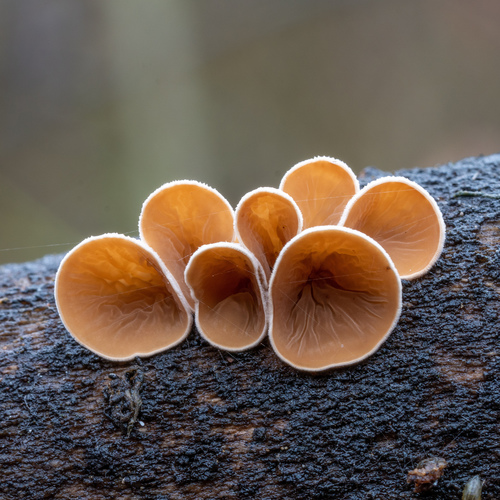
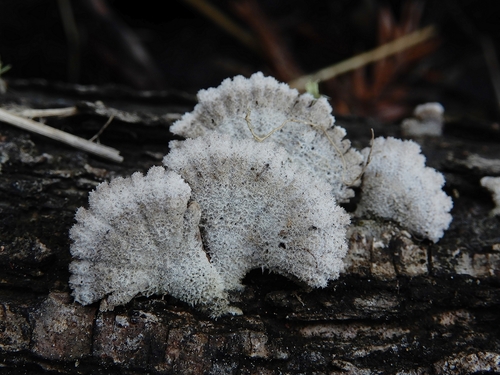
Schizophyllum commune is usually recognized as a single morphologically defined species with a global distribution. However, some research indicates it may instead be a species complex that includes multiple cryptic species, each with a narrower native distribution – a pattern common to many mushroom-forming Basidiomycota. The caps of this fungus measure 1–4 centimetres (3⁄8–1+5⁄8 in) across, and are covered in white or grayish hairs. Fruiting bodies grow in shelf-like clusters and do not have stalks. The gills, which produce basidiospores on their surface, split when the mushroom dries out, which gives the fungus its common name split gill. Mushrooms can stay dry for decades and then regenerate when exposed to moisture. The spore print of this species is white. This fungus is commonly found growing on rotting wood, and occurs across the world. In regions like North America, it can be found year-round. This mushroom is reported to be edible when young. Orson K. Miller Jr. and Hope H. Miller classified the species as nonpoisonous, and both they and David Arora consider it inedible due to its small size and tough texture. Some native people in Madagascar chew this fungus.