About Schizachyrium scoparium (Michx.) Nash
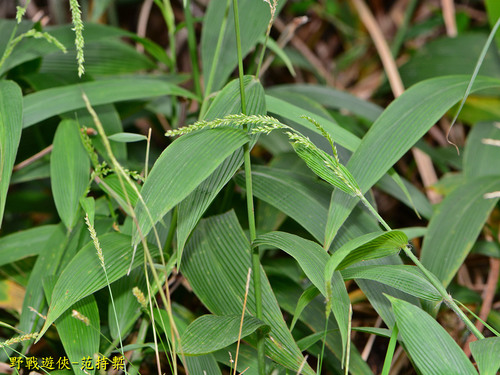
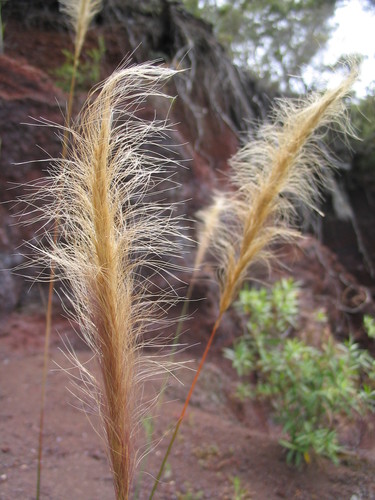
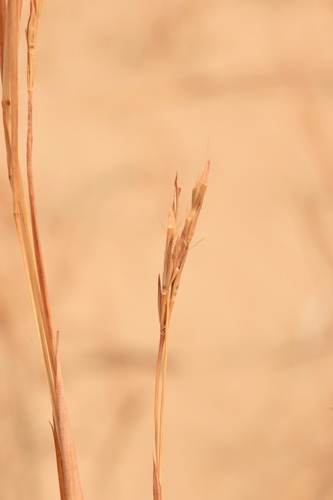
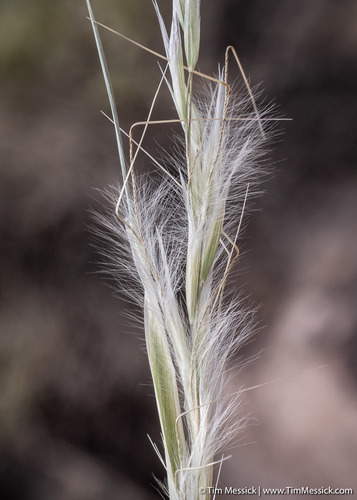
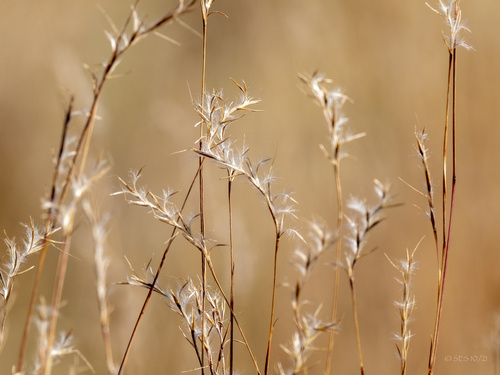
Little bluestem (Schizachyrium scoparium) grows into an upright, rounded mound of soft, bluish-green or grayish-green blades by May and June, reaching about 2 to 3 feet in height. In July, it produces flowering stalks that grow to 4 to 5 feet tall. In autumn, its foliage turns coppery or mostly orange, with subtle red or purple tints; it may develop a redder fall color when growing in sandy soils. Over winter, it fades to an orangish-bronze tone, turning more tan by early spring. Individual little bluestem plants produce multiple tillering stems. Tiller are arranged by age, with the youngest tillers growing at the center of the plant, pushing older tillers out to the periphery. Ecologically, little bluestem is drought tolerant, and acts as a larval host plant for the cobweb skipper, common wood nymph, crossline skipper, Dakota skipper, dusted skipper, Indian skipper, Leonard's skipper, Ottoe skipper, and swarthy skipper. For cultivation, it is recommended for USDA hardiness zones 3 through 9. It grows best in full sun and well-drained soils. Like many other perennials, it can be dug up and divided in spring for propagation or to reduce the size of an overgrown mature plant. Just like many other North American prairie grasses including big bluestem, Indian-grass, and switchgrass, stands of little bluestem in prairies or meadows can be burned in late winter or early spring before new growth emerges; these grasses burn quickly and cleanly.