About Schistocerca piceifrons (Walker, 1870)
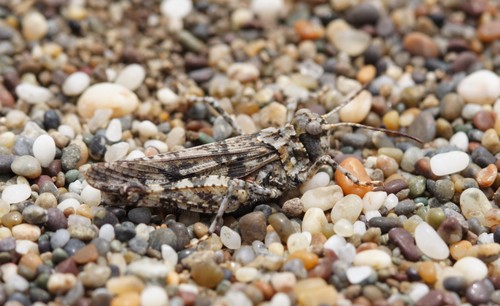
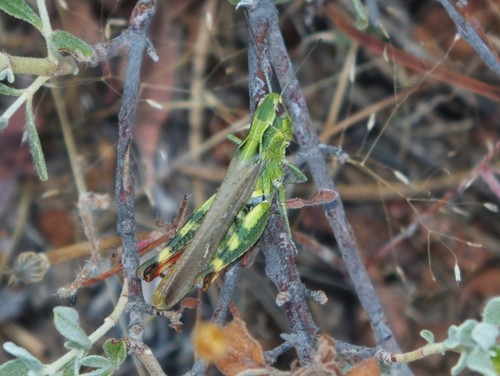
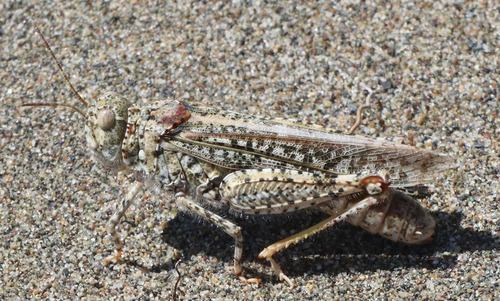
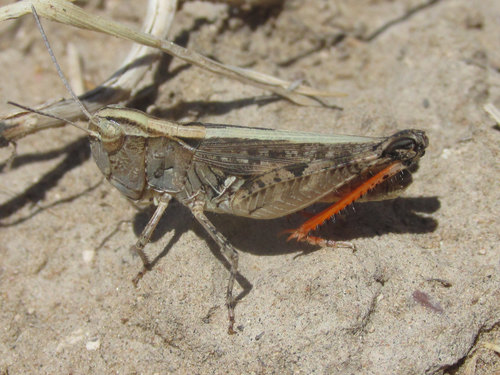
Schistocerca piceifrons (Walker, 1870) is a large locust belonging to the subfamily Cyrtacanthacridinae of the Acrididae family. It has two accepted subspecies: S. p. piceifrons, commonly called the Central American locust, and S. p. peruviana, commonly called the Peruvian locust. In taxonomy, S. piceifrons is closely related to Schistocerca americana, but it displays a greater degree of phase polymorphism, which is referred to as "density-dependent phenotypic plasticity" in technical literature. It is the primary swarming locust species found in tropical America. This species is polyphagous, meaning it feeds on a wide range of plant types. It shows a distinct feeding preference for rice, wheat, maize, palms, and citrus. When these preferred food plants are not available, it will also attack sunflower, lentil, potato, tobacco, and sorghum. The life cycle of S. p. piceifrons in Yucatan and Central America follows a consistent two-generation annual pattern. It survives the winter dry season in the adult stage. Copulation and oviposition take place in April, and a new generation of adults emerges in July. These adults mature in September and lay a second generation of eggs, which hatch in October. This second generation reaches the adult stage between late December and early January, and remains immature until the following April. The life cycle of S. p. peruviana is less well studied, due to the complicating influence of altitude on its development. While it is not confirmed, researchers believe it also has two generations per year, and survives the May to October dry season in the adult stage. The most severe recorded plague of S. p. piceifrons in Central America began in 1939 and continued until 1954. For S. p. peruviana, the area around Ayacucho has been permanently infested since 1940. From 1945 to 1948, a plague of this subspecies infested 100,000 square kilometres of northern Peru. A total of 12 locust plagues caused by this species have been recorded in Colombia between 1540 and 1917. Two large plagues, occurring in 1881–1886 and 1913–1918, saw swarms that likely originated in Colombia spread to reach Venezuela, Trinidad and Guyana. It is not possible to confirm the subspecies of these swarms with certainty.