About Schisandra glabra (Brickell) Rehder
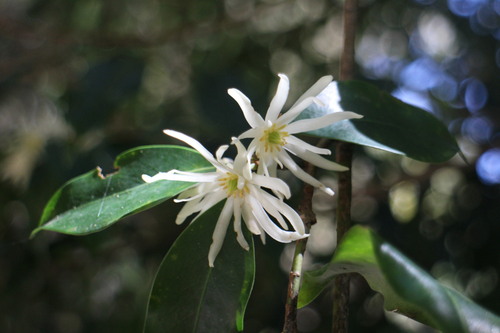
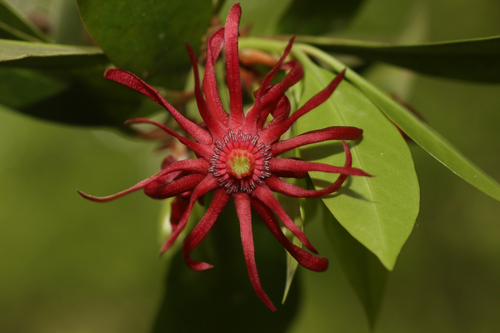
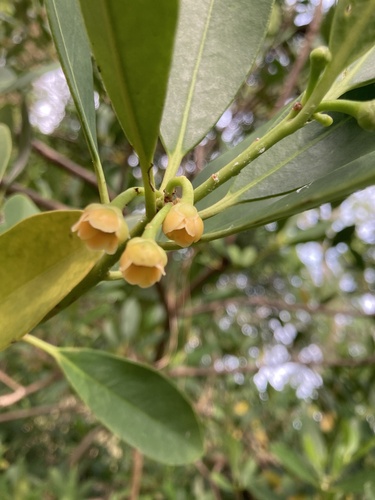
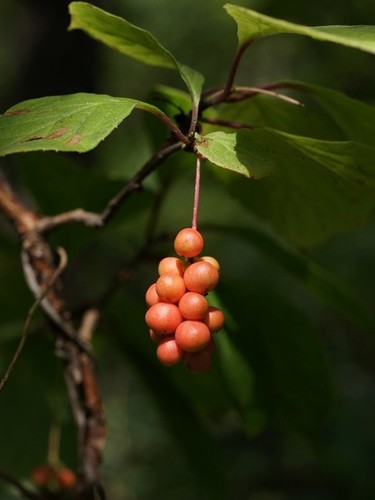
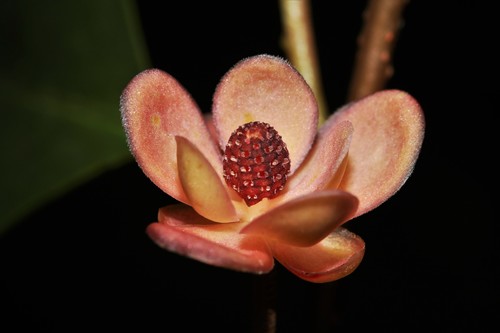
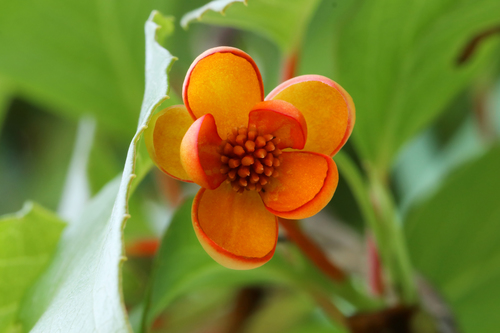
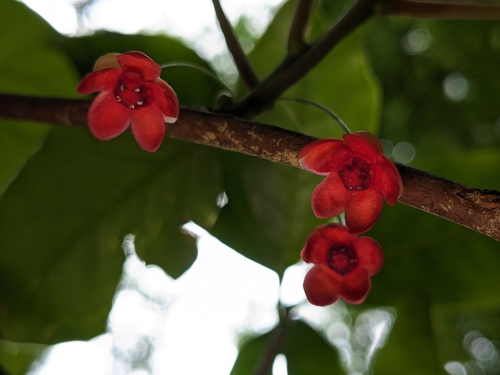
Schisandra glabra, commonly called bay star-vine, is the only American species in the genus Schisandra, which is predominantly native to Asia. It is native to the southeastern United States and northern Mexico. It grows in Louisiana, eastern Arkansas, southwestern Tennessee, Mississippi, Alabama, northwestern Florida, and Georgia, with isolated populations present in Kentucky, South Carolina, North Carolina, and Hidalgo. Although it has a wide range, it is classified as a vulnerable species. Very few of its populations are stable, because of competition from invasive species like Japanese honeysuckle, and habitat loss. Schisandra glabra is a trailing or twining woody vine that can sometimes climb to a height of 20 m (67 feet) or more. Its leaves range in shape from elliptic to cordate, or heart-shaped, and can grow up to 13 cm (5.2 inches) long. This species is monoecious, meaning it produces separate staminate (male, pollen-producing) and pistillate (female, seed-producing) flowers on the same individual plant. Its sepals are whitish, and its petals are pink or red. Its berries are red, shaped spherical to ellipsoid, and grow up to 15 mm (0.6 inches) long. It grows in wooded bluffs, hillsides, and ravines at elevations below 500 m (1650 feet). Some sources spell the genus name as Schizandra, and others use the name Stellandria, which is now rejected. Schisandra is the currently accepted spelling.