About Schisandra chinensis (Turcz.) Baill.
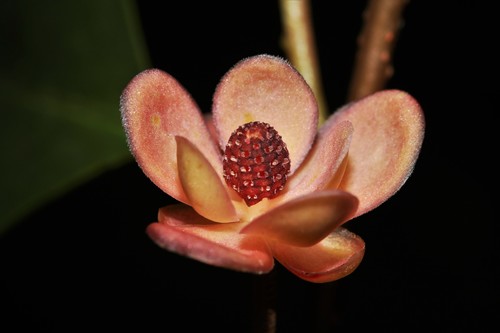
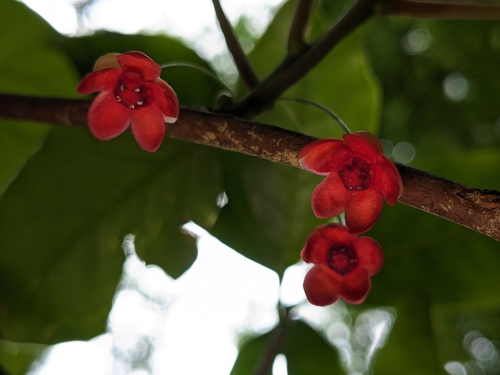
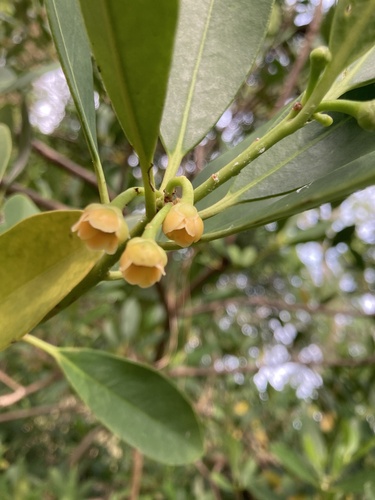
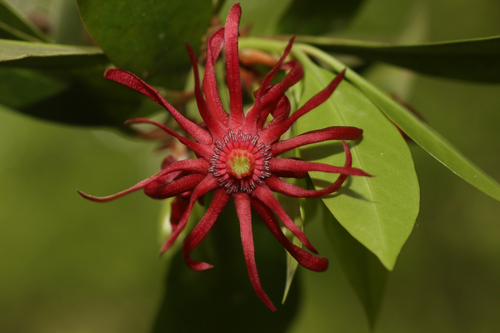
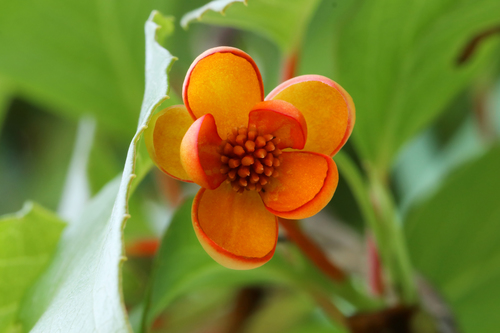
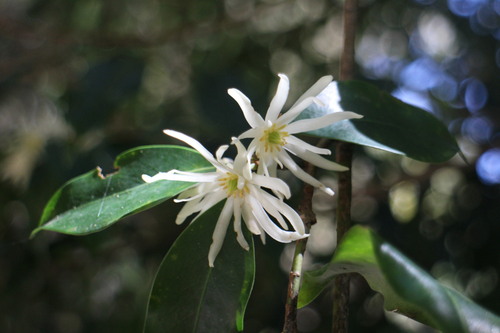
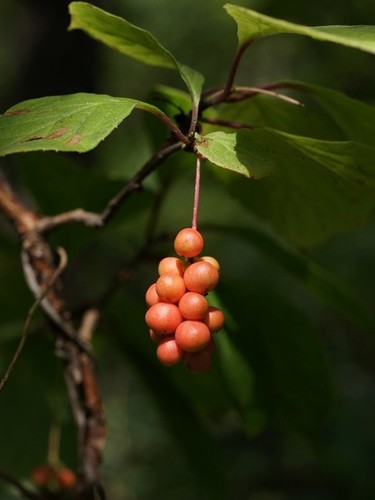
Schisandra chinensis (Turcz.) Baill. is a vine plant native to forests of Northern China, the Russian Far East, Korea, and Japan. It is hardy in USDA Zones 4–8. Its fruit, which bears the common names schisandra, magnolia berry, or five-flavor fruit, grows as red berries in dense clusters around 10 centimetres (3.9 in) long. While Schisandra chinensis is native to northern and northeastern China (Manchuria), major commercial cultivation is located in Korea and China. Schisandra production has declined continuously due to increasing deforestation across Asia. This species is naturally adapted to climbing trees to access better light, so it can be integrated into agroforestry farming systems. For large-scale production, Schisandra plants are grown similarly to grape vines, tied to vertical stakes, and are generally considered to have cultivation requirements similar to grapes. The wild-type species is dioecious, meaning female flowers require pollen from a separate male plant for fertilization. One hybrid selection, named 'Eastern Prince', is monoecious (self-fertile), though seedlings sold under this name are typically single-sex plants. Another monoecious cultivar, "Hong-zhen-zhu", is widely planted in China. Along with "Bai Wu-wei-zi", "Chang-bai-hong", and "Da-chuan-hong", "Hong-zhen-zhu" is one of the main Chinese cultivars maintained for germplasm resources. Schisandra can be propagated by seed or layering in spring or autumn, or via semi-ripe cuttings in summer. In China, Schisandra seeds are planted in early May, sprout after 15 to 20 days, and continue growing until late September. Seeds are sown at a density of 30 g per square meter, then covered with fine soil and a protective layer of straw, pine needles, or a grass mat. Seeds may also be started in pots and later transplanted to the field. Soil must be kept consistently moist to allow seeds to absorb sufficient water. Plants will produce their first flowers three years after sowing. Flowering normally occurs from mid to late May through early June. Since flowers are easily damaged by frost, Schisandra grows best in regions with low risk of frost in May and June. Fruits develop from June to July and ripen between August and September. Pruning Schisandra vines in spring, summer, or fall is required to improve ventilation and light penetration, support healthy endogenous nutrition status, increase the number of female flowers, and boost overall fruit yield. Sprouting tillers that compete for nutrients with the main vine should also be removed. Schisandra berries are used in traditional medicine. Their confirmed chemical constituents include the lignans schisandrin, deoxyschizandrin, gomisins, and pregomisin. When crushed, the leaves release a lemony scent and can be eaten as a vegetable. In Korea, the berries are known as omija (Hangul: 오미자) and are used to make a sweet cordial drink called omija-cha, or omija tea, a type of Korean tea. The Ainu people, an Indigenous group native to Japan, traditionally used this plant (which they call repnihat) as a remedy for colds and sea-sickness.