About Schinus terebinthifolia Raddi
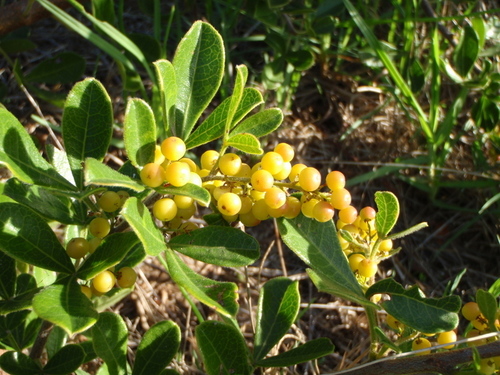
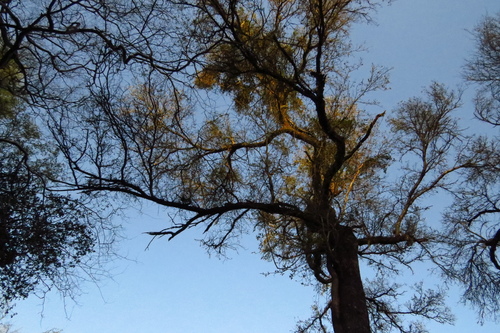
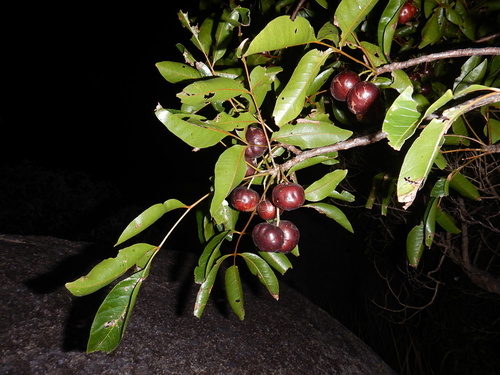
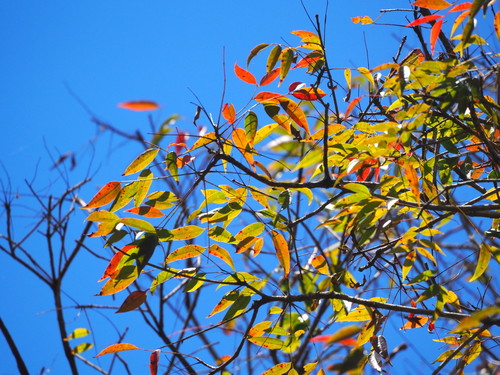
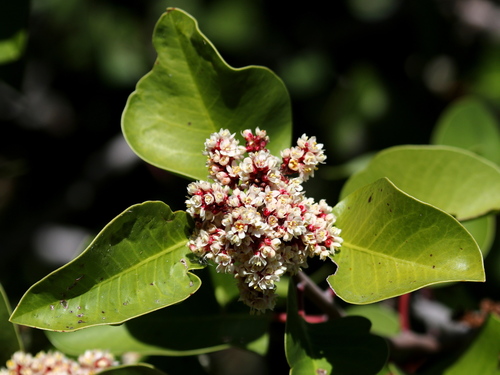
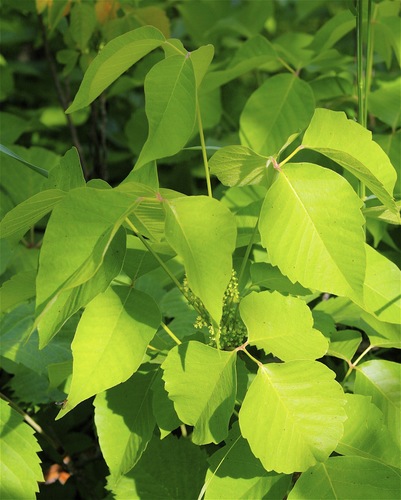
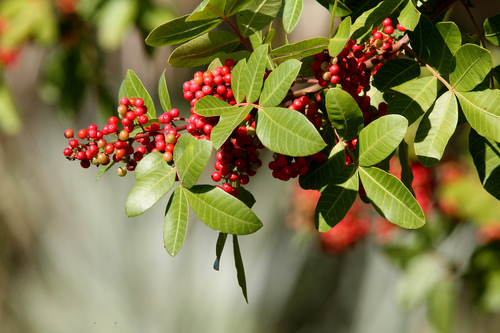
Schinus terebinthifolia Raddi, commonly called Brazilian peppertree, is a sprawling shrub or small tree with a shallow root system, growing 7–10 m (23–33 ft) tall. A single individual can bear branches that are upright, reclining, or nearly vine-like. Its flexible morphology lets it thrive in a wide range of ecosystems, from dunes to swamps, where it grows as a semiaquatic plant. Its leaves are alternate, 10–22 cm (3.9–8.7 in) long, and pinnately compound, with (3–) 5–15 leaflets. Leaflets are roughly oval, ranging from lanceolate to elliptical, 3–6 cm (1.2–2.4 in) long and 2–3.5 cm (0.79–1.38 in) wide, with finely toothed margins, an acute to rounded apex, and yellowish veins. The leaf rachis between leaflets is usually, but not always, slightly winged. This species is dioecious, and small white flowers grow in large profuse axillary clusters. The fruit is a 4–5 mm (0.16–0.20 in) diameter drupe, borne in dense clusters that can hold hundreds of fruits. Two varieties are recognized: S. terebinthifolia var. acutifolia has leaves up to 22 cm long, 7–15 leaflets, and pink fruit, while S. terebinthifolia var. terebinthifolia has leaves up to 17 cm long, 5–13 leaflets, and red fruit. Schinus terebinthifolia is native to Argentina, Brazil, and Paraguay. It has been introduced to California, Texas, Hawaii, Arizona, Nevada, Louisiana, and Florida in the United States. Like many other species in the family Anacardiaceae, Brazilian peppertree produces an aromatic sap that can cause skin reactions similar to poison ivy burns in sensitive people; this reaction is usually weaker than that caused by touch of the closely related Lithraea molleoides, called "wild" aroeira (aroeira brava) in Brazil. In contrast, S. terebinthifolia is commonly known as "tame" aroeira (aroeira mansa). A triterpene research paper notes that ingested fruits of this species have a "paralyzing effect" on birds. Other sources, including the Bureau of Aquatic Plant Management, have also documented narcotic and toxic effects on birds and other wildlife. The AMA Handbook of Poisonous and Injurious Plants states that triterpenes found in the fruits can cause throat irritation, gastroenteritis, diarrhea, and vomiting. Like most other members of Anacardiaceae, Brazilian peppertree contains active alkenyl phenols such as urushiol and cardol, which can trigger contact dermatitis and inflammation in sensitive people. Contact with sap from a cut or bruised plant can cause rashes, lesions, oozing sores, severe itching, welts, reddening and swelling, especially swelling of the eyes. Burning S. terebinthifolia releases many airborne irritants that affect the skin, eyes, and lungs. It is described as having a "mace-like" effect on people nearby, and burning this plant is strongly discouraged. Brazilian peppertree is widely cultivated as an ornamental plant in frost-free regions of South America, valued for its foliage and fruit. In its native range, it is a melliferous flower and is the main food source for the stingless bee Tetragonisca angustula, an important honey producer in Central and South America. Although it is not a true pepper (genus Piper), its dried drupes are often sold as pink peppercorns, along with fruits from the related species Schinus molle (Peruvian peppertree). Its seeds can be used as a spice, adding a pepper-like flavor to food. These dried seeds are usually sold dry, when they have a bright pink color, and are less often sold pickled in brine, where they turn a dull, nearly green hue. Originally planted as an ornamental outside its native range, Brazilian peppertree has become widespread and is classified as an invasive species in many subtropical regions with moderate to high rainfall. This includes all or parts of Australia, the Bahamas, Bermuda, southern China, Cuba, Fiji, French Polynesia, Guam, Malta, the Marshall Islands, Mauritius, New Caledonia, New Zealand, Norfolk Island, Puerto Rico, Réunion, South Africa, and the United States including Hawaii. It is also grown in drier areas such as Israel and Southern California, but has generally not become invasive in these locations. In California, the California Invasive Plant Council lists it as invasive in coastal regions. Brazilian peppertree is difficult to control because it produces basal shoots if its trunk is cut, and it produces large numbers of seeds dispersed by birds and ants. This same hardiness makes the species very useful for reforestation in its native environment, but also allows it to become invasive outside its natural range.