About Schefflera digitata J.R.Forst. & G.Forst.
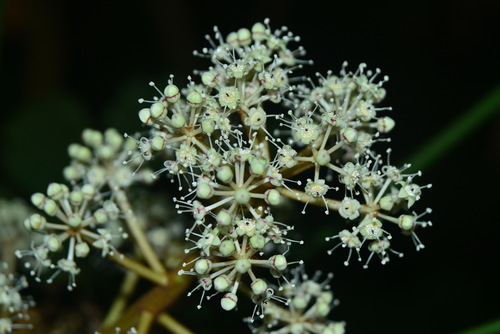
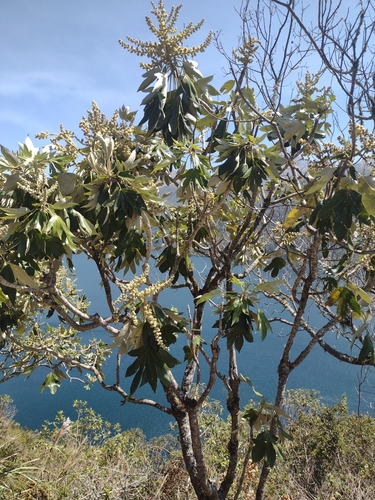
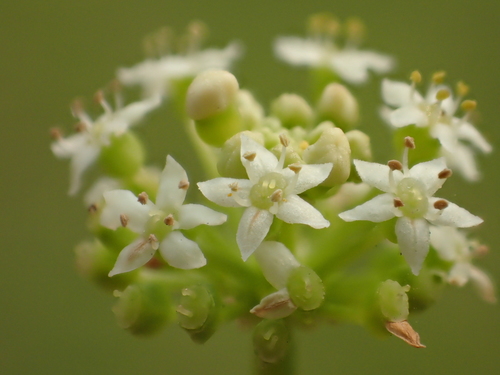
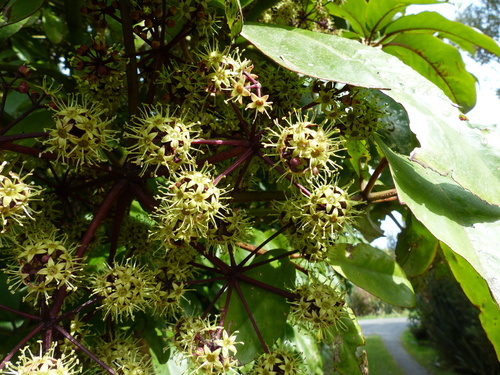
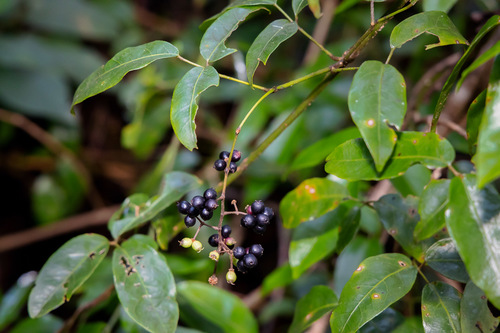
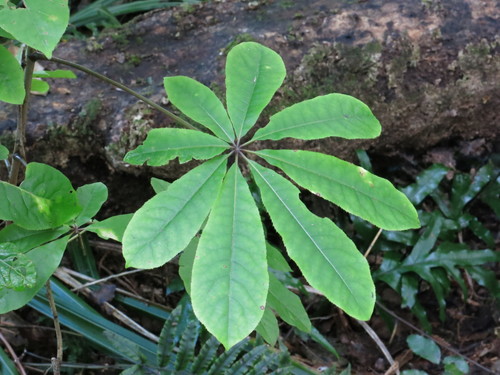
Schefflera digitata, commonly known as patē, is an evergreen, dioecious tree species in the Araliaceae family. It grows up to 8–9 metres (26–30 feet) tall, though most mature individuals reach 4–6 metres (13–20 feet). Its trunk is branched, with greenish, ridged bark marked by scattered bumps. The tree has round, reddish petioles that can grow up to 25 cm (9.8 in) long, and similarly reddish petiolules that reach up to 2 cm (0.79 in) long. Its leaves are palmately compound, most often with seven leaflets referred to as 'fingers'. Mature leaves are green on the upper surface and paler underneath, while young leaves are shiny with a purplish underside. The terminal leaflets are the largest, growing up to 20 cm (7.9 in) long, with smaller leaflets arranged along the sides. Leaflets are wider near the tip, ending in either a pointed or blunt tip. Mature plants have sharply toothed leaf margins, while young plants have irregularly lobed margins. This species is often confused with five-finger (Pseudopanax arboreus) due to similar leaf structure, but P. arboreus has smaller, thicker leaflets with larger teeth. Its flower clusters (inflorescences) grow on hanging panicles that have many spreading branches up to 35 cm (14 in) long. Bracts and bracteoles are small, and each umbel holds up to ten flowers. Peduncles are 10 mm (0.39 in) long, while pedicels are shorter. Flowers are small, around 7 mm (0.28 in) in diameter, and greenish-cream in colour. Petals are typically 5 mm (0.20 in) in diameter, and each flower has five filamentous stamens. Ripe fruits are dark purple or violet, somewhat globe-shaped, and approximately 3.5 mm (0.14 in) in diameter. Seeds measure 2–2.5 mm (0.079–0.098 in) long. This species is endemic to New Zealand, where it is widespread across the North Island, South Island, and Stewart Island. Its conservation status under the New Zealand Threat Classification System was assessed as 'Not Threatened' in 2023. Schefflera digitata typically grows in lowland to montane forests, from sea level up to a maximum elevation of 1,200 m (3,900 ft). It is a shade-tolerant species that prefers well-drained, fertile soil, and most commonly grows in shaded areas along streams. It can also grow as an epiphyte on other plants, or on wet rocky outcrops. Seeds of Schefflera digitata are dispersed by frugivorous animals, including a number of native New Zealand birds: bellbirds (Anthornis melanura), kererū (Hemiphaga novaeseelandiae), kōkako (Callaeas), tūī (Prosthemadera novaeseelandiae), stitchbirds (Notiomystis cincta), and silvereyes (Zosterops lateralis). Pollination is carried out by insects. The caterpillars of the patē owlet (Meterana merope) feed on this tree, which also hosts the New Zealand vegetable bug (Glaucias amyoti) and lemon tree borer (Oemona hirta). It is also a primary host for the root parasite Dactylanthus taylorii. For indigenous Māori, the timber of Schefflera digitata was used to start fire by friction, and there are no recorded uses of this timber by European settlers. Māori used the juice from the fruits as a dye, and Europeans used the same juice as a substitute for ink. This species has several Māori names: patē, patatē, kōtētē, and kohi. It also held medicinal importance for Māori: the tree's leaves contain falcarindiol, a compound that may be beneficial for treating skin fungus, the tree's sap was used to cure a range of skin diseases, and leaves were used to wrap newborn Māori babies to keep them warm until they started perspiring.