About Sceptridium dissectum (Spreng.) Lyon
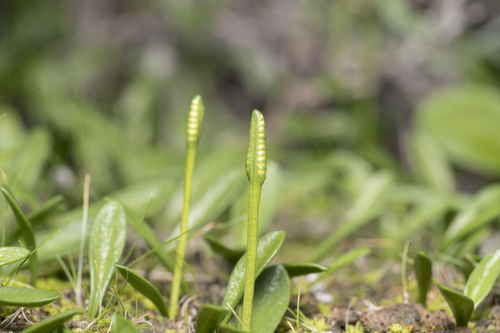
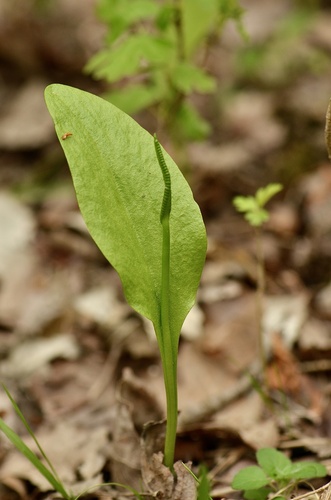
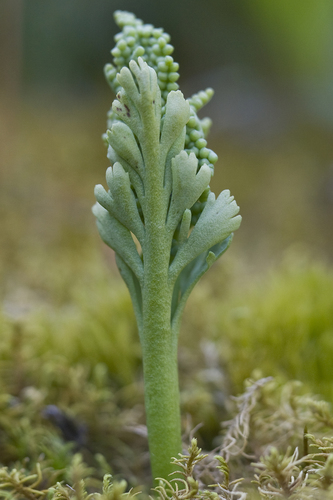
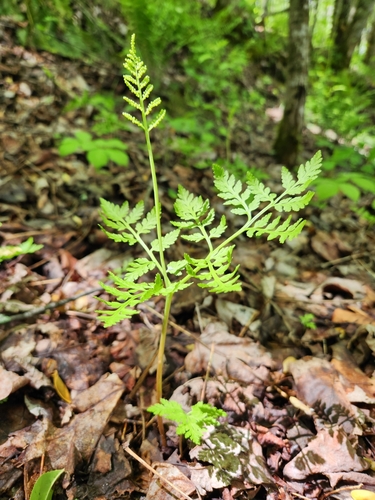
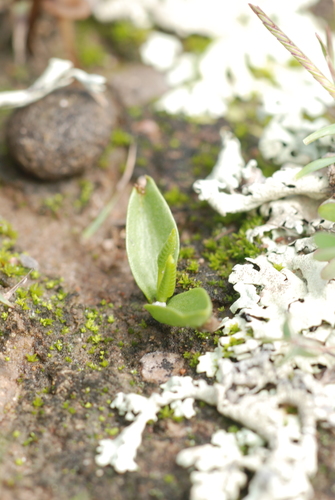
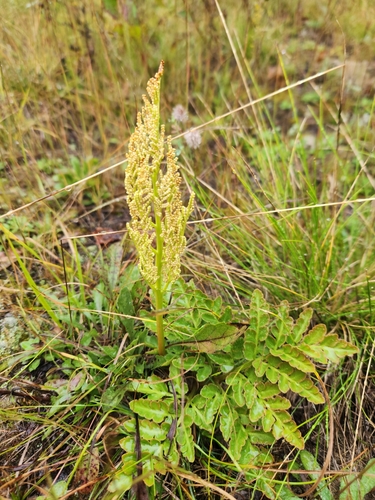
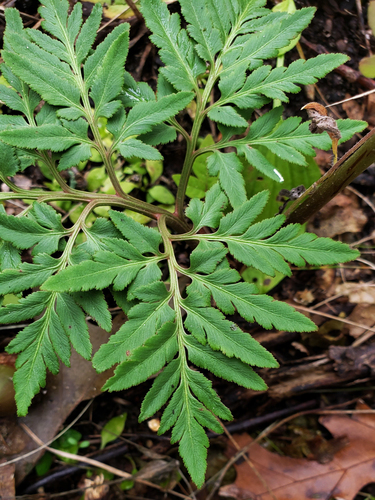
Sceptridium dissectum (Spreng.) Lyon, commonly called cutleaf grapefern, is a non-flowering perennial fern. It produces two fronds that appear separate at first glance: a fertile frond that superficially resembles a stalk of grapes, and a leafy sterile frond. The fertile stalk connects to the sterile leaf stalk near the plant’s rhizome. The grape-like sporangia on the fertile frond range in color from green to yellow, which is why ferns of this type are called grape ferns. The sterile frond is mostly bipinnate, with leaves that have lacy edges. Both the full green petiole (stalk) and the sterile frond are glabrous. In spring and early summer, the leaves are light green. The leaves become deciduous in late summer, then typically turn bronze in late fall, and can retain a greenish bronze color through winter. This fern grows to a height of 6 to 15 inches. It is distributed across the eastern United States, ranging from Minnesota in the north, south to northeastern Texas, and extending across the entire US east coast. It most commonly grows in habitats including deciduous woodlands, sandy grasslands, and the edges of swamps or ravines, and favors deciduous woodland habitats that receive winter sun. Sceptridium dissectum is a homosporous fern, meaning it produces only one type of spore. It typically grows in partial sunlight to medium shade, in loam or sandy loam soil under moist to dry-mesic conditions. Spores require 3 to 4 weeks of darkness to germinate, and a longer period in darkness leads to a higher percentage of germination. Both spore germination and early gametophyte growth are directly affected by the oxidation level of the available nitrogen source. This fern develops very slowly from spores, and is fully dependent on mycorrhizal fungi for survival, even after its sterile and fertile leaves have emerged. Unlike some other members of the Ophioglossaceae family, Sceptridium dissectum does not always produce spores. It grows only one new leaf per year. It is rumored to have a lifespan of 10 to 45 years. It is very difficult to cultivate, so it is rarely used in horticulture. Wild turkey, ruffed grouse, and white-tailed deer feed on its leaves.