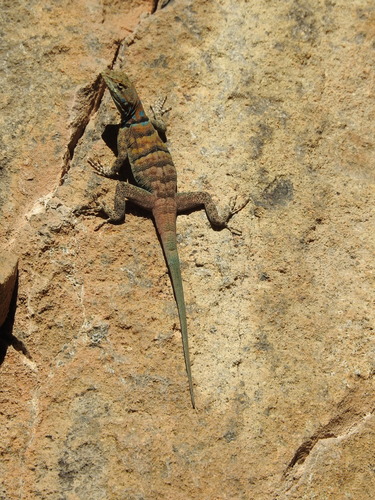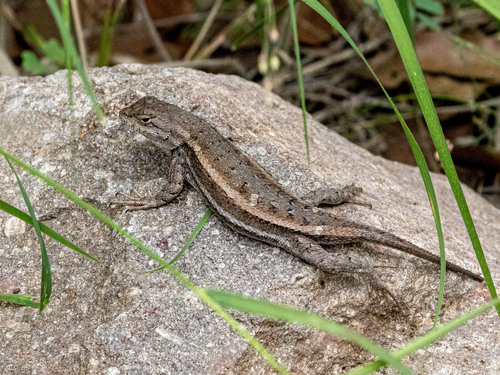
About Sceloporus virgatus Smith, 1938
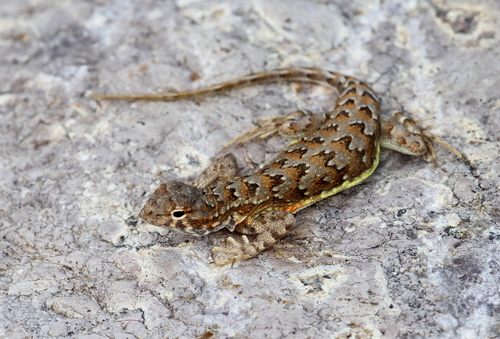
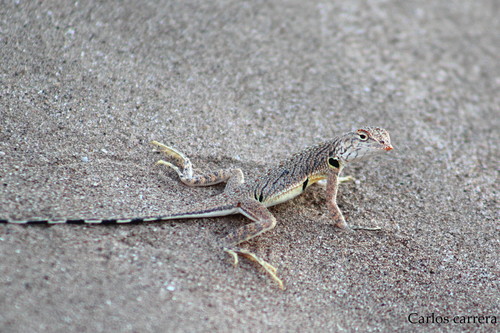
Sceloporus virgatus, commonly known as the striped plateau lizard, is a species of lizard in the genus Sceloporus. Members of this genus are known for their diverse signaling modalities, including visual motion signals, chemical signals that help identify territories, and color signals that indicate aggression. The striped plateau lizard is native to the northern Sierra Madre Occidental, and it is a relatively small species, reaching less than 72 mm (2.8 in) in length. The striped plateau lizard is a primarily terrestrial, montane species that lives in temperate forests and moist savannas. It is most abundant in mixed pine and oak woods, or in wooded canyons and ravines. Its range extends upward into pine forests, and downward into oak woodlands that grow along streams. The species favors hard, rough ground surfaces such as rocks, leaf litter, logs, and scattered grasses, and can also be found near sandy, rocky intermittent streams. It is widely distributed in the Southwestern United States, ranging from extreme southeastern Arizona to extreme southwestern New Mexico, including the Chiricahua, Peloncillo, Guadalupe, and Animas mountains. Its range extends south into the Sierra Madre Occidental and southern Chihuahua in Mexico. As a montane species, the striped plateau lizard’s populations are geographically isolated by semi-desert grassland and desert-scrub valleys that are now inhospitable to the species. Over 10,000 years ago, desert-scrub valleys were much cooler, and woodlands extended down into the valleys, creating a continuous rather than fragmented habitat for S. virgatus. Climate and habitat change have left the species relatively isolated for a very long time. The striped plateau lizard reproduces sexually and is oviparous, meaning it lays eggs that hatch after exiting the mother’s body. Brood size measures 0.291, and the species produces roughly one litter per year. When females reach maturity at around 50 mm (2.0 in) in body length, they typically lay clutches of between three and 18 eggs. Egg laying takes place at the start of the summer rainy season, which runs from late June to late July. Clutch size is associated with the previous year’s precipitation and temperature. Hatchlings emerge in late August and September, and measure around 21 to 22 mm (0.83 to 0.87 in) in body length. The current total population of S. virgatus is stable at around 100,000 individuals, but the population is severely fragmented, and the number of mature individuals continues to decline. This shift can lead to an overabundance of younger striped plateau lizards in the population, which may slow future population growth and harm the species’ long-term persistence.