About Sceloporus variabilis Wiegmann, 1834
Sceloporus variabilis is one of the smaller species in the genus Sceloporus. Adult individuals reach a maximum snout-to-vent length (SVL) of 54 mm (2.1 in). When the tail is unbroken, the maximum total length of the species is 140 mm (5.5 in).
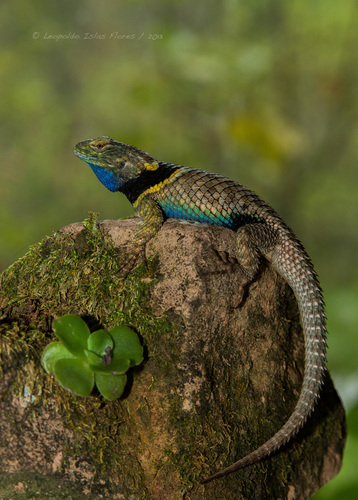
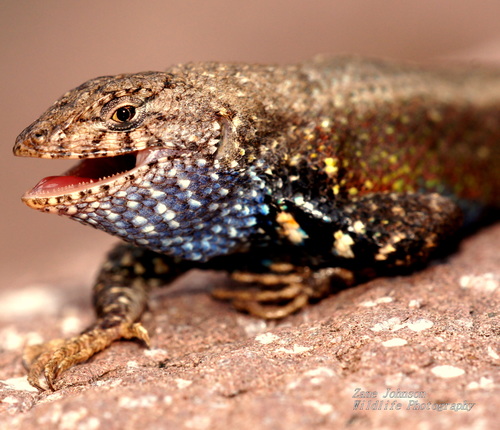
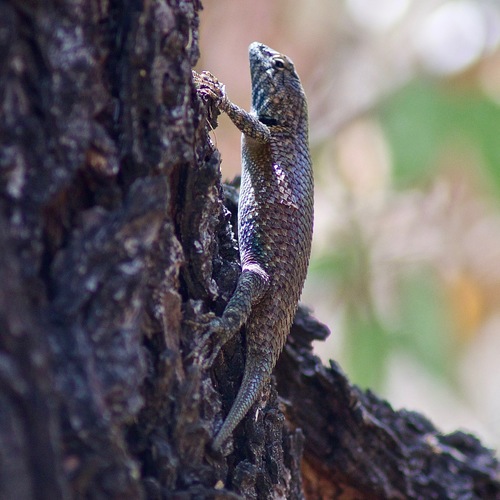
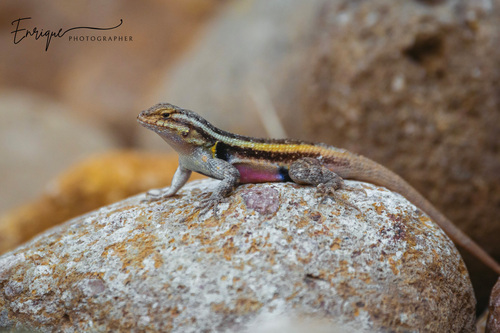
On its dorsal side, the lizard is tan or olive, marked with a double series of dark brown spots. Two yellowish dorsolateral stripes run along the lizard's back, one on each side. Males are darker along the side below the dorsolateral stripe. On the ventral side, the lizard is dirty white or yellowish. Males have a large pink blotch on each side of the belly, bordered by dark blue, and also have a black marking in the axilla.
The supraocular scales of Sceloporus variabilis are small, and are bordered medially by a row of small scales that keep them from contacting the median head shields. The dorsal scales are keeled, pointed, and spiny. There are 58 to 69 dorsal scales from the interparietal shield to the base of the tail. A postfemoral pocket is present, and males have 10 to 14 femoral pores.
The geographic range of Sceloporus variabilis extends from southern Texas in the United States to northern Costa Rica in Central America, where it is most often found in more arid regions. It occurs in a variety of habitats, including ocean beaches, grassland, shrubland, and forest, at elevations ranging from sea level to 2,500 m (8,200 ft). Sceloporus variabilis reproduces by laying eggs (it is oviparous).