About Scarus coeruleus (Edwards, 1771)
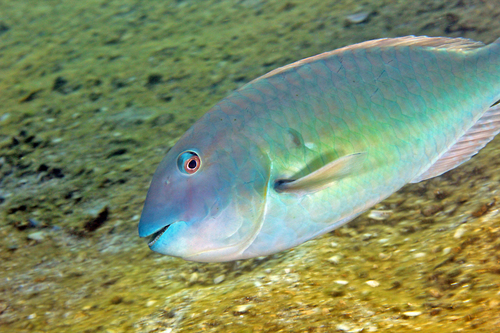
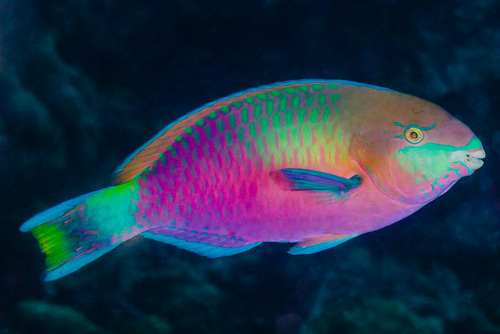
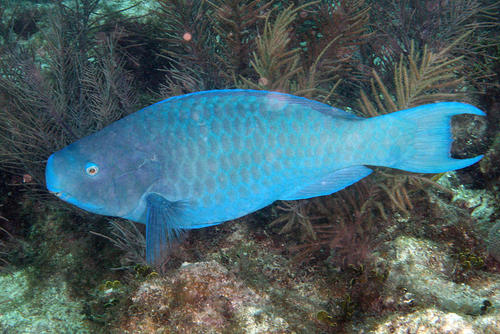
This species, known as the blue parrotfish with the scientific name Scarus coeruleus (Edwards, 1771), has a uniform blue body, paired with a yellow spot on the head that fades as the fish ages. No other fish species has this uniform blue color in adult individuals. On average, blue parrotfish grow between 30 to 75 centimetres (12 to 30 inches) long, and reach a maximum length of 1.2 metres (3 feet 11 inches). They typically weigh about 9.1 kilograms (20 lb). Like other parrotfish, blue parrotfish develop a large beak-like structure, which they use to scrape algae and small organisms off rocks. They also have pharyngeal teeth that grind ingested rocks into sand. Blue parrotfish are found on coral reefs at depths of 2–25 m (9.8–82.0 ft) in the western Atlantic Ocean. Their range stretches from Maryland in the United States, through Bermuda, the Bahamas, and the West Indies, and extends south to Brazil. They are absent from the northern Gulf of Mexico. Juvenile blue parrotfish live in beds of turtle grass, Thalassia testudinum. Blue parrotfish depend heavily on coral reef systems to provide their various food sources. Coral reef ecosystems are currently threatened, which has put blue parrotfish and many other reef species at risk of extinction due to lack of available food. Blue parrotfish reproduction follows two distinct patterns. In summer, blue parrotfish gather in spawning groups. After mating, females release their eggs into the water column, and the eggs then sink to the seabed. Eggs hatch approximately twenty-five hours after being released. Two special reproductive traits are unique to female blue parrotfish. There is an annual all-female group of immature individuals, and females in sexually mixed groups spawn year-round with no seasonal spawning pattern.