About Scardinius erythrophthalmus (Linnaeus, 1758)
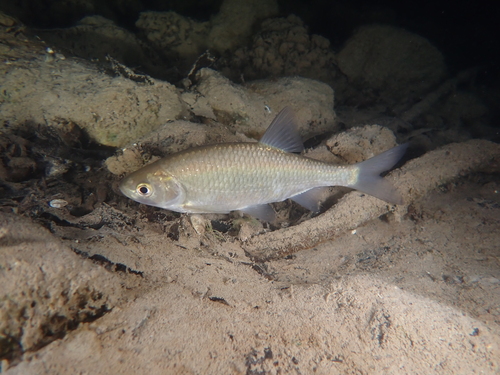
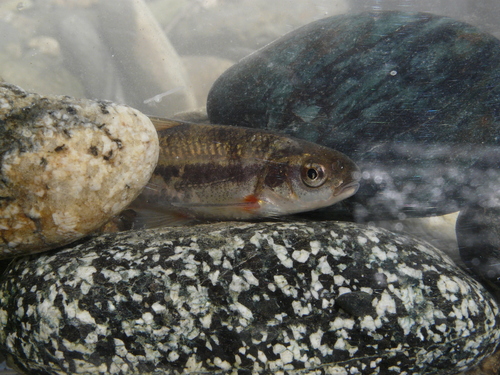
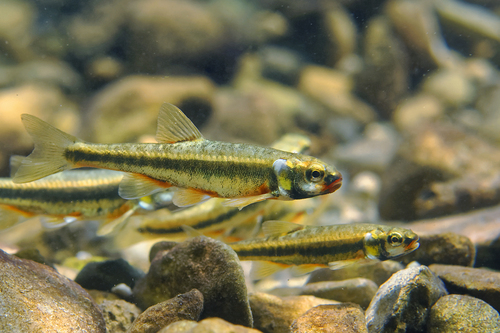
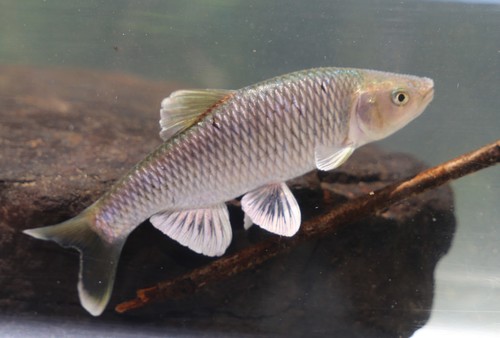
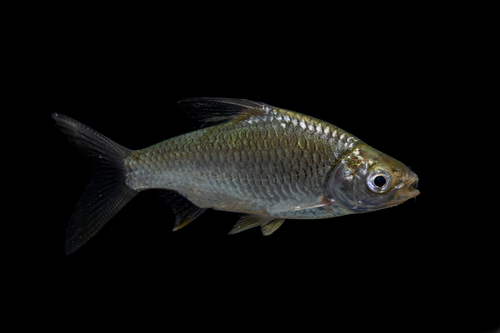
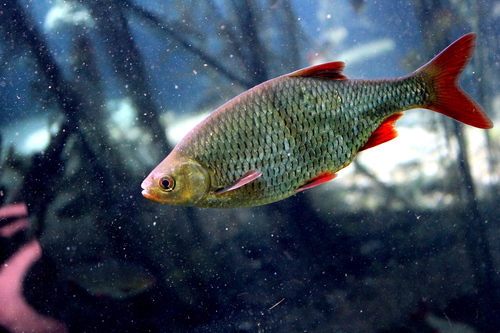
For identification, Scardinius erythrophthalmus (common rudd) is morphologically very similar to roach (Rutilus rutilus), and the two species are easily confused. Common rudd can be distinguished from roach by several key features. Common rudd have yellow eye color, while roach have a large more or less conspicuous red spot above the pupil. Common rudd have an upturned mouth, a trait that is visible even in young fish, that lets them feed easily at the top of the water. The dorsal fin of common rudd is placed further toward the rear of the body, and this difference is visible even in very young fish. Normally there are only one or two scales between the tip of the pelvic fins and the anal fins in common rudd, while roach have five scales in this area. Common rudd have yellowish-green skin, while roach have bluish flanks. Common rudd also have 8–9 soft rays in the dorsal fin, compared to 10–12 soft rays in roach. Common rudd can also be confused with ide, but ide have smaller scales. A golden-bodied variety of common rudd called golden rudd is popular among pond-keepers. Common rudd can grow to around 45–50 cm, with an average adult size of about 25 cm. The dorsal fin and pectoral fins are greyish with a reddish tint, and all other fins are bright red; this fin coloration is the origin of the 17th century common name 'rudd'.
In terms of ecology, common rudd prefer clear waters that are rich in plants. They favor non-acidic, mesotrophic waters, and typically live in shallow weedy areas of lakes and river backwaters. By contrast, roach are sometimes found alongside perch in nutrient-poor waters. Common rudd can tolerate a wide range of temperatures and water conditions, including eutrophic or polluted waters. When water temperature exceeds 18 °C, common rudd feed on aquatic vegetation. They hunt for living prey in the upper levels of the water. Mature females lay up to 200,000 eggs on submerged vegetation. Young common rudd eat zooplankton, aquatic insects, and occasionally other small fish. Mature common rudd, which reach around 18 inches in length and weigh about 3 pounds, eat mostly aquatic vegetation. A common rudd can consume up to 40% of its body weight in vegetation per day, and up to 80% of this consumed vegetation is discharged as waste, which releases nutrients into the water column. In laboratory settings, common rudd readily hybridize with the North American golden shiner (Notemigonus crysoleucas). Common rudd come in both silver and gold color forms, and are sometimes sold as ornamental pond fish. The maximum reported lifespan of common rudd is 17 years, and sexual maturity is reached at 2–3 years of age.