About Scaphiopus couchii Baird, 1854
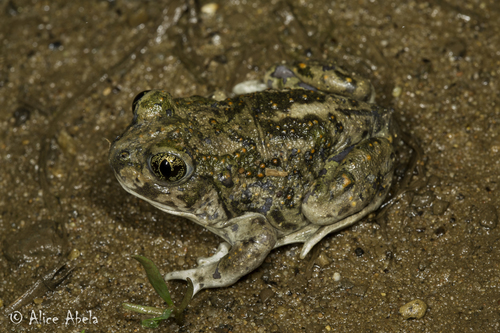
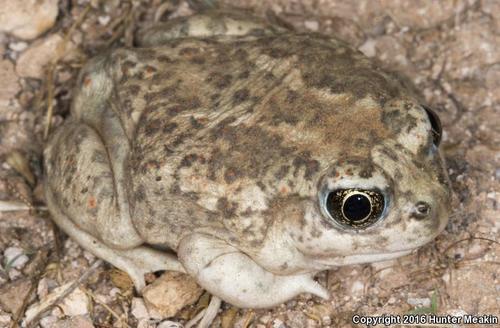
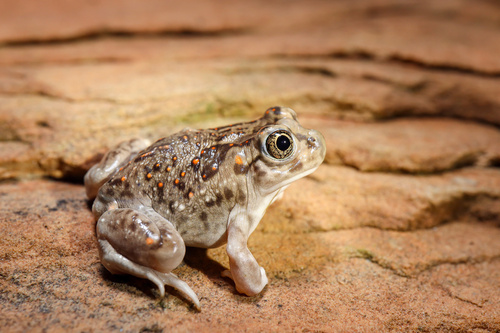
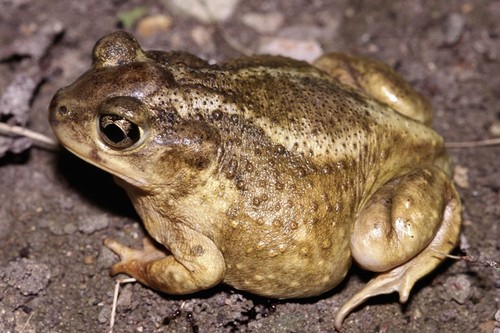
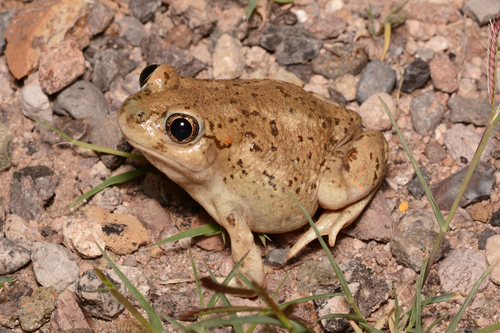
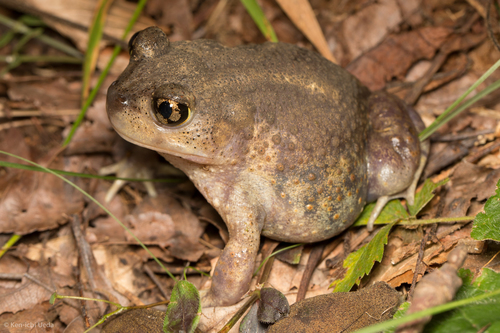
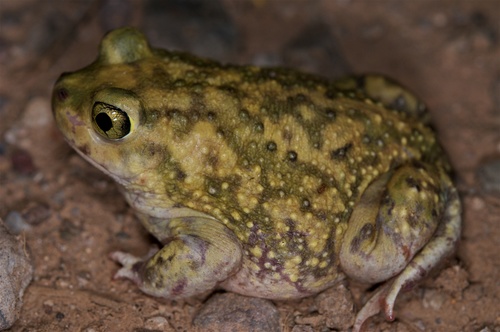
Description: Unlike other toads that have horizontal pupils, spadefoot toads have vertical pupils. A hard, dark "spade" structure sits on the underside of the hind foot, and this feature gives spadefoot toads their common name. Spadefoots can grow up to 3.5 inches in length. They use these "spades" to burrow into the ground, which helps them prevent water loss and hide from predators. Two spadefoot species live in the Sonoran Desert of Arizona and California: Couch's spadefoot toad (Scaphiopus couchii) has a sickle-shaped "spade", while the western spadefoot toad (Spea hammondii) has a rounded "spade". Spadefoots are not true toads, so they are properly referred to simply as spadefoots. Distribution: Couch's spadefoot is native to the southwestern United States southwest of southeastern Colorado and central Oklahoma, northern Mexico, and the Baja peninsula. It can be found throughout the entire Sonoran Desert, which includes portions of southern Arizona and California. Mating and reproduction: Water is a required environment for fertilizing spadefoot eggs. After eggs hatch, water also provides habitat for tadpoles to mature into adult spadefoots. Because water is so critical to their reproduction, spadefoots are active during the Northern Hemisphere wet season (spring and summer) and stay underground during the dry season of fall and winter. When a summer thunderstorm occurs, males emerge from underground to search for rainwater pools. Once they locate water, males produce mating calls to attract females. New research shows females are generally more attracted to bright-colored males than dark-colored males. This preference adds a new factor to how females assess a male's size and overall condition. Since rainwater pools are often short-lived, mating takes place on the first night after rainfall begins. During reproduction, the male mounts the female and releases sperm to fertilize the eggs, which are deposited into the water as a floating mass. The fertilized eggs hatch into tadpoles, which mature very quickly into adults. Tadpoles must reach the adult stage before their pool dries up, so they can mature in as little as 9 days after being laid. Western spadefoot toad tadpoles take longer to mature, needing at least three weeks. The small rainwater pools are warmed by the sun, which speeds up tadpole growth. Spadefoot tadpoles eat a wide range of foods: they eat small insects near the pool, scrape algae off rocks, filter microorganisms from water as it passes over their gills. They gather in wriggling groups, stir up bottom muck, and filter out organic nutrients. Unlike most tadpoles, which feed only on plants or filter food from water, spadefoot tadpoles are omnivores. They also consume dead insects, other tadpoles, and fairy shrimp.