About Scapanus orarius True, 1896
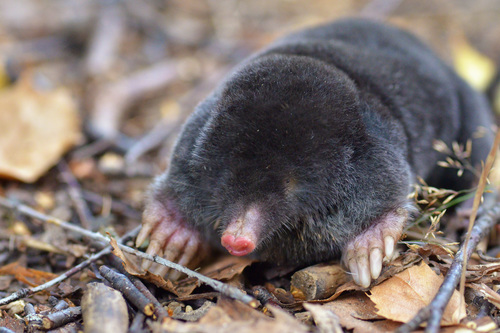
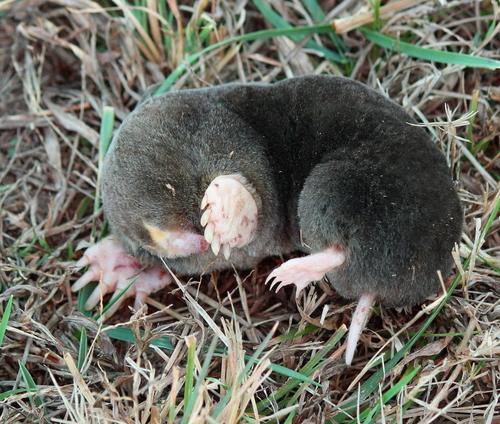
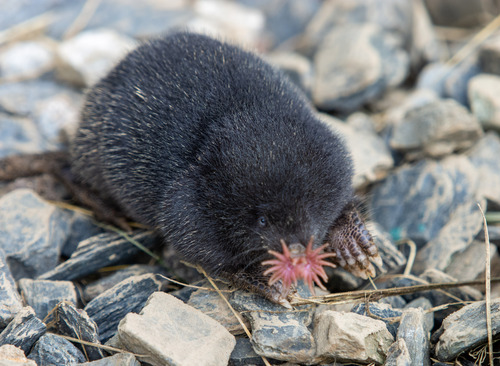
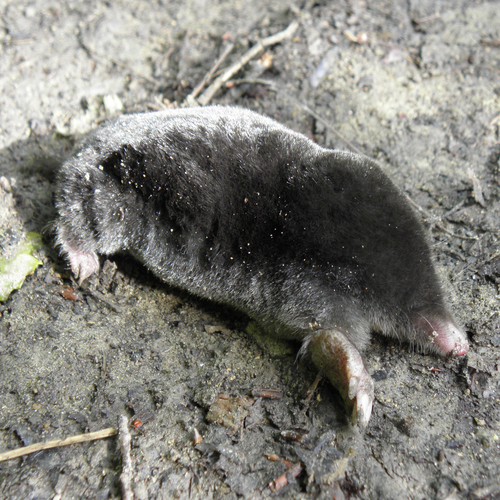
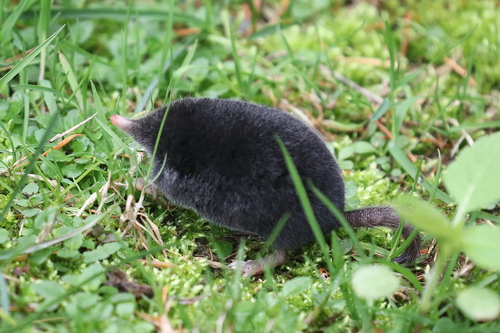
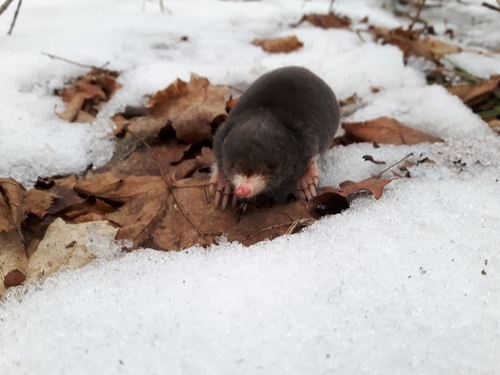
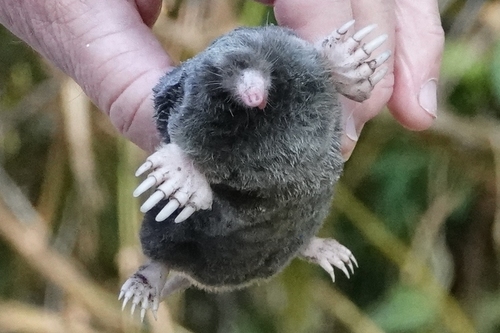
The coast mole, Scapanus orarius True, 1896, is generally less than 200 mm in total length, with its tail making up one-fourth of this total length. Its fur is uniformly black. It has a relatively narrow, long skull with an underdeveloped sublacrimal-maxillary ridge. Its teeth are uncrowned and evenly spaced. This mole has a disjunct distribution. It ranges from the western end of British Columbia, Canada through western Oregon and Washington, and also occurs in coastal parts of Northern California. An outlying part of its range extends into portions of west-central Idaho. The species is primarily fossorial, but it is not limited exclusively to underground habitats. Like many other mole species, it can come to the surface to scavenge and for juvenile dispersal, particularly during summer. It can live in, but is not restricted to, agricultural land, sand dunes, grassy meadows, sagebrush, deciduous forest, and several types of pine forest: yellow-pine, Douglas fir, spruce, hemlock, and redwood. Mating typically occurs between late January and early March. During the mating season, coast moles leave their usual solitary lifestyles, expand their tunnel systems, and will enter other coast moles' tunnel systems to search for a mate. Little is known about their gestation and nursing behaviors. Females produce only one litter per year, and maternal care is limited. Offspring become reproductively active between nine and ten months after birth.