About Saturnia pavonia Linnaeus, 1758
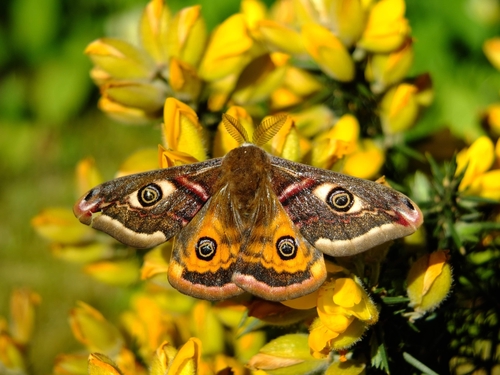
Saturnia pavonia, first described by Linnaeus in 1758, shows clear size and color differences between males and females. Males have a wingspan of approximately 60 mm (2.4 in); their forewings are brown and white, marked with red and orange fascia, and feature a prominent black and orange eyespot. Hindwings of males are orange and bear a similar eyespot. Females are larger, with a wingspan of about 80 mm (3.1 in), and are less brightly colored than males. They are generally grey and white, but all their wings have eyespots matching those found on males. Males fly quickly during the day, from mid-April to late June, searching for the much slower-moving females, which typically only fly at night. This species lives in a variety of habitats, but is most commonly associated with heathland and moorland. Newly hatched caterpillars are black and orange; as they grow, they become green with black rings and yellow and red spots. Heather is the most common food plant for this species, but larvae have been recorded feeding on a wide variety of other plants. The species overwinters as a pupa inside a fibrous cocoon. Recorded food plants for S. pavonia larvae include: Alchemilla, Alnus, Arbutus, Betula, Calluna, Cornus, Crataegus, Erica, Fagus, Filipendula, Fragaria, Fraxinus, Hippophae, Humulus, Juglans, Lythrum, Malus, Myrica gale, Pistacia, Populus, Potentilla, Prunus, Pyrus, Quercus, Rhamnus, Rosa, Rubus, Rumex, Salix, Sambucus, Schinus, Sorbus, Spiraea, Ulmus, and Vaccinium.