About Sassafras tzumu (Hemsl.) Hemsl.
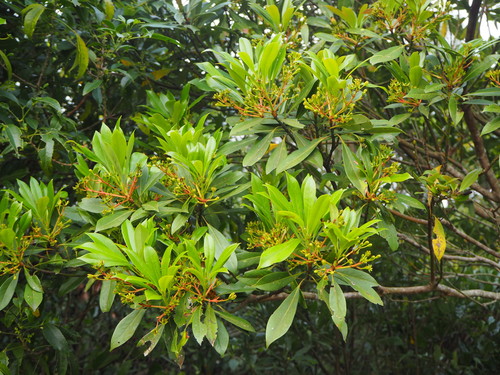
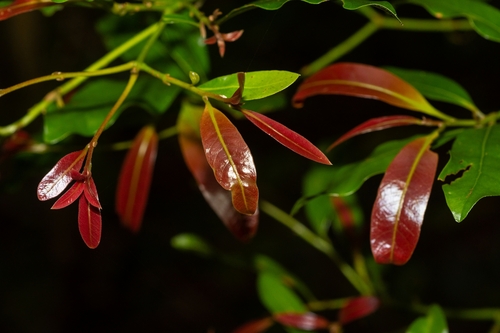
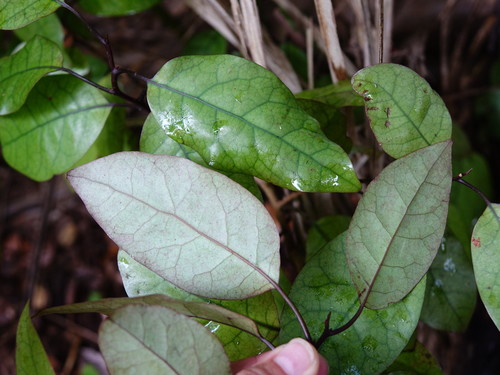
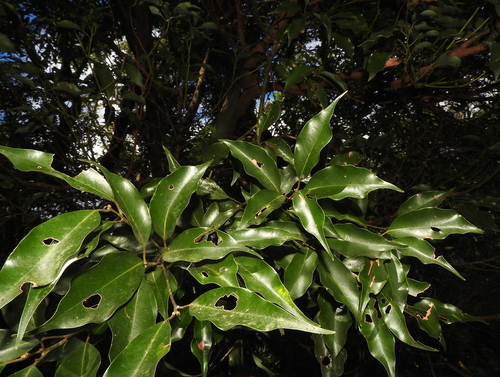
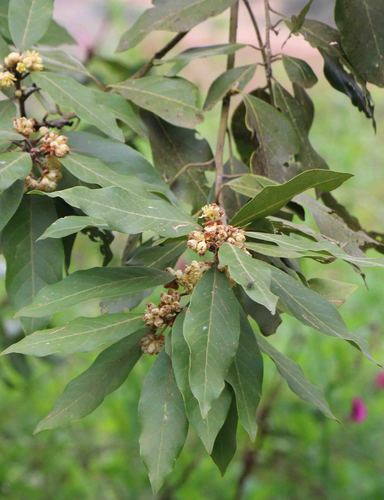
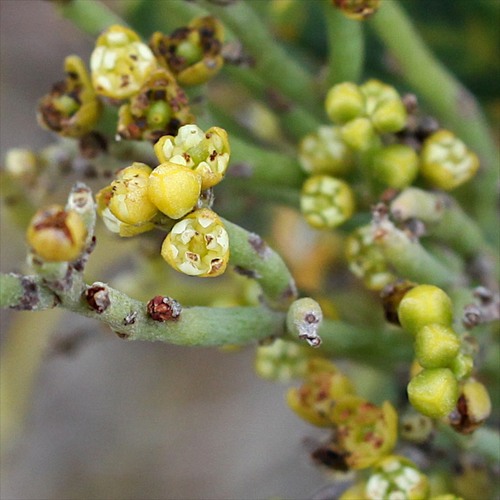
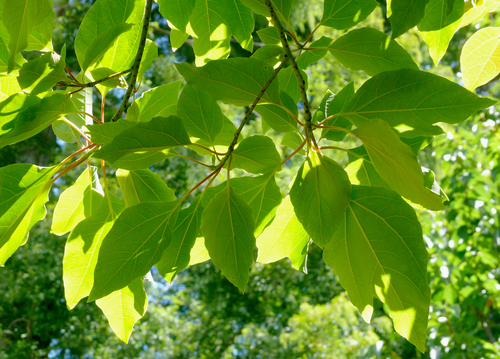
Sassafras tzumu (Hemsl.) Hemsl. is a deciduous tree that typically reaches heights of up to 35 meters (115 feet). One historical source records individual trees reaching up to 100 meters (330 feet), but this claim is not corroborated by modern sources. Its wood is yellow-green with longitudinal fissures, and turns gray or brown as the tree matures. It has sympodial branching. Its leaves are alternate, gray-green, ovate or obovate, and measure 9–18 cm long and 6–10 cm broad. Leaves are attached to slender, reddish petioles 2-7 centimeters long, and may be two-lobed or three-lobed. Three-lobed leaves occur much more frequently on S. tzumu than on the North American species Sassafras albidum, where three-lobed leaves are possible but rare. The species produces yellow flowers around 4 millimeters in size, and blue-black fruit with a white waxy coating. Unlike North American Sassafras species such as Sassafras albidum, which are dioecious (each individual plant bears only male or only female flowers), S. tzumu and Sassafras randaiense may bear both types of flowers on a single tree: male flowers that have 3 staminodes and 1 rudimentary pistil, and female flowers that have 12 staminodes. Molecular data also confirms genetic differences between Chinese and North American Sassafras species. The bark of S. tzumu is yellow, fine-grained, and durable. Its durable wood is used for shipbuilding and furniture making. This species is used in medicine to treat rheumatism and trauma. Essential oils can be extracted from its bark, roots, or fruit, and the extracted oil contains approximately 1% phenylpropene safrole. Other sources note that S. tzumu bark contains an especially high safrole oil content of 97%, making it valuable for commercial oil production, as well as for the production of illicit drugs.