About Sarracenia rubra Walter
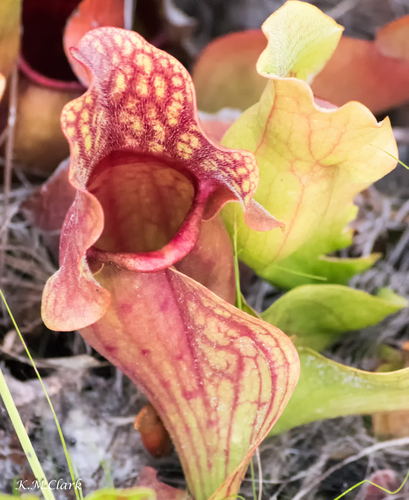
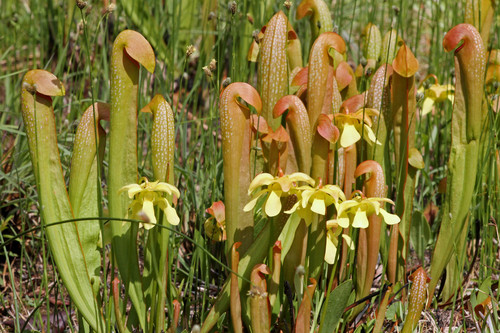
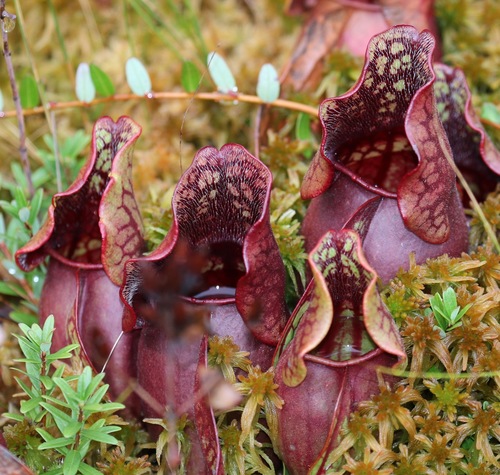
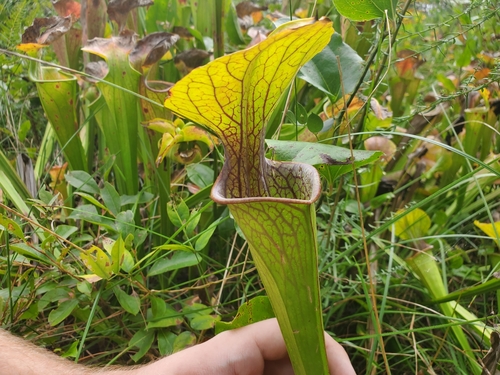
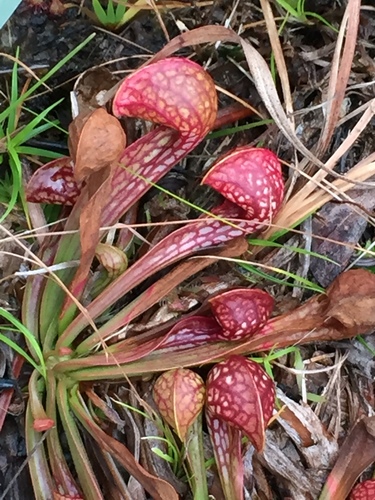
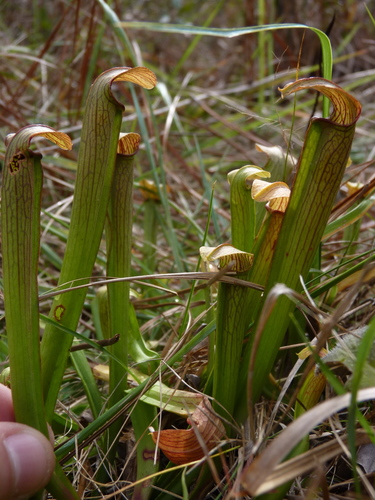
Like other species in the Sarracenia genus, the sweet pitcherplant Sarracenia rubra Walter traps insects using a rolled leaf. This species’ rolled leaves are generally smaller and narrower than those of most other Sarracenia species, and typically do not grow taller than 65 cm (26 inches). Sarracenia rubra usually grows in a clump-forming habit. The top of the leaf flares out into a lid called the operculum, which stops excess rain from entering the pitcher and diluting the digestive secretions inside it. The upper sections of the pitcher are covered in short, stiff, downward-pointing hairs, which direct insects that land on the upper parts of the leaf toward the opening of the pitcher tube. The opening of the pitcher tube curves backward into a nectar roll called the peristome, and its surface is dotted with glands that secrete nectar. When prey enter the tube, the smooth, waxy secretions coating the upper tube surfaces make their footing very unstable. Insects that slip on this surface fall to the bottom of the tube, where a mixture of digestive fluid, wetting agents, and inward-pointing hairs stops them from escaping. Occasionally, some large insects like wasps have been recorded escaping the pitchers by chewing through the tube wall to get out.