About Sarracenia oreophila (Kearney) Wherry
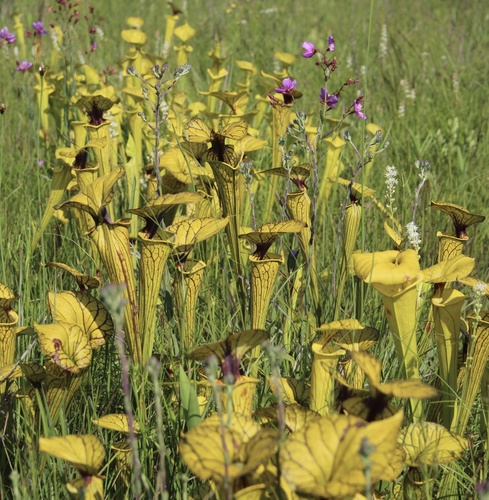
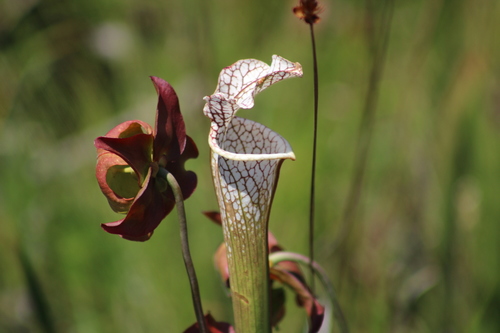
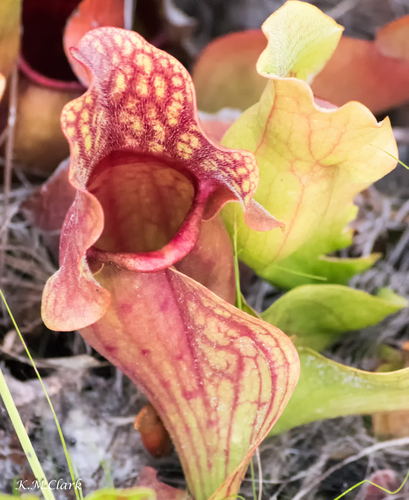
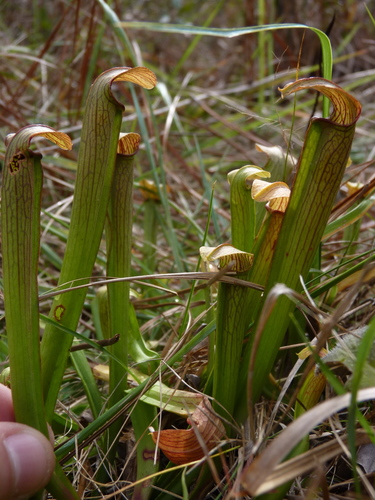
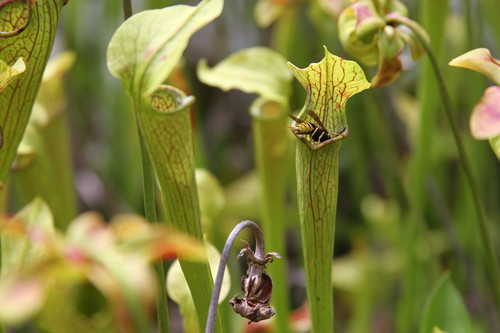
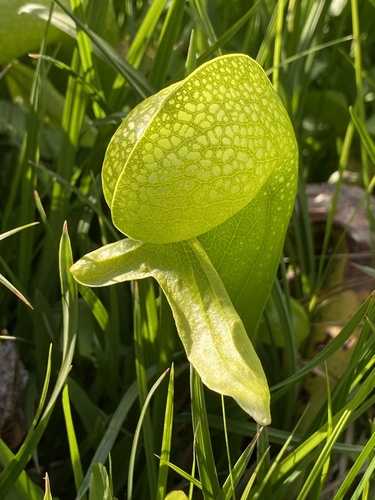
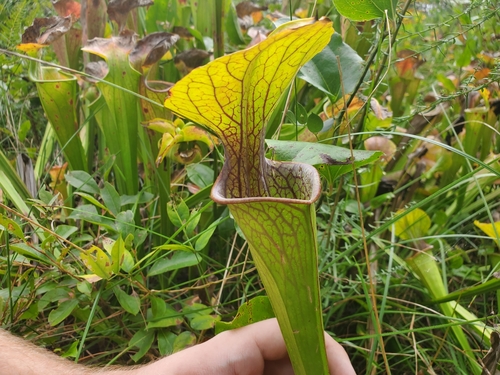
Like other species in the genus Sarracenia, the green pitcher plant (Sarracenia oreophila) traps insects with a tubular rolled leaf that holds digestive juices at its base. This species’ pitcher tube is similar in shape to that of Sarracenia flava, but it has a wider pitcher mouth and neck, and is typically somewhat shorter, growing to only 60 cm (24 inches) in height. The uppermost section of the leaf flares out into a lid called the operculum, which stops excess rain from entering the pitcher and diluting the digestive secretions inside. The upper regions of the pitcher are covered in short, stiff, downward-pointing hairs that guide insects that land on the upper leaf toward the opening of the pitcher tube. The opening of the pitcher tube is folded back to form a 'nectar roll' or peristome, whose surface is dotted with nectar-secreting glands. When prey enter the tube, the smooth, waxy secretions coating the upper inner surfaces of the tube make their footing extremely unstable. Insects that slip on this surface fall to the bottom of the tube, where a mixture of digestive fluid, wetting agents, and inward-pointing hairs stop them from escaping. Occasionally, some large insects such as wasps have been recorded escaping the pitchers by chewing their way out through the tube wall. Pitchers can range in appearance from entirely green, to lightly or heavily veined, and some cultivated varieties have heavily pigmented throats. The traps also develop a pink or red flush as they age.