About Sarracenia minor Walter
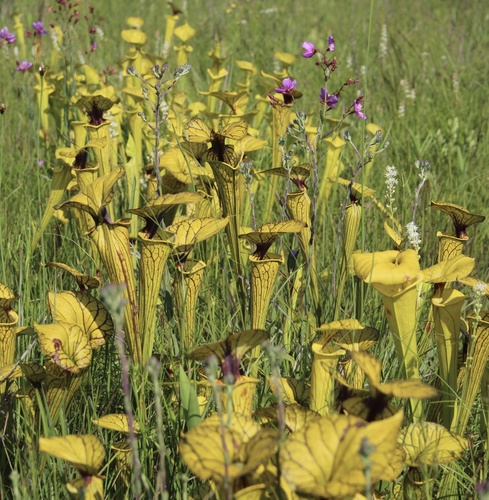
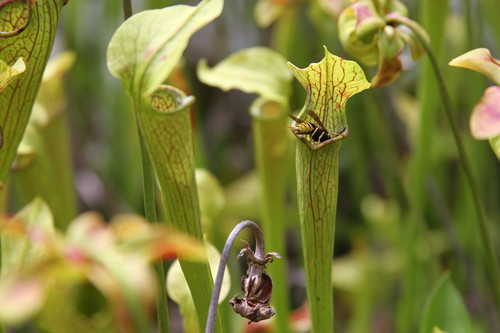
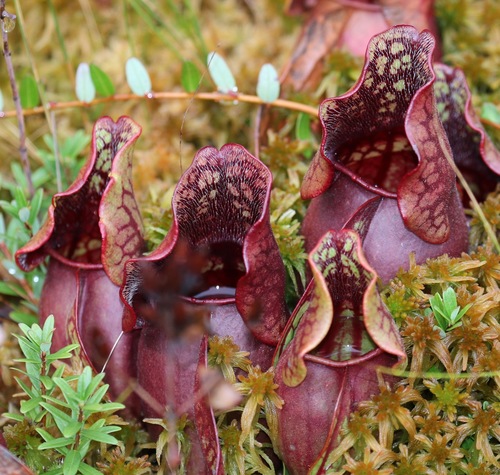
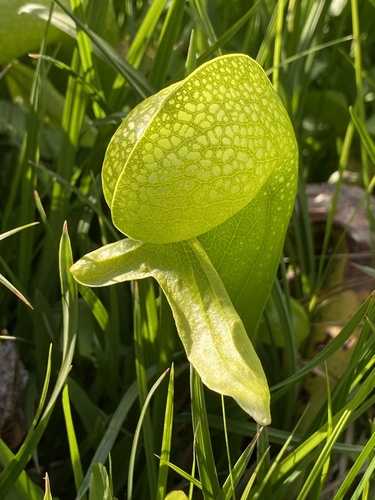
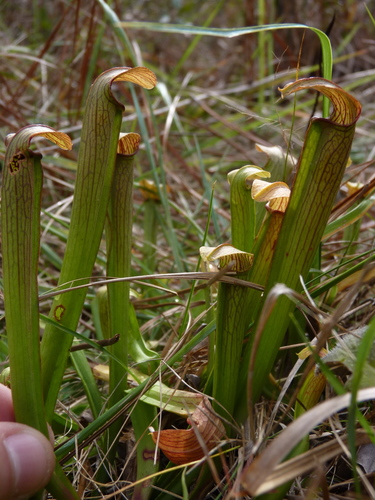
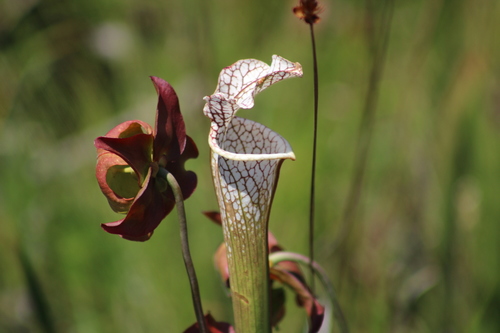
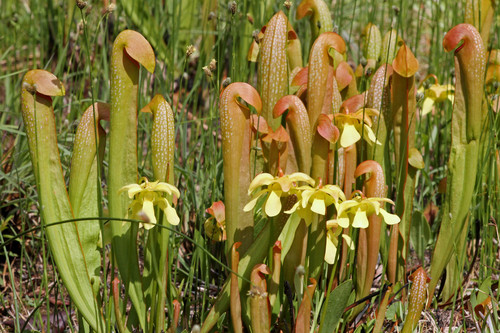
Sarracenia minor Walter, commonly known as hooded pitcher plant, has two main growth forms. The typical form is a relatively small carnivorous plant with pitchers measuring 25–30 centimetres (10–12 inches) in height. An exceptionally large form, with pitchers reaching 90–120 centimetres (3–4 feet) tall, grows in the Okefenokee marshes along the border between Georgia and Florida. The pitcher tubes are mostly solid green overall, though the upper sections may turn reddish. Flowering takes place from late March to mid-May. The flowers are yellow, odorless, and each seed capsule produces more than one hundred seeds. Alongside Sarracenia psittacina, this species is one of only two in the genus Sarracenia that produces domed pitchers with translucent white patches that let light pass through. Researchers have hypothesized that light shining through these patches draws flying insects deeper into the pitcher and away from the pitcher’s opening, a trapping mechanism similar to that seen in Darlingtonia californica and two Nepenthes species: N. aristolochioides and N. klossii. Pitchers fill with water and plant-produced digestive enzymes that break down captured prey. In its natural habitat, Sarracenia minor is particularly attractive to ants, though it also captures and consumes a wide variety of flying insects. This species is distributed across northern and central Florida, through Georgia, and as far north as southern North Carolina. It has the southernmost natural range of any Sarracenia genus member, with isolated fragmented populations extending as far south as the area surrounding Lake Okeechobee in south-central Florida. It grows in nutrient-poor swampy habitats, specifically environments with low levels of nitrogen and phosphorus.