About Sarracenia alata (Alph.Wood) Alph.Wood
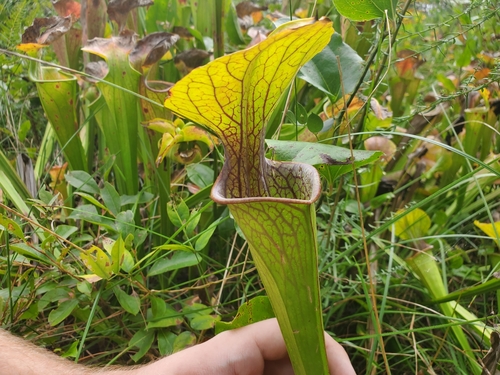
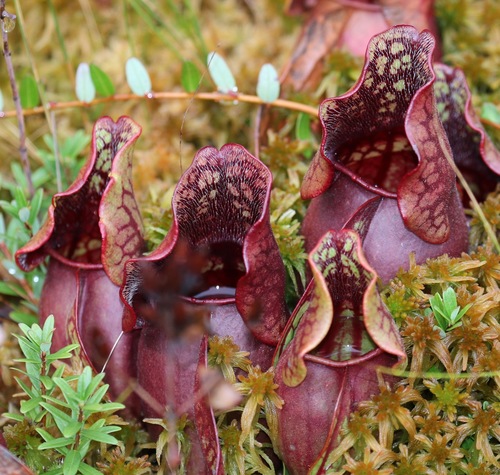
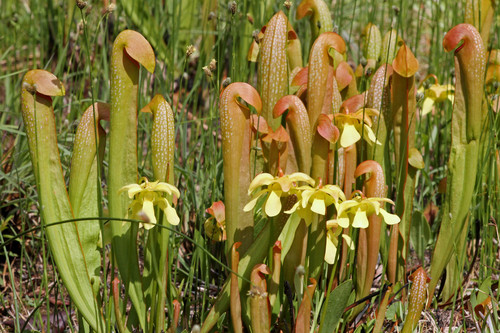
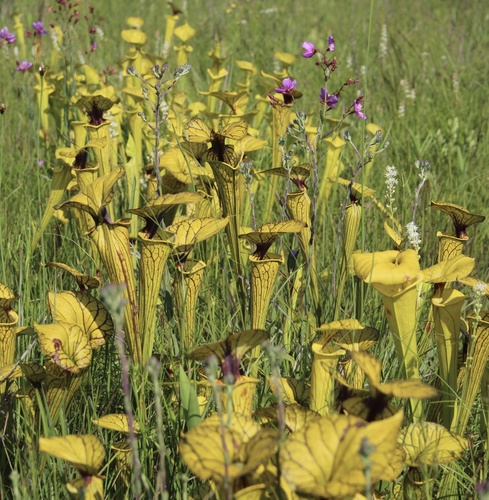
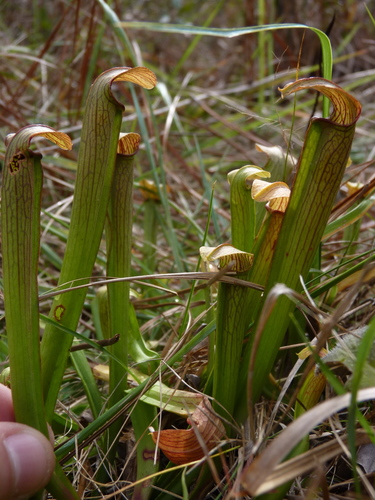
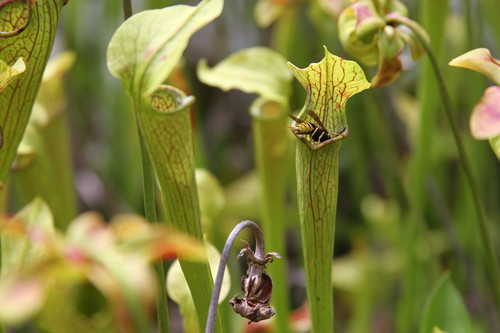
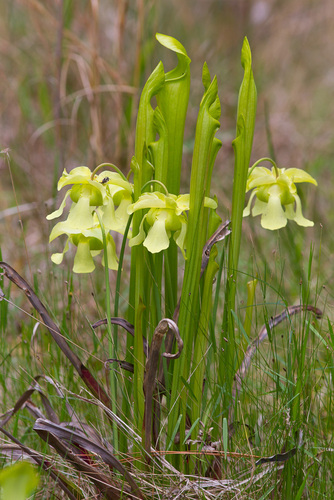
Among species in the Sarracenia genus, the flower color of Sarracenia alata varies remarkably. Its flowers can be cream, white, greenish, yellow, or reddish. Because these color variations occur in populations located hundreds of miles away from any other Sarracenia species, the variations cannot be explained by hybridization. Aside from this wide range of floral colors, Sarracenia alata differs very little from Sarracenia rubra. The pitcher veins of Sarracenia rubra are typically more net-like (reticulated), while the veins of Sarracenia alata often have a more pinstripe pattern, and Sarracenia alata also grows taller pitchers. Like all Sarracenia species, S. alata is endemic to the New World. It evolved a perennial growth habit and insect-based nutrient supplementation to adapt to its unique ecological niche and environment. These pitcher plants generally grow in flat, low-lying areas, and prefer locations with protection from strong breezes and high winds. They grow well in conditions that would kill most plants: consistently saturated, nutrient-poor soils in open wetlands, most commonly longleaf pine (Pinus palustris) savannas. The habitat of the pale pitcher plant is divided into two geographically isolated regions: an eastern range that stretches from eastern Louisiana across Mississippi's Gulf coastline, and into western Alabama. The species also has a western range that extends from eastern Texas to western Louisiana. In Mississippi, mature wild specimens of S. alata can reach a size that matches the largest of any other Sarracenia species.