About Sarcodon imbricatus (L.) P.Karst.
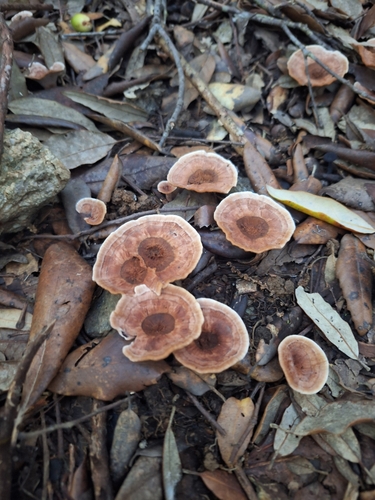
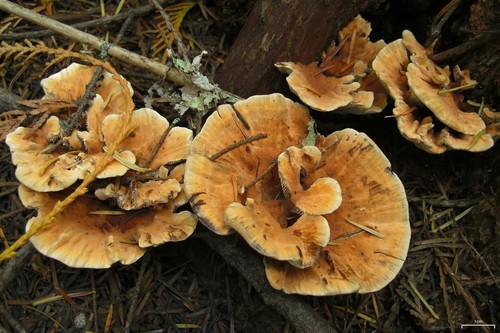
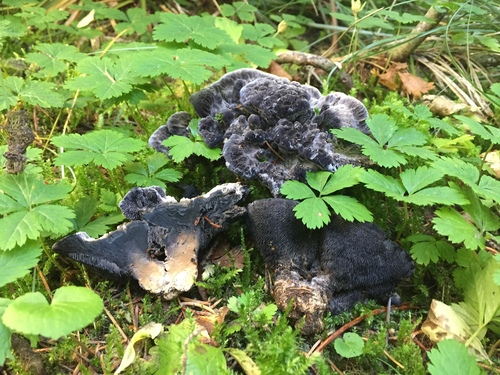
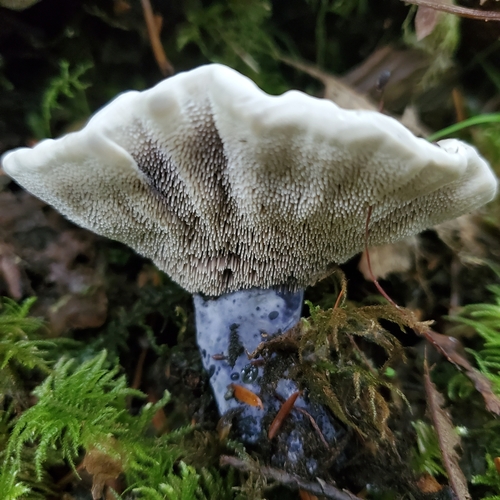
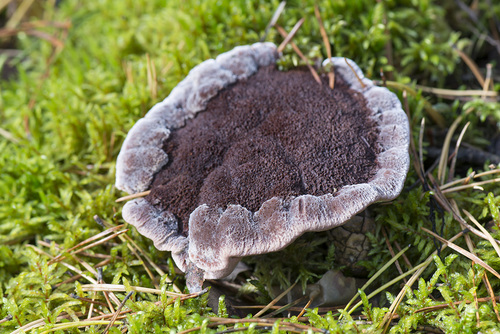
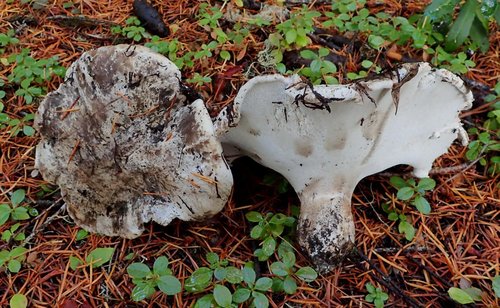
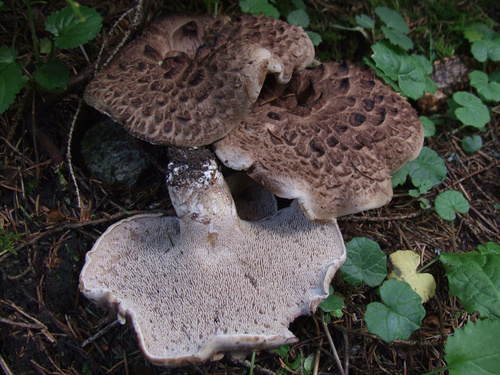
Sarcodon imbricatus (L.) P.Karst. has a brownish or buff funnel-shaped cap that reaches up to 15 centimetres (6 in) in diameter. The cap is covered in coarse, darker brown scales that darken and turn upturned as the mushroom ages. Instead of gills, the underside of the cap has soft, pale grey tooth-shaped structures. These teeth are 0.5–1.5 cm (1⁄4–5⁄8 in) long, grayish brown, darken with age, and are brittle. The pale grey or brown stipe can grow up to 10 cm (4 in) tall and 4 cm (1+1⁄2 in) wide; it is often narrower at the base and sometimes positioned off-center. The soft flesh of the mushroom ranges from whitish to tan, and its spores are brown. This species is distributed across Europe and North America, though collections previously identified as Sarcodon imbricatus from the British Isles are now classified as Sarcodon squamosus. In Europe, Sarcodon imbricatus fruits from August to October. In most of North America, it fruits from July to September, while on the West Coast of North America it fruits from September to December. It grows on sandy or chalk soils, often forming fairy rings, and associates with fir trees (Abies), particularly in hilly or mountainous regions. Older Sarcodon imbricatus mushrooms and related species contain blue-green pigments. In Norway, these pigments are used to dye wool.