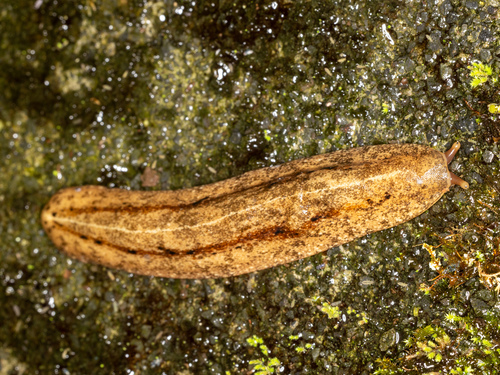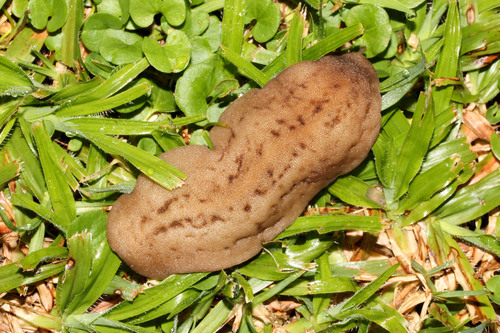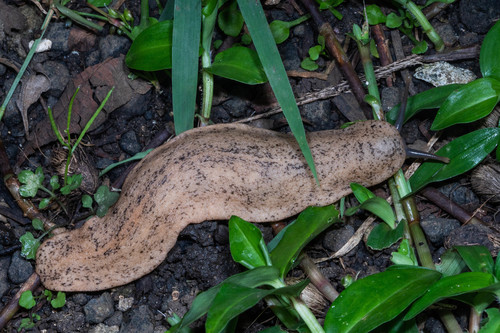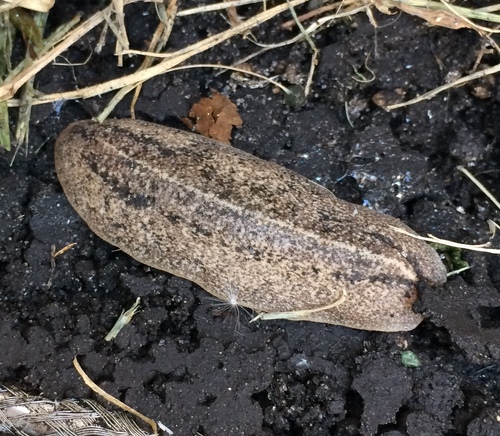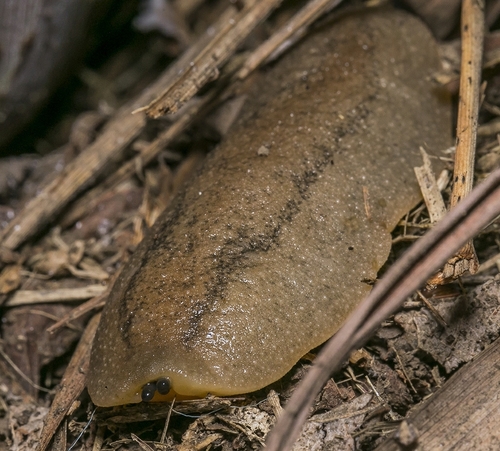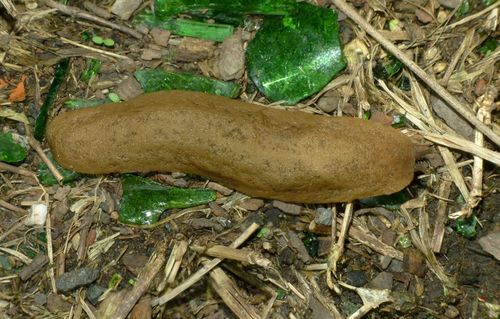
About Sarasinula plebeia (P.Fischer, 1868)
Sarasinula plebeia, commonly known as the bean slug or Caribbean leatherleaf slug, is a species of air-breathing land slug. It is a terrestrial pulmonate gastropod mollusk belonging to Veronicellidae, the leatherleaf slug family. As of November 2012, some websites and databases (including the ITIS entry) incorrectly list this species as "Sarasomia plebeia" credited to the same original author. This species was first discovered and described in 1868 by French zoologist Paul Henri Fischer under the original name Vaginulus plebeius, with a type locality of New Caledonia. Its confirmed distribution includes Cuba, Jamaica, Saint Martin (Leeward Islands), Dominica, Canouan, Saba Island, Southern USA, the region from Mexico to Panama (including Mexico and Costa Rica), Rio Grande do Sul (Brazil), and Venezuela. It has also been introduced to Australasia and several Pacific island groups: Saipan (Mariana Islands), Ritidian Point (Guam), San José (Leyte, Philippines), Wasi (Ambon Island, Moluccas), and Vate, Aoba Island, Malakula Island, Espiritu Santo, and Malo Island (New Hebrides). The species is already established in the USA. It is considered a potentially serious threat as an invasive pest that could negatively impact agriculture, natural ecosystems, human health, or commerce, so it has been recommended that this species be given top national quarantine significance in the USA. One known parasite of Sarasinula plebeia is Angiostrongylus cantonensis.