About Saproscincus mustelinus (O'Shaughnessy, 1874)
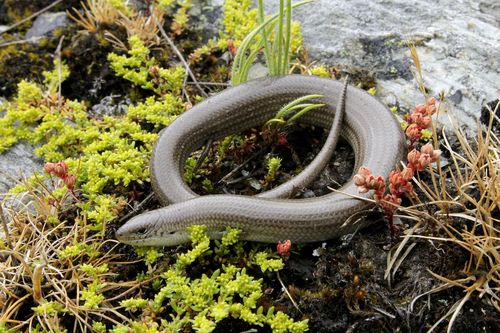
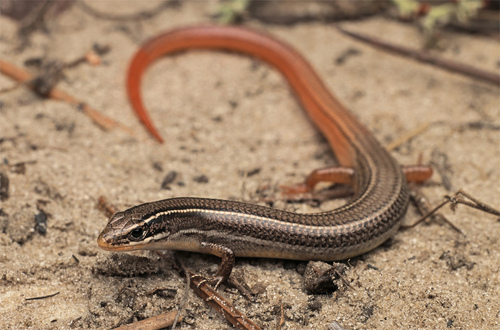
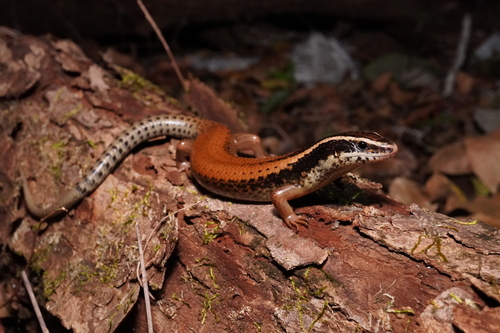
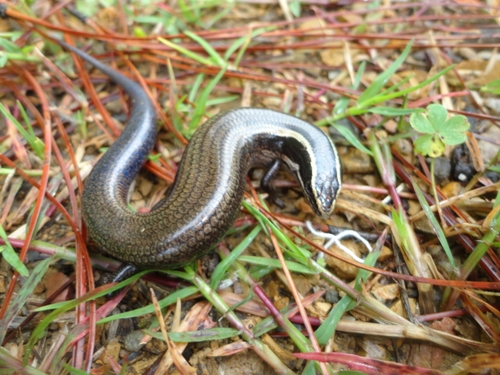
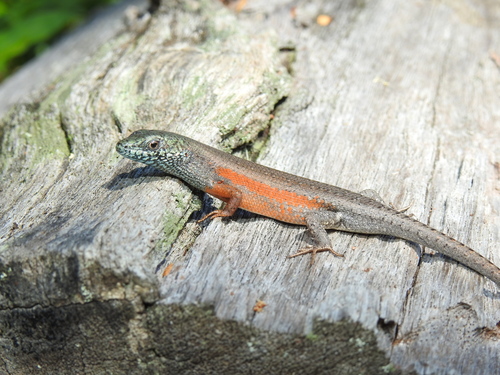
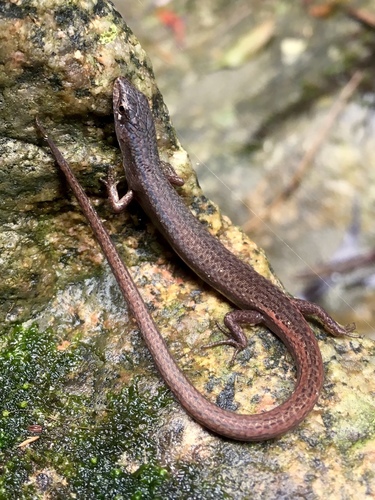
The southern weasel skink, scientifically named Saproscincus mustelinus (O'Shaughnessy, 1874), measures approximately 45 mm (1.8 in) from snout to vent. Its body is covered in fine, iridescent reddish brown scales, and it has several distinct white markings located behind and below the eye. For shelter, the southern weasel skink typically makes use of existing vegetation and fallen timber. This species has a geographic distribution that forms a coastal strip running from southern Victoria to southern Queensland. For reproduction, female southern weasel skinks lay up to four eggs per clutch in communal nests. These nests are usually dug burrows that hold the eggs of many different females. Egg laying normally takes place between spring and late summer.