About Sapindus oahuensis Hillebr.
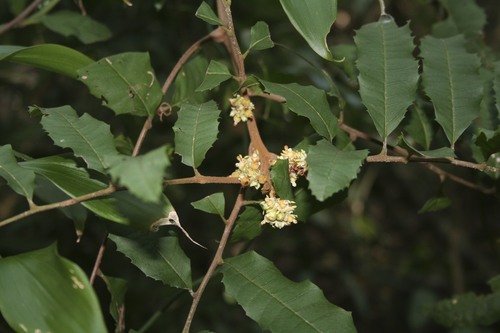
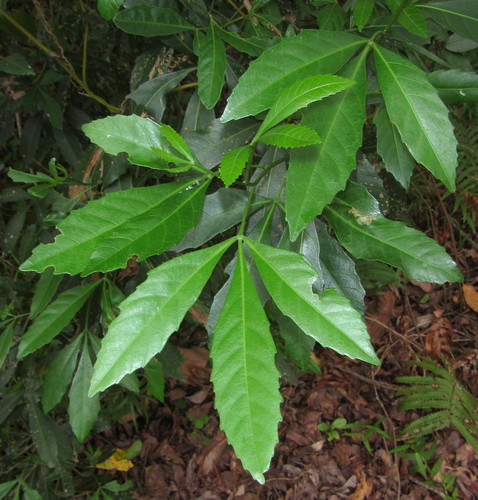
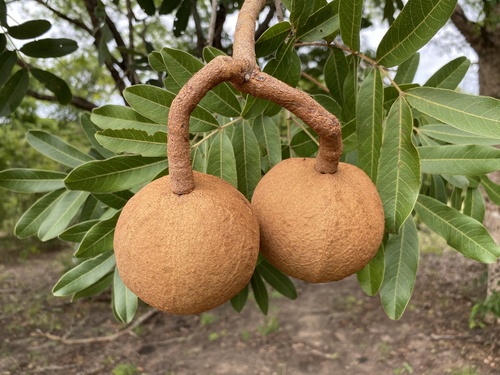
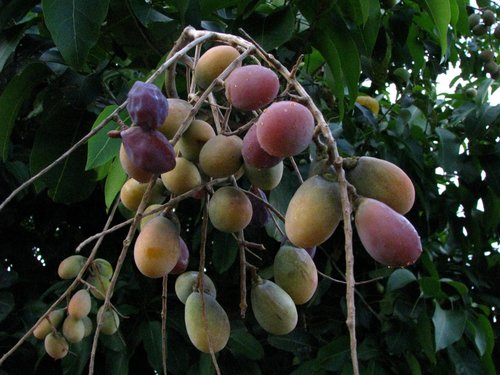
Sapindus oahuensis Hillebr., commonly known as Āulu, is a tree that grows up to 18 m (59 ft) tall, with a trunk diameter of up to 0.5 m (1.6 ft). Its alternately arranged, hairless leaves have simple blades, unlike the compound leaves of its congener the wingless soapberry (S. saponaria). The leaves are somewhat thick, green, up to 15 cm (5.9 in) long, and feature a yellow midvein. The inflorescence is a panicle holding many greenish yellow, bell-shaped male and female flowers. These flowers bloom in spring, summer, and winter, grow in clusters from the bases of the leaf stems. The fruit is a shiny, leathery berry roughly 2 cm (0.8 in) long, containing one large black seed. The fruits are not edible. The wood of this species is hard and light brown, with gray-to-white bark. Young branches are coated in yellow-brown fuzz. A common fungus, Balladyna velutina, often grows on Sapindus oahuensis, appearing as a powdery white mildew. This tree grows in dry and moist forest habitats at elevations between 200–2,000 ft (61–610 m), and it most often inhabits dry semi-deciduous forests. It has been hypothesized that Sapindus oahuensis reached Hawaiʻi by floating across water, because its fruits have trapped air pockets that allow them to float.