About Sapajus libidinosus (Spix, 1823)
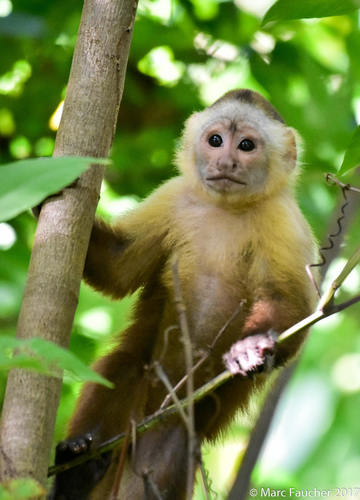
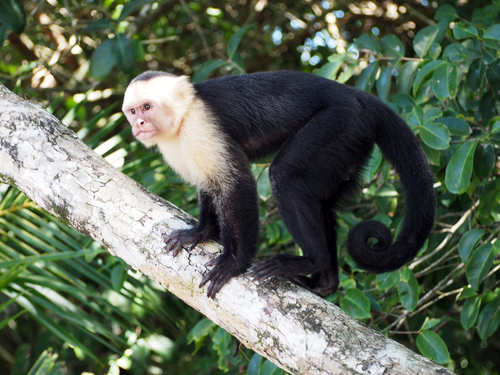
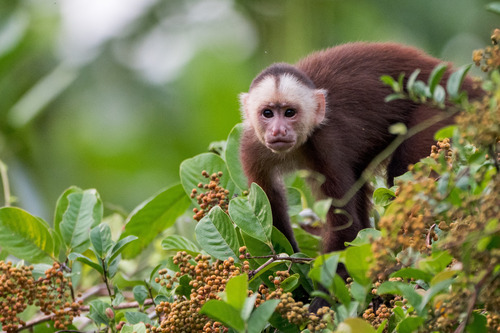
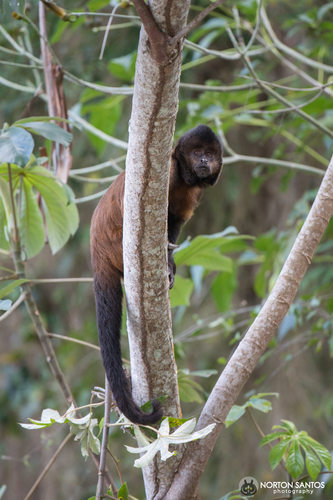
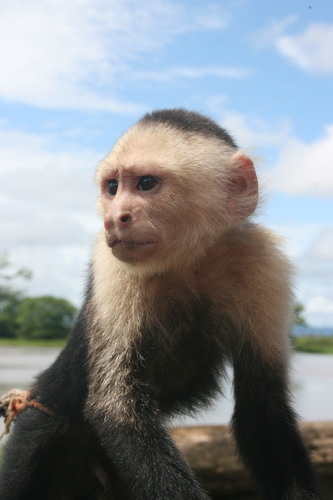
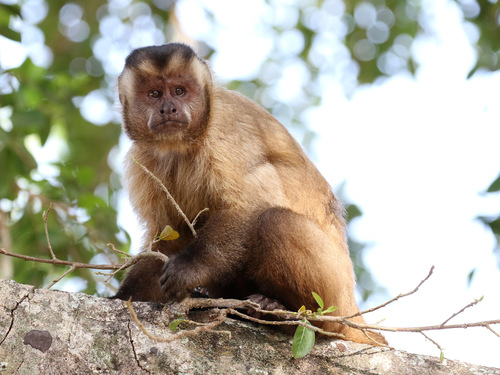
Black-striped capuchins (Sapajus libidinosus), also called bearded capuchins, share many traits with other tufted capuchins and only a few physical features set them apart. Like other tufted capuchins, they have thick, strong tails. Their body fur ranges from light to dark brown, while their tail, arms, legs, and head have darker black fur. They got the alternate common name "bearded capuchin" from their darker facial fur paired with lighter hair around the mouth and lower face. When individuals reach sexual maturity, they develop dark spots on the head and sideburns on the face. Their most distinguishing features are orange fur on the neck and yellow-tinted fur on the dorsal side. Males and females are similar in height, averaging around 37 cm (14.6 in), but show strong sexual dimorphism in weight: males weigh around 3.5 kg, while females weigh around 2.1 kg. Their lighter lower face coloration, which distinguishes them from other similar tufted capuchins, is what gave them their name. Black-striped capuchins can live up to 25 years in the wild, and live much longer in captivity. This species is distributed across northern and central Brazil, specifically occurring in the country's Cerrado, Caatinga, and Pantanal regions. Black-striped capuchins have a distinct mating behavior. When a female is ready to mate, she follows a male to gain his attention, sometimes through behaviors like throwing rocks and sticks. Males initially respond with disinterest and aggression, which is followed by a behavior called "touch and go": the female touches the male, then flees before he can act aggressively toward her. Over time, the male becomes receptive, and the pair mates. Females give birth to a single infant on average once every two years. The infant is first carried on its mother's belly, then transitions to riding on her back. It is weaned slowly, and reaches independent foraging at two years of age.