About Santalum haleakalae Hillebr.
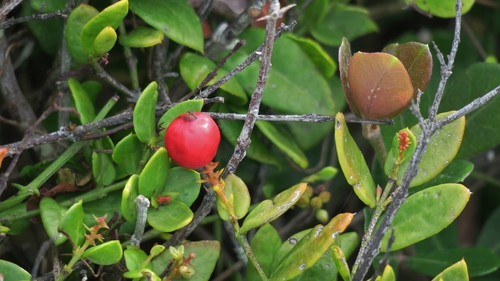
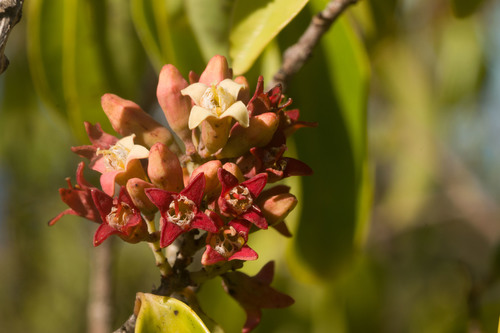
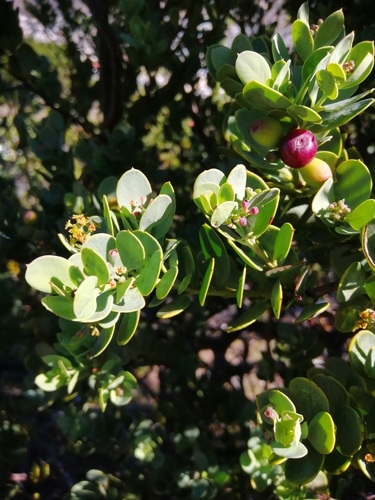
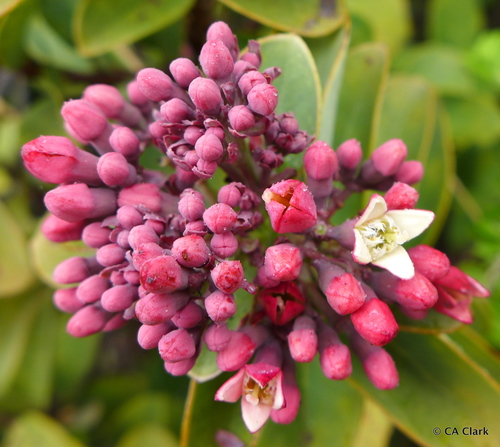
Santalum haleakalae Hillebr. is a shrub or small tree that bears green, ovate leaves, which are often glaucous and tinged purple, particularly in Santalum haleakalae var. haleakalae. Its buds are cream-colored to red, and open flowers are cream to white, arranged in tight compound cymes. The fruits are reddish to black drupes. Santalum haleakalae var. haleakalae grows only on the slopes of Haleakalā on Maui, while Santalum haleakalae var. lanaiense grows on the Hawaiian islands of Lanai, Molokai, and Maui. Santalum haleakalae var. haleakalae occupies subalpine and montane mesic forests, and Santalum haleakalae var. lanaiense occupies wet shrublands. Like most sandalwoods, Santalum haleakalae is a hemiparasite, which gets part of its nutrition from the roots of surrounding plants. Santalum haleakalae var. lanaiense is thought to use koa (Acacia koa) as one of its hosts alongside other native trees. The flowers of this species provide nectar for native Hawaiian honeycreepers such as the Maui ʻamakihi. Native Hawaiians used ʻiliahi, a group that includes this species and other native Santalum members, for a range of medicinal uses, for scenting kapa, and for crafting musical instruments. After the lucrative global sandalwood trade reached Hawaii in the late 18th century, Hawaiian nobles forced lower-caste people to harvest the wood of this and related sandalwood species. Many harvesters suffered harm or died during this work, and famine occurred as people abandoned the cultivation of food crops. Hawaii became so well known for its sandalwood in China that people in the Macau area called Hawaii "Tan Heung Shan", which translates to "the Sandalwood Mountains". The Hawaiian sandalwood trade ended around the middle of the 19th century. While many ʻiliahi populations have recovered, large, old ʻiliahi trees remain difficult to find.