About Santalum ellipticum Gaudich.
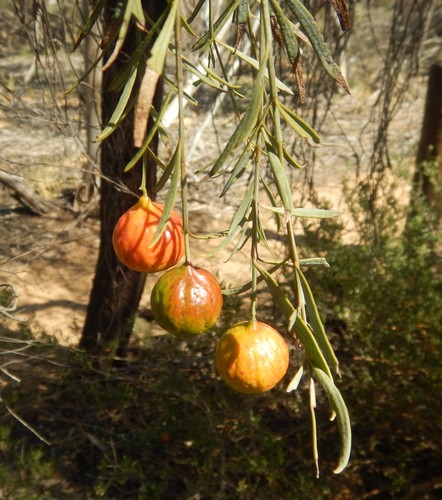
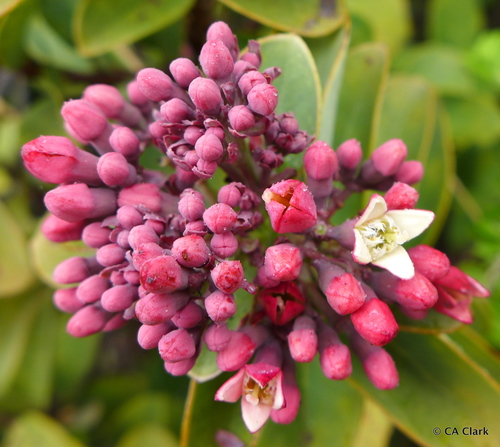
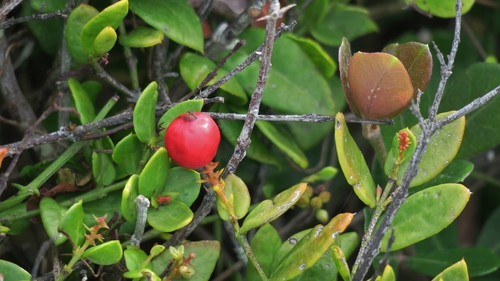
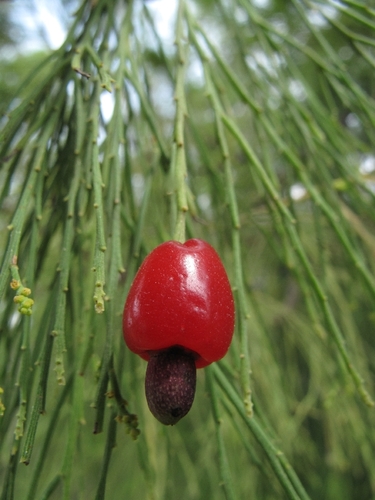
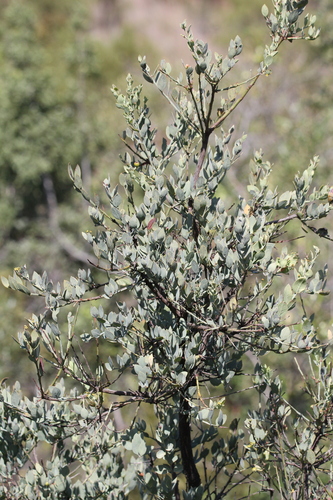
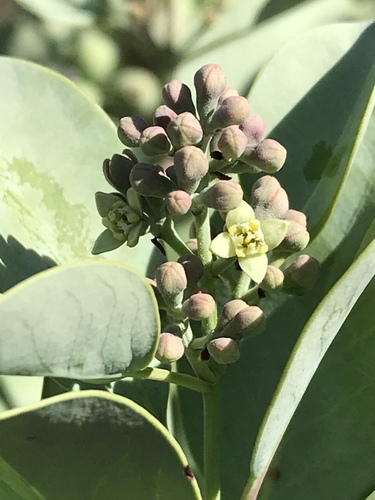
Santalum ellipticum, commonly known by the Hawaiian name ʻIliahialoʻe or as coastal sandalwood, is a species of flowering plant in the Santalaceae (mistletoe) family that is endemic to the Hawaiian Islands. It grows as a sprawling shrub to small tree, normally reaching 1 to 5 meters (3.3 to 16.4 feet) in height and 1 to 3 meters (3.3 to 9.8 feet) in canopy spread, though its size and shape are extremely variable. Like other species in the Santalum genus, S. ellipticum is a hemi-parasite: it obtains some of its nutrients by attaching to the roots of a host plant. ʻIliahialoʻe lives in dry forests, low shrublands, and lava plains across the entire Hawaiian archipelago, including the Northwestern Hawaiian Islands. It has been completely extirpated from Laysan and Kahoʻolawe. While it has never been formally recorded on Niʻihau, it is almost certain that the species occurred there historically. S. ellipticum is most commonly found at elevations between sea level and 560 meters (1,840 feet), but established populations can grow as high as 950 meters (3,120 feet). One isolated individual has been observed growing at 2,140 meters (7,020 feet) on the island of Hawaiʻi. The aromatic heartwood (called ʻlaʻau ʻala) of ʻiliahialoʻe contains valuable essential oils. Between 1791 and 1840, the trees were harvested and exported to China, where the hard, yellowish-brown wood was used to create carved objects, chests, and incense. The commercial trade of ʻiliahialoʻe reached its peak from 1815 to 1826. Native Hawaiians used the wood to make pola, the deck of a waʻa kaulua (double-hulled canoe). Powdered ʻlaʻau ʻala was used as a perfume and added to kapa cloth. For medicinal use, Native Hawaiians combined ʻiliahialoʻe leaves and bark with ashes from naio (Myoporum sandwicense) to treat kepia o ke poʻo (dandruff) and liha o ka lauoho (head lice). A mixture of ʻiliahialoʻe shavings with ʻawa (Piper methysticum), nioi (Eugenia reinwardtiana), ʻahakea (Bobea spp.), and kauila (Alphitonia ponderosa) was used to treat sexually transmitted diseases.