About Sanicula graveolens Poepp. ex DC.
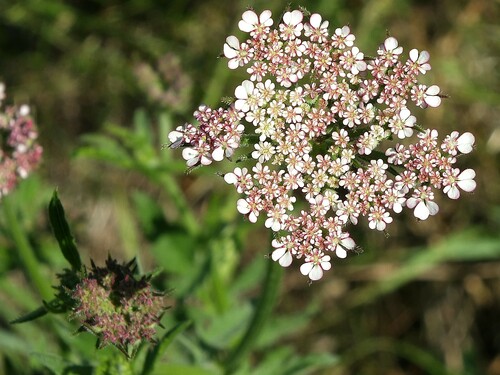
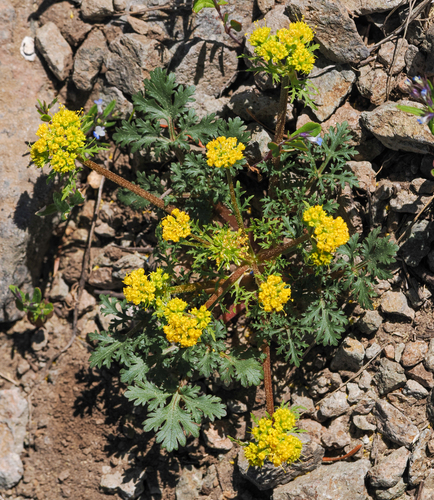
Sanicula graveolens Poepp. ex DC. is a species of flowering plant in the Apiaceae family, commonly known by the common names northern sanicle and Sierra blacksnakeroot. It is native to western North America, ranging from British Columbia to Montana to California, and also grows in southern South America, including southern Chile. Its natural habitats include mountain slopes, forests, and woodlands growing on serpentine soils. This plant is a perennial herb that grows a slender, branching stem up to half a meter tall from a taproot, and its leaves grow in an alternate arrangement. The lowest leaves have long stalks, and often grow attached below ground level. Upper leaves are smaller, sparser, and are often sessile, meaning they lack stalks. All leaves are compound, with each leaf blade divided into three deeply lobed, toothed leaflets. The leafy herbage of the plant ranges in color from green, to purple-tinged, to solid purple overall. Its inflorescence consists of one or more heads of both bisexual flowers and male-only flowers, which have tiny, curving yellow petals. Each flower head has a set of narrow, toothed bracts at its base. The plant produces rounded fruits a few millimeters long, covered in curving prickles, and these fruits are borne in small clusters.