About Samia cynthia Drury, 1773
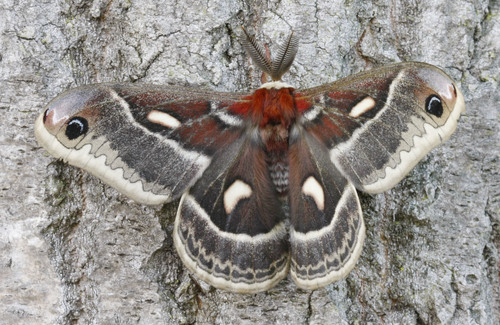
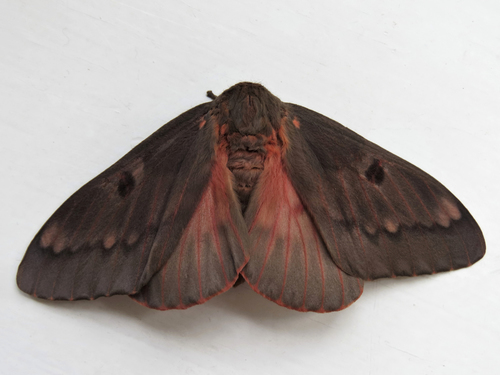
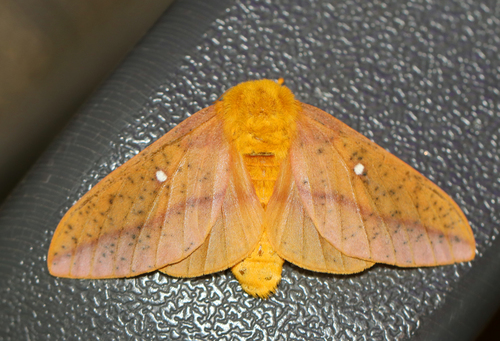
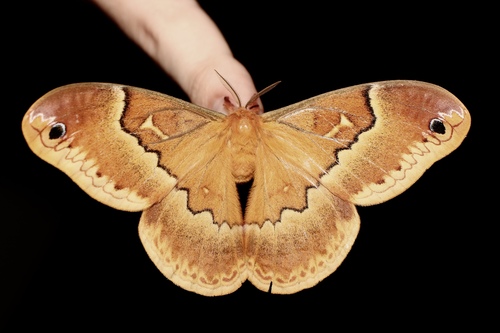
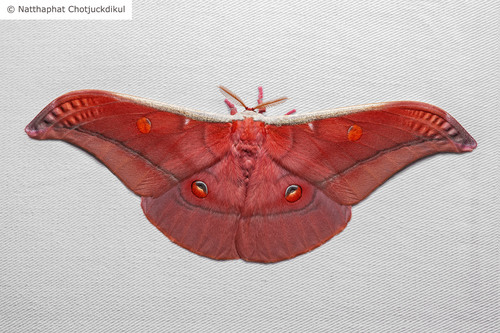
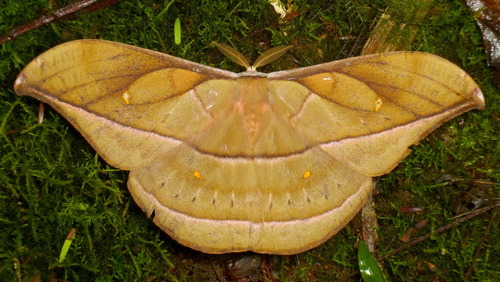
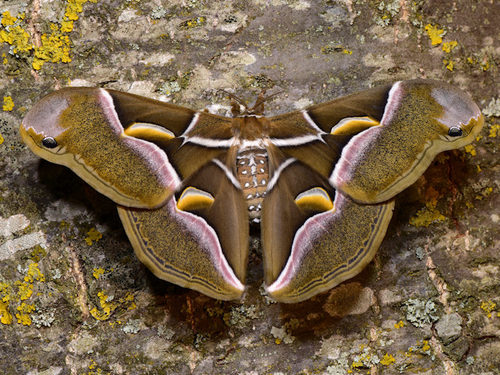
Samia cynthia, commonly called the ailanthus silkmoth, is a saturniid moth. It is used to produce silk fabric, but it is not as fully domesticated as the domestic silkworm Bombyx mori. This species has very large wings that measure 113–125 mm (4.4–4.9 in). A quarter-moon shaped spot appears on both the upper and lower wings, along with whitish and yellow stripes on a brown background. There are additional eyespots on the outer sections of the forewings. The species was first formally described by Dru Drury in 1773. In their 2003 revision of the genus Samia, Peigler & Naumann listed examined material of true Samia cynthia. For feeding behavior: while larvae will feed on other trees and shrubs, all eggs of Samia cynthia are laid on the tree of heaven (Ailanthus altissima), and larval growth is best when feeding on this plant. The tree of heaven is commonly grown as an ornamental in cities, but it is classified as a noxious weed, a vigorous invasive species, and is counted among the worst invasive plant species in Europe and North America. A subspecies, S. cynthia ricini, feeds on castor bean.