About Salvia mellifera Greene
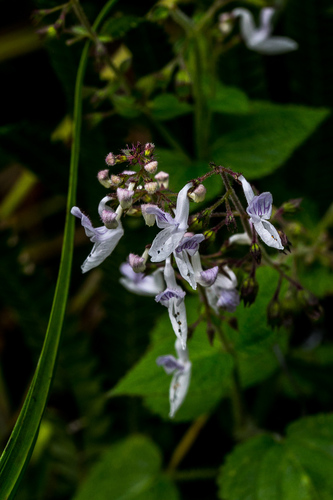
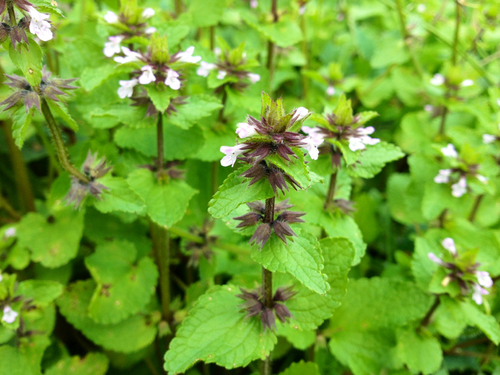
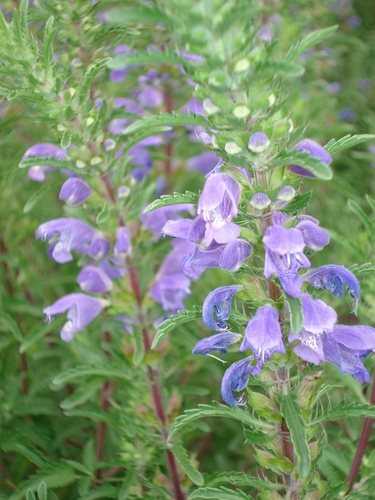
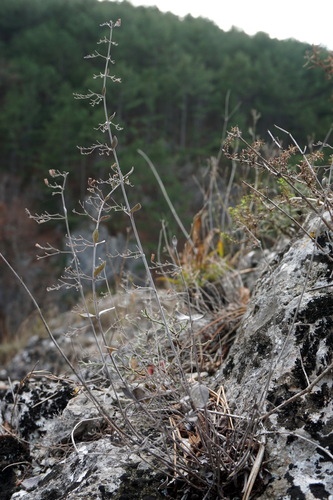
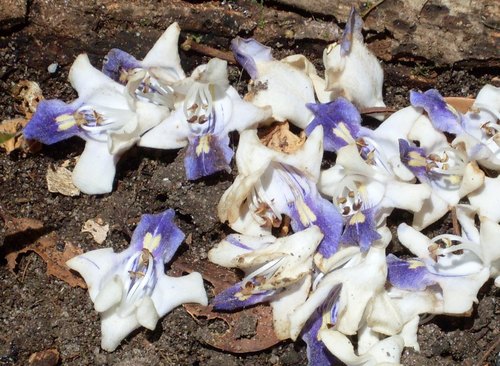
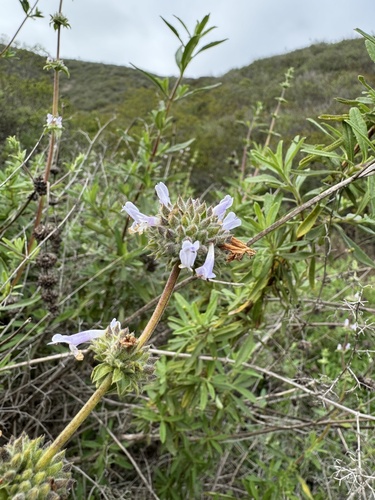
Salvia mellifera Greene, commonly known as Californian black sage, is a perennial shrub that reaches roughly 1–2 meters (3.3–6.6 ft) in height. It is covered in simple hairs alongside some glandular hairs, which gives it a strong aromatic character. Its leaves range in shape from oblong-elliptic to obovate, and measure around 2.5–7 cm (0.98–2.76 in) long. The upper leaf surface is somewhat glabrous, while the lower leaf surface is hairy. Inflorescences form clusters that are 1.6–4 cm (0.63–1.57 in) wide. Flowers are most often pale blue or lavender, and very rarely pale rose. The upper lip of the flower has two lobes, and both the style and stamens extend slightly beyond the flower opening. The fruit of this species is a schizocarp made up of four brown nutlets, each 2–3 mm (0.079–0.118 in) long. This plant typically blooms from March to June, and its flowers attract native bees, butterflies, and hummingbirds; these interactions are an important part of local pollination networks. In ecology, Californian black sage grows in coastal sage scrub and lower chaparral plant communities, at elevations ranging from sea level up to 1,200 m (3,900 ft). It can grow successfully on many different soil types, including those derived from sandstone, shale, granite, serpentinite, gabbro, or basalt. It is semi-deciduous, with leaf retention depending on location and drought severity. It has shallow roots and tolerates drought through leaf curling, rather than avoiding drought by dropping leaves. It readily hybridizes with three other coastal scrub Salvia species: Salvia apiana (Californian white sage), Salvia leucophylla (San Luis purple sage), and Salvia clevelandii. It only rarely hybridizes with the annual species Salvia columbariae and Salvia carduacea. For traditional use, the Chumash people prepared a strong sun tea from the plant's leaves and stems, which was rubbed onto painful areas of the body or used as a foot soak. The plant contains pain-relieving diterpenoids, including aethiopinone and ursolic acid. In addition to its medicinal use, black sage is frequently used in native plant restoration projects to stabilize soil and support the pollination networks noted earlier. Californian black sage produces nectar that is used to make black sage honey. This honey is typically peppery and strong-flavored, and it is valued as a rare product because the plant grows in a dry climate. Black sage honey can only be produced when specific rain conditions are met that allow the plant to produce enough nectar.