About Salvia indica L.
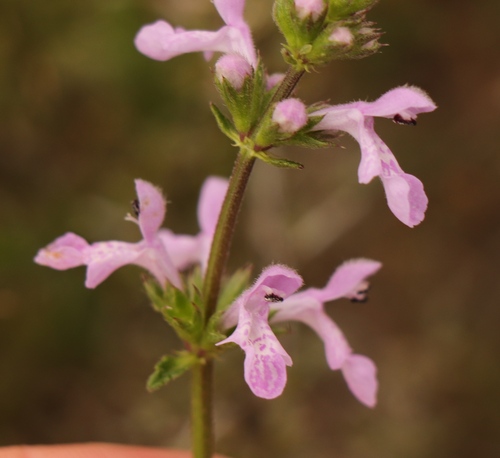
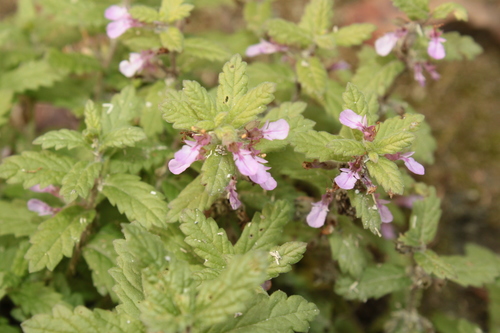
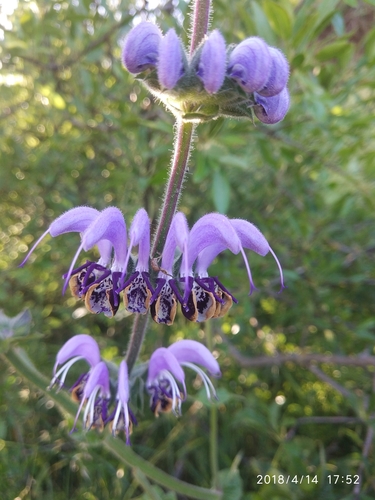
Salvia indica L. is native to rocky limestone slopes at elevations between 350 and 5,000 ft (110 and 1,520 m), where it flowers during April and May. This plant has an erect, stately growth habit, and forms a clump of rich grassy-green, ovate leaves with scalloped margins. Its leaves are covered in long, soft, straight hairs. Inflorescences form from specialized flowering stems that grow from the center of the plant, and reach heights of two to four feet. Widely spaced whorls of four to six flowers open slowly from the inflorescence. Each individual flower is two-lipped: the one-inch upper lip is a shiny bright lilac color. The stubby lower lip has a trough marked with purple and brown spots on a white background. Flowers of Salvia indica L. stay in bloom for quite a long time, nearly one month. This plant is typically propagated by seed, and seedlings often appear near the parent plant. When grown in gardens, it prefers full sun, loamy soil, and good drainage. After flowering, the plants require very little moisture. It can survive brief periods of temperatures as low as 20 °F (−7 °C). Like many other species in the genus Salvia, Salvia indica L. has potential for medicinal use. There is evidence that extracts of this plant have some anti-fungal properties.