About Salvia hispanica L.
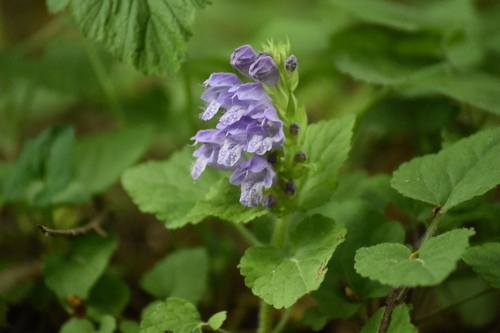
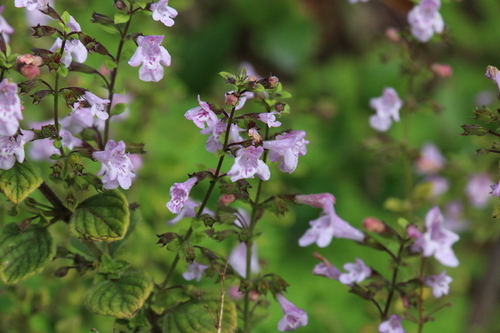
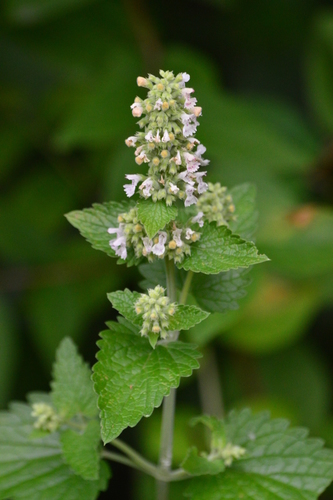
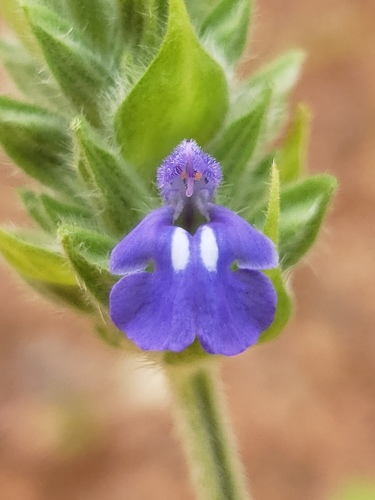
Chia (Salvia hispanica L.) is an annual herb that grows up to 1.75 metres (5 feet 9 inches) tall. It produces opposite leaves that measure 4–8 cm (1+1⁄2–3+1⁄4 inches) long and 3–5 cm (1+1⁄4–2 inches) wide. Its flowers are either purple or white, and grow in numerous clusters arranged in a spike at the end of each stem. Its seeds are small, oval-shaped, with a diameter of roughly 1 mm (1⁄32 inch). Seeds are mottled, with a mix of brown, gray, black, and white coloring. Chia seeds are hydrophilic, and can absorb up to 12 times their weight in liquid when soaked. As they soak, the seeds develop a mucilaginous coating, which gives chia-based beverages a distinct gelatinous texture. It should be noted that many plants cultivated under the name S. hispanica are actually Salvia officinalis subsp. lavandulifolia (synonym S. lavandulifolia). Chia is native to central and southern Mexico, as well as Guatemala. It is hardy in USDA Zones 9–12. Chia is grown and consumed commercially in its native range of Mexico and Guatemala, and also in Bolivia, Ecuador, Colombia, Nicaragua, northwestern Argentina, parts of Australia, and the southwestern United States. New patented chia varieties have been bred in Kentucky to allow cultivation in the northern latitudes of the United States. It is grown commercially for its seeds, which are a food rich in omega-3 fatty acids. The seeds yield 25–30% extractable oil, including α-linolenic acid. The typical fat composition of chia seed oil is 55% ω-3, 18% ω-6, 6% ω-9, and 10% saturated fat.