About Salvelinus alpinus (Linnaeus, 1758)
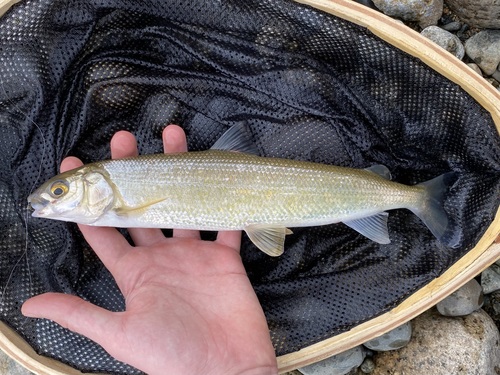
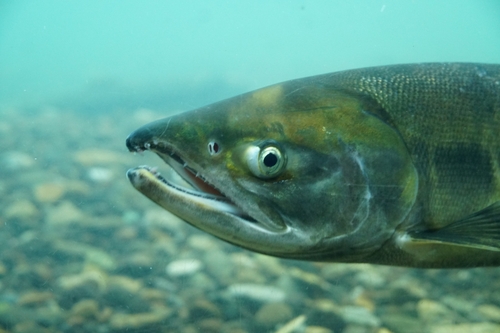
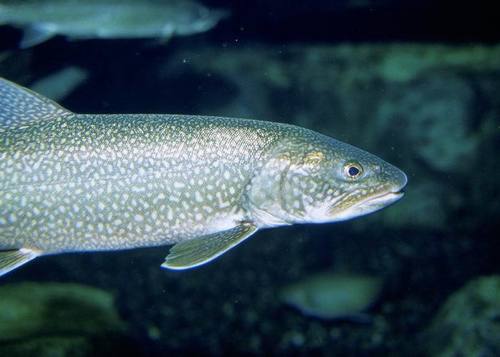
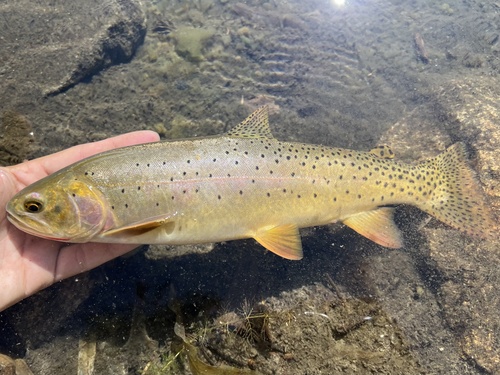
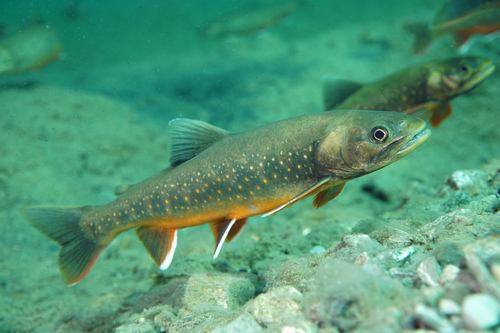
Arctic char, with the scientific name Salvelinus alpinus (Linnaeus, 1758), is closely related to both salmon and trout, including Atlantic salmon and lake trout, and shares many characteristics with both groups. This species has highly variable coloration that changes based on the time of year and the environmental conditions of the lake it inhabits, and appearance also differs between Arctic char populations. The dorsal (back) side of an Arctic char is dark, while the ventral (belly) side ranges in color from red and yellow to white. Arctic char has distinct size dimorphism, with two forms: dwarf and giant. Dwarf Arctic char weigh between 0.2 and 2.3 kg (7 oz and 5 lb 1 oz) and average 8 cm (3 in) in length, while giant Arctic char weigh between 2.3 and 4.5 kg (5 lb 1 oz and 9 lb 15 oz) and average 40 cm (16 in) in length. Individual Arctic char can weigh 9 kg (20 lb) or more; record-sized fish have been caught by anglers in Northern Canada, where the Inuktitut names for this fish are iqaluk or tariungmiutaq. Whole market-sized Arctic char are generally between 1 and 2.5 kg (2 lb 3 oz and 5 lb 8 oz). Male and female Arctic char grow to the same average size. The flesh of Arctic char can range from bright red to pale pink. Arctic char spawn in freshwater, and their populations can be entirely lake-dwelling (lacustrine), entirely river-dwelling (riverine), or anadromous, meaning adults return from the ocean to their freshwater birth rivers to spawn. No other freshwater fish occurs as far north as Arctic char; for example, it is the only fish species found in Lake Hazen, which sits at 81°56′N 68°55′W on Ellesmere Island in the Canadian Arctic. It is one of the rarest fish species in Great Britain and Ireland, where it lives mainly in deep, cold, glacial lakes, and it faces risk from acidification in these regions. In other parts of its range, such as the Nordic countries, Arctic char is much more common and is fished extensively. In Siberia, this species is called golets (Russian: голец), and it has been introduced to lakes where it sometimes threatens less hardy native endemic species, including the small-mouth char and long-finned char in Elgygytgyn Lake. Arctic char is also found in Lake Pingualuit on the Ungava Peninsula, Quebec, a lake located in an impact crater that formed roughly 1.4 million years ago. Since the last glaciation, changing water levels are thought to have connected the lake to glacial runoff and surrounding streams and rivers, allowing Arctic char to swim upstream into the lake. Arctic char is the only fish found in this lake, and evidence of fish cannibalism has been observed there. Arctic char has a mostly circumpolar distribution, and no other species of freshwater fish is found at a higher latitude. It is native to Arctic and subarctic coasts and high-elevation lakes, and has been recorded in the Canadian Arctic, Greenland, Iceland, Scandinavia, Siberia, and Alaska. Anadromous Arctic char migrate to the sea annually between mid-June and mid-July, then return to freshwater after around two months to reproduce and overwinter. As a food fish, commercially produced Arctic char typically weighs 1–2.5 kg (2–6 lb). Its flesh has a fine flake and medium firm texture, ranges in color from light pink to deep red, and has a flavor between that of trout and salmon.