About Salix udensis (Wimm.) Trautv. & C.A.Mey.
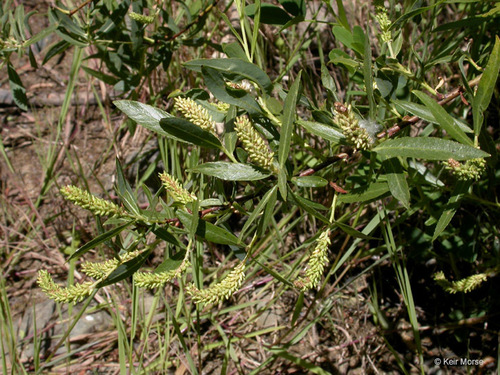
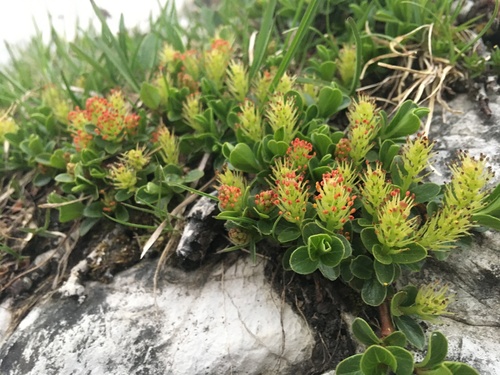
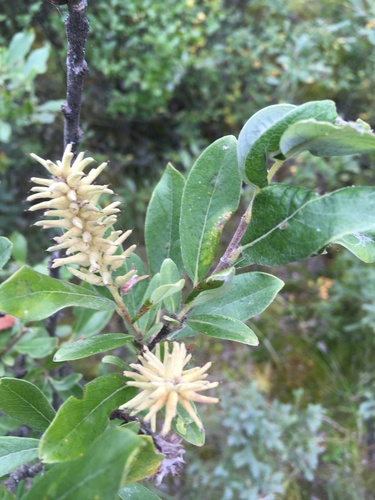
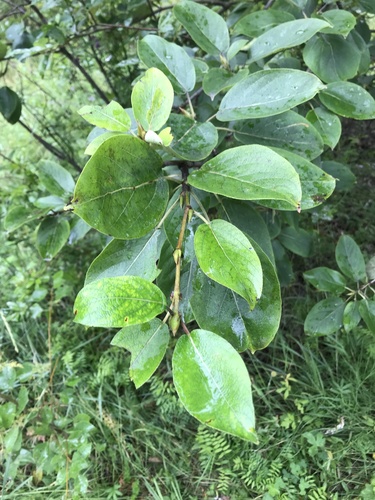
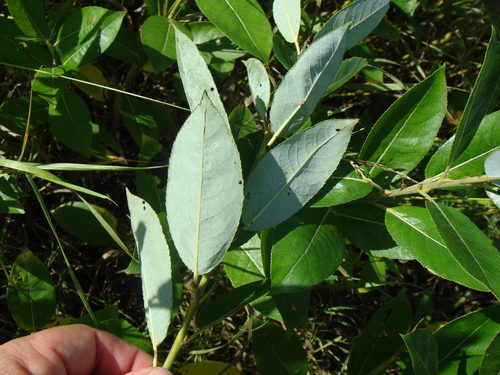
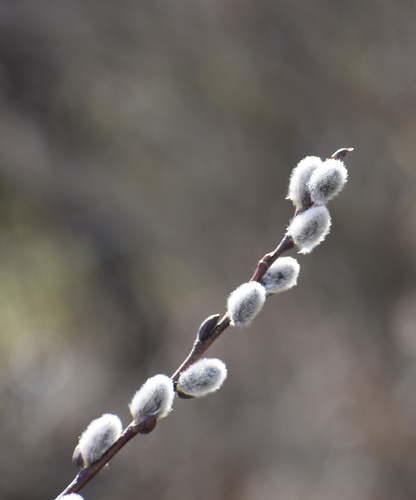
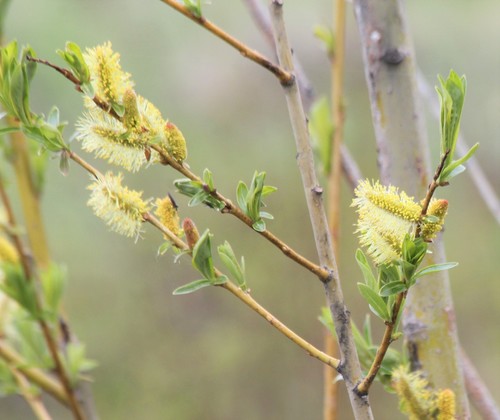
Salix udensis (Wimm.) Trautv. & C.A.Mey., also known by the synonym Salix sachalinensis F.Schmidt, is a willow species native to northeastern Asia, where it occurs naturally in eastern Siberia including Kamchatka, northeastern China, and northern Japan. It is a deciduous shrub that reaches a maximum height of 5 m (16 ft). Its leaves are slender and lanceolate, measuring 6–10 cm long and 0.8–2 cm broad; the upper leaf surface is glossy dark green, while the underside is glaucous, slightly hairy, and edged with serrations. This species produces flowers in early spring, borne on catkins that are 2–3 cm long, and it typically takes 20 years to reach full maturity. The cultivar Salix udensis 'Sekka', commonly called Japanese fantail willow, is cultivated as an ornamental plant. This cultivar has abnormally joined stems that grow in a flattened arrangement, a trait called fasciation that gives the cultivar its "fantail" common name; the stems are highly valued by floral arrangers for use in Ikebana. The 'Sekka' cultivar has also been documented as resistant to plant pathogens, specifically rust diseases caused by pathogenic fungi of the genus Melampsora.