About Salix serissima (Bailey) Fernald
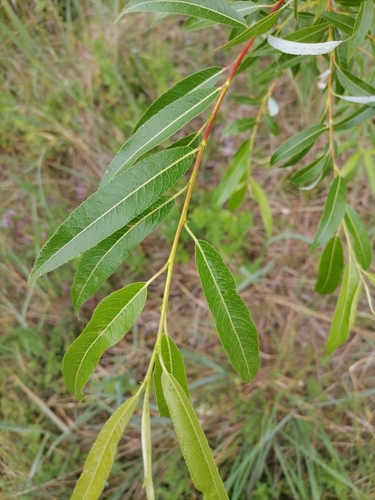
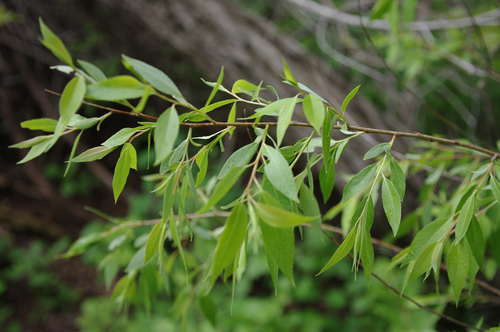
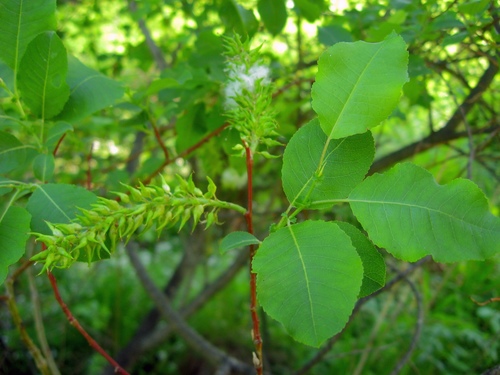
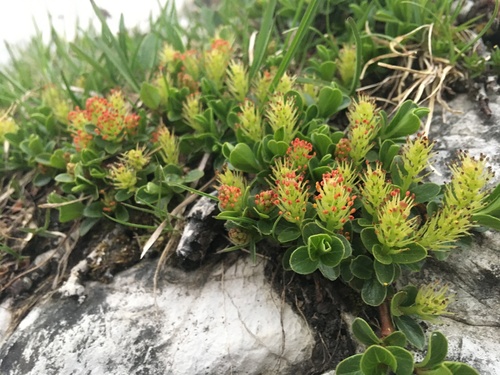
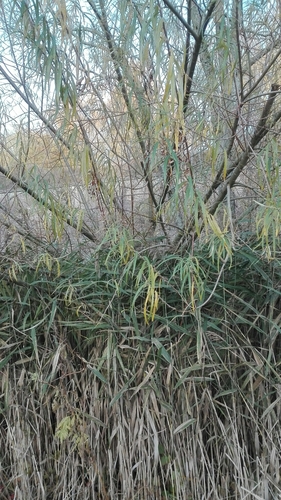
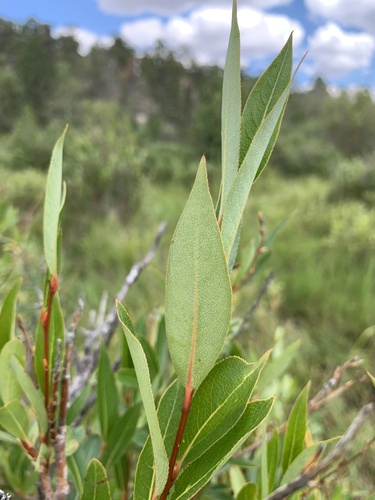
Salix serissima is a species of flowering plant in the willow family, with common names autumn willow and fall willow. It is native to North America, distributed across most of Canada and the northern contiguous United States. This willow is a shrub that typically grows 2 to 3 meters (6.6 to 9.8 feet) tall, and can occasionally reach up to 5 meters (16 feet) in height. Its stems and twigs are hairless. The leaves are lance-shaped to oval, reaching up to 11 cm long and 3.3 cm wide, and are also hairless. Its inflorescence takes the form of a catkin. This willow grows in forests, woodlands, and moist habitats including bogs, swamps, and riverbanks. It grows alongside quaking aspen (Populus tremuloides) and balsam poplar (P. balsamifera), and may also grow with other willow species. Its seeds stay dormant over winter and germinate in spring, which lets the species invade fens and other open, moist habitats. While the species' overall range covers northern North America, several separated disjunct populations occur further south. These southern populations include four in the Black Hills of South Dakota, with two located on Black Hills National Forest; one in the Sherman Mountains of Albany County, Wyoming, located on Medicine Bow National Forest; seven in north-central Colorado, with one on Arapaho-Roosevelt National Forest; and one in southwestern Colorado, which is potentially located on San Juan National Forest. Although Salix serissima is not a globally threatened species, these disjunct southern populations are considered sensitive. The species is threatened in these areas by changes to the hydrology of the peatlands where it grows.