About Salix caroliniana Michx.
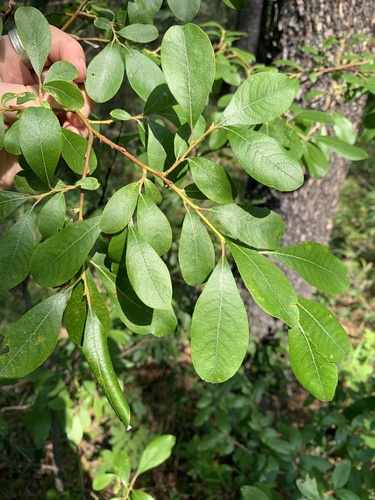
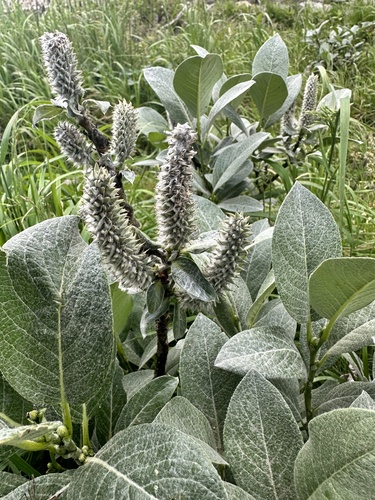
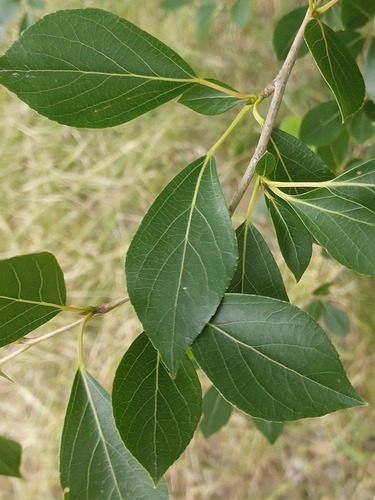
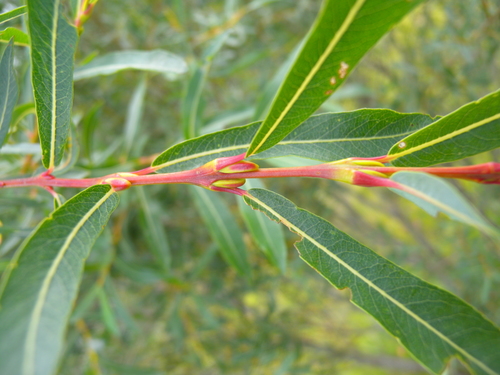
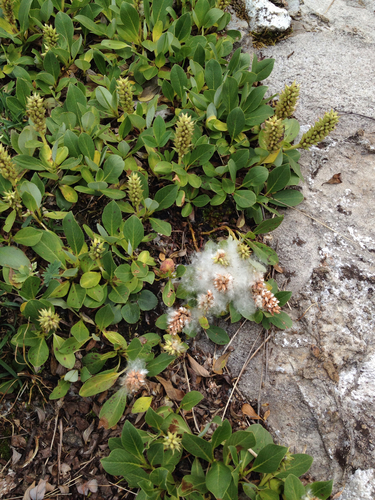
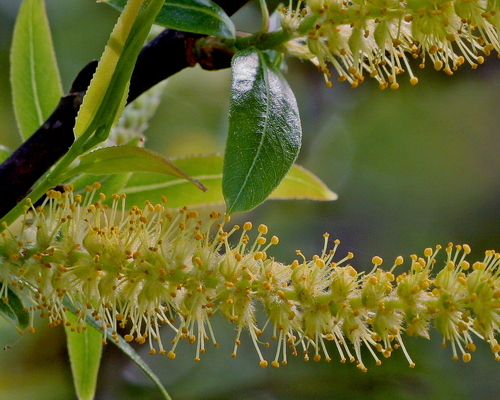
Salix caroliniana, commonly called the coastal plain willow, is a shrub or small tree native to the southeastern United States, Mexico, parts of Central America, and the Caribbean. It is an obligate wetland species, and grows as an emergent species in the Everglades. When there is no fire, S. caroliniana can convert herbaceous wetlands into forested wetlands. This species flowers in early spring, either before new leaves emerge or at the same time leaves appear. In 1982, flowering was recorded during February and March in Alachua County, Florida. The species was first formally described by French naturalist André Michaux in 1803, in his work Flora Boreali-Americana. Male flowers produce spring pollen that is used by bees. Salix caroliniana acts as a larval host for a wide range of moth and butterfly species: the black-waved flannel moth, the blinded sphinx, the cecropia moth, the elm sphinx, the imperial moth, the Io moth, the modest sphinx, the mourning cloak, the polyphemus moth, the promethea moth, the red-spotted purple, and the viceroy.
Within the southeastern United States, Salix caroliniana is distributed across North Carolina, South Carolina, Virginia, Georgia, Florida, Alabama, Mississippi, Louisiana, Texas, Tennessee, West Virginia, Pennsylvania, Maryland, Ohio, Illinois, and Indiana. It most often occurs in wetland habitats including swamps, rivers, and marshes, particularly in the coastal plain. Salix caroliniana plays an important role in stabilizing soil in riparian areas, and provides habitat for many wildlife species.