About Salicaceae
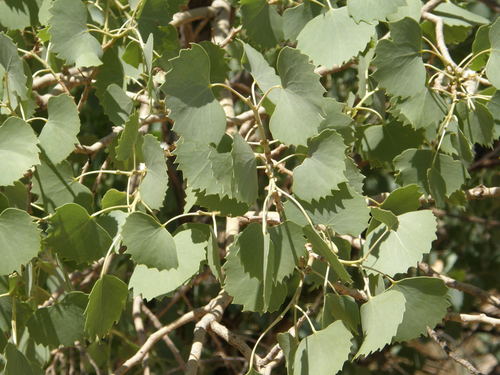
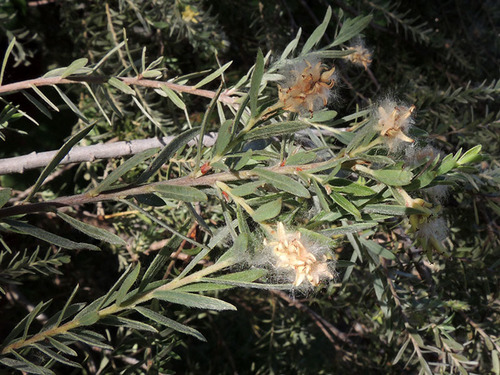
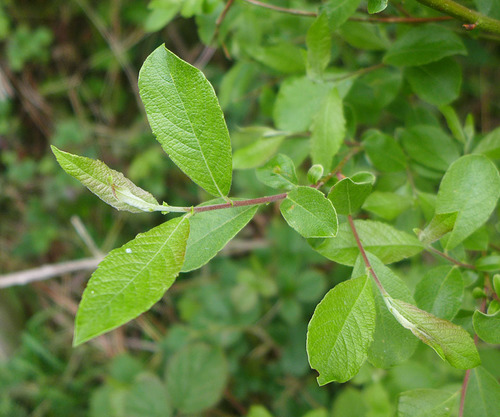
Salicaceae, commonly known as the willow family, is a group of flowering plants. The traditional narrowly defined Salicaceae (Salicaceae sensu stricto) includes only willows and poplars. Genetic analysis summarized by the Angiosperm Phylogeny Group (APG) has greatly expanded the family’s defined boundaries, bringing the total to 56 genera and approximately 1220 species. This expanded circumscription incorporates the former tropical family Scyphostegiaceae and many species previously placed in Flacourtiaceae. In the Cronquist system, Salicaceae was placed in its own separate order, Salicales, and contained just three genera: Salix (willows), Populus (poplars), and Chosenia, which is now classified as a synonym of Salix. Since Salicaceae is recognized as being closely related to the families Violaceae and Passifloraceae, the APG places it in the order Malpighiales. Under this modern expanded circumscription, most members of Salicaceae are trees or shrubs. They typically bear simple, alternately arranged leaves; temperate species are usually deciduous. Most members have leaves with serrate or dentate (toothed) margins. Many species with toothed margins have salicoid teeth: in this tooth type, a vein enters the tooth, expands, and ends at or near the tooth’s apex, where spherical, glandular protuberances called setae sit near the end of the vein. In some cases, these glands deflate and take on a doughnut-like torus shape. Other Salicaceae members have violoid or theoid teeth. Along with the presence of an aril and introrse anther dehiscence, differing tooth types have sometimes been used to split the group into three separate families: Salicaceae sensu medio, Samydaceae, and Scyphostegiaceae. Members of the family often have small, unnoticeable reduced flowers. All Salicaceae have superior or half-inferior ovaries with parietal placentation.